Blueberry Matcha Latte with Ube Foam (September 2026)
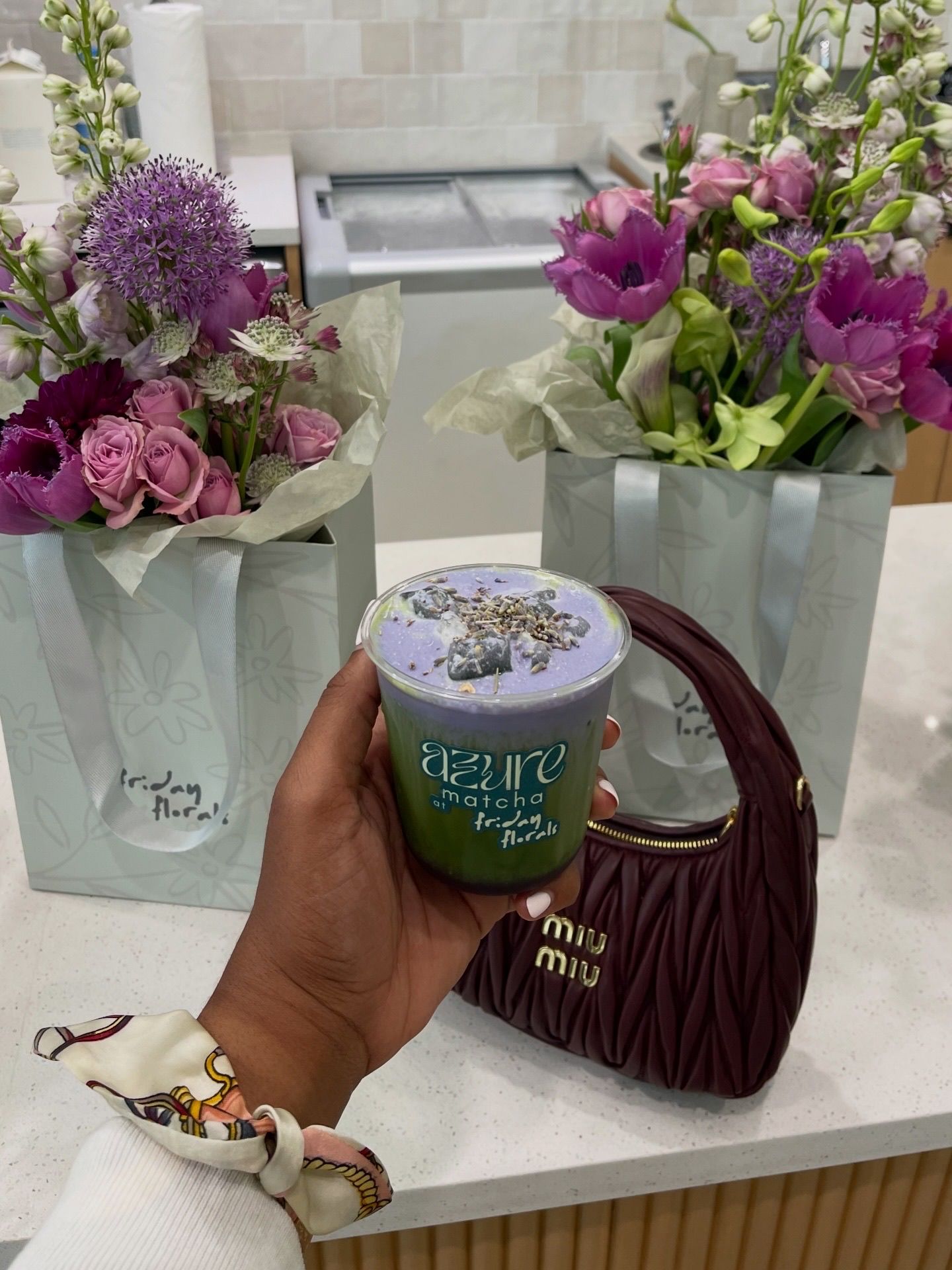
Blueberry and matcha sound like an odd pairing until you taste them together. The blueberry syrup lifts the earthiness, softens any bitterness, and the ube cold foam pulls the whole thing into something you'd actually want to photograph before drinking. Here's the full build, layer by layer.
TLDR:
- Blueberry compote's tartness sharpens matcha's vegetal notes; latte-grade powder holds up best against the fruit.
- Whisk matcha into a paste with room temperature water first. Heat draws out bitterness from first-flush leaf.
- Ube cold foam (30-45 seconds with a frother) creates a three-zone visual: green base, purple gradient, lavender crown.
- Batch the blueberry compote up to two weeks ahead. Matcha and foam must be made fresh each time.
- Azure Matcha's Premium Blend uses Okumidori and Saemidori cultivars, shade-grown four weeks and stone-ground in Uji, Japan.
Why Blueberry and Matcha Work Together
Matcha carries a grassy, umami depth that can feel heavy on its own. Blueberry cuts right through that, its tart-sweet brightness lifting the earthiness without erasing it. The two sit at opposite ends of the flavor range, which is exactly why they work.
The berry sweetness also softens bitterness, which matters if you're working with a higher-dose pour or a slightly more astringent leaf. The berry sweetness also softens any bitterness in the matcha, which matters if you're working with a higher-dose pour or a slightly more astringent leaf.
What Is Ube Cold Foam
Ube is a purple yam native to the Philippines with a flavor somewhere between vanilla and coconut: mildly sweet, a little earthy, with none of the starchiness you might expect. Its naturally vivid purple color comes from anthocyanin pigments, no food dye required. Ube's flavor profile makes it a natural pairing for creamy, cold applications.
Cold foam is milk or cream frothed at low temperature until thick and spoonable. Unlike steamed foam, it stays cold and sits on top of the drink instead of blending in, which is exactly what you want for layering and visual effect.
Ube works here because its sweetness is subtle enough to complement the green matcha base without competing. The purple foam creates a sharp color contrast that looks intentional without requiring much effort to achieve.
Ingredients You Need
Here's how the three components break down before you start building the drink.
Blueberry Compote
- 1 cup fresh or frozen blueberries
- 1/4 cup water
- 2 tablespoons sugar/agave/honey
Matcha Base
- 3 to 6g Azure matcha (ceremonial-grade; 4g is the working serve. More powder gives a stronger, creamier result)
- 2 to 3 tablespoons room temperature filtered water
- 3/4 cup milk of choice (oat, almond, or whole)
Ube Cold Foam
- 1/2 cup heavy cream or oat-based half-and-half
- 1 to 2 tablespoons ube powder (preferred over ube extract)
Fill the rest of the glass with ice.
Choosing the Right Matcha for This Recipe
Ceremonial-grade matcha from first-harvest leaves holds its own against sweet blueberry compote and creamy foam. Azure's Premium Blend, grown from Okumidori and Saemidori cultivars, shade-grown four weeks and stone-ground in Uji, is built for exactly this kind of build. Its clean, vegetal depth stays present through the fruit and foam without turning flat.
Culinary-grade matcha comes from later harvests with more sun exposure, and the bitterness it carries sits flat in cold drinks. Azure does not use culinary-grade in any recipe.
Worth knowing: "ceremonial grade" has no legal definition. The quality signals that actually matter are shading duration (usually three to four weeks before harvest), first-flush timing, stone-ground processing, and the growing region. Uji, Kagoshima, and Shizuoka are Japan's key matcha-producing regions, each with distinct character.
For color, a properly shaded, early-harvested leaf gives you a vivid green that contrasts cleanly against the purple foam. Dull or yellowish powder almost always points to a later harvest or poor storage.
How to Make the Blueberry Compote
Combine the blueberries, water, and sweetener in a small saucepan over medium heat. Stir once, then let it sit until the berries start to break down, about 3 to 4 minutes. Once they begin releasing liquid, press them gently with a spoon and stir occasionally for another 4 to 5 minutes until the mixture thickens slightly and coats the back of a spoon.
For a smooth compote, pour it through a fine-mesh strainer and press the solids firmly to extract as much liquid as possible. For more body, skip the strainer entirely. The strained version layers more cleanly in the glass.
Frozen blueberries work well when fresh are out of season. They break down faster and release more juice, so reduce your simmer time by about a minute. The color tends to run deeper, which shows up nicely in the finished drink.
How to Prepare the Matcha Base
Sift the matcha directly into a wide bowl. This takes about 20 seconds and breaks up any clumps that would otherwise survive the whisk and sit in the foam as bitter pockets.
Add a small splash of room temperature filtered water, just enough to dampen the powder. Whisk into a smooth, glossy paste. Add your blueberry compote at this stage if you want it evenly distributed and not pooled at the bottom.
Then add the remaining water slowly while whisking in a W or M motion. The wrist does the work. Circular motion just moves liquid; the W or M folds air in. Look for fine, dense foam with a slightly matte surface.
Room temperature water is the right call here. It keeps the flavor rounder and the foam more stable over ice. The three minutes that make the cup explains why this window matters.
Use a bamboo chasen for this stage. An electric frother skips the paste step, which means uneven dispersion and flat flavor.
How to Make the Ube Cold Foam
Pour the heavy cream or oat half-and-half into a tall, cold container. Add the ube powder and simple syrup. Whisk with an electric milk frother for 30 to 45 seconds until the mixture is thick, spoonable, and holds its shape without immediately running. Aim for a texture closer to loose whipped cream than frothed milk.
If you're using ube halaya instead, blend it with the cream first to break it down before frothing. Halaya is dense enough to seize the frother if you skip that step, and the result won't foam evenly. Use slightly less than you think you need, since it sweetens fast.
How to Layer and Assemble the Drink
Fill a tall glass with ice first. This keeps the matcha cold on contact and slows the layers from blending before you're ready to serve.
Pour the matcha base over the ice slowly. For a clean gradient, add the blueberry compote after the matcha and let it sink naturally. If you want more defined color separation, spoon the compote in before the matcha. The compote-first method gives you a deeper purple-blue at the base that bleeds upward into green.
Spoon the ube cold foam over the back of a spoon to slow the pour and keep it sitting on top. A properly frothed foam will crown the glass and hold its shape for a few minutes before deflating.
The finished glass should show three distinct zones: vivid green at the base, a purple-blue gradient in the middle, and a pale lavender foam crown on top. If the layers are muddy, the foam was too thin or the matcha was poured too fast.
Milk Options and Variations
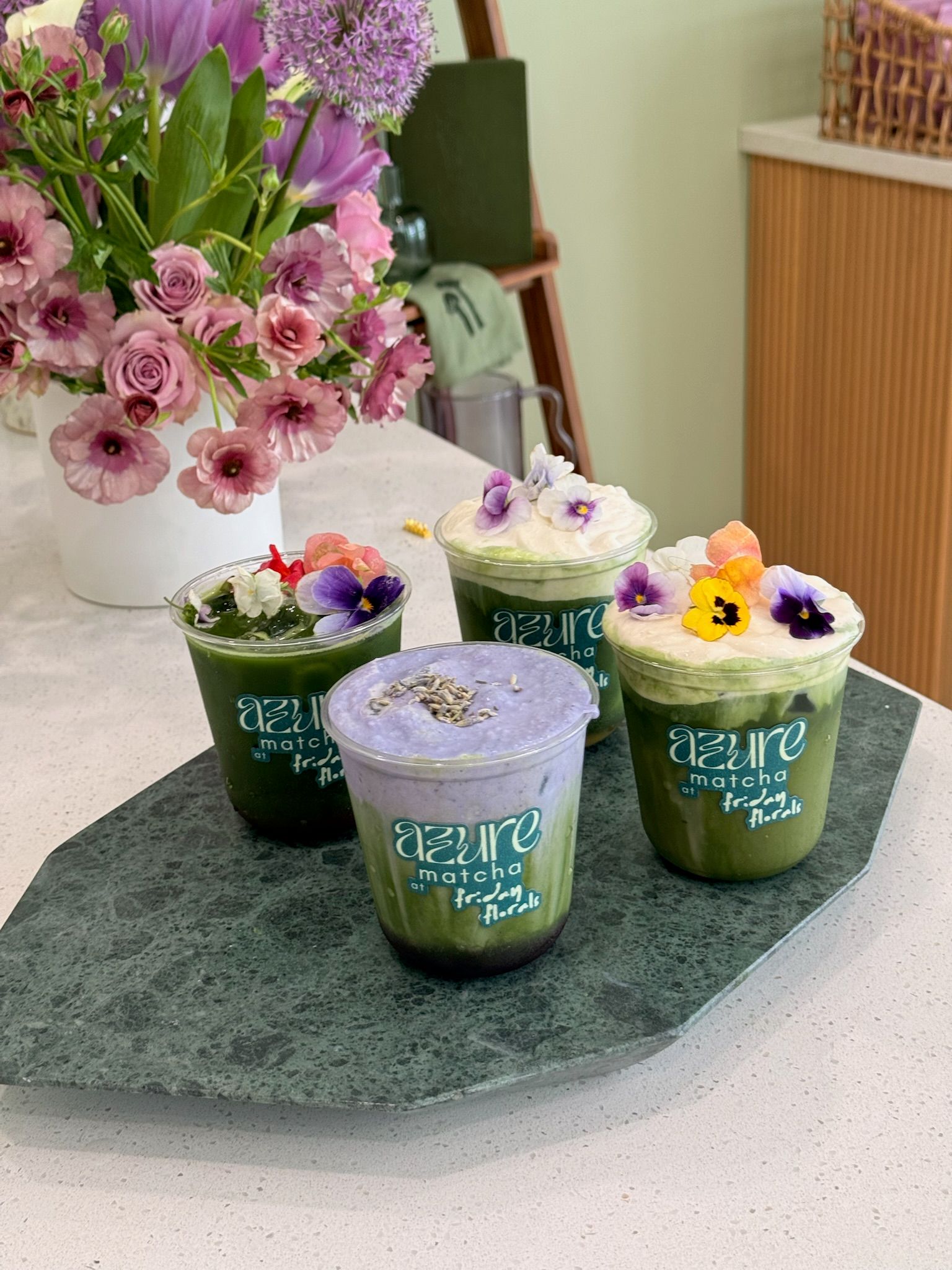
The milk you choose changes the drink more than most steps do. Here is how the main options play out. More Azure matcha recipes follow similar layering principles.
- Oat milk — Body: Creamy, medium; Flavor Notes: Neutral; Layering: Most forgiving; Best For: Everyday builds; lets blueberry and ube shine
- Almond milk — Body: Light; Flavor Notes: Slightly nutty; Layering: Good; Best For: When you want matcha flavor to come through clearly
- Coconut milk — Body: Rich; Flavor Notes: Naturally sweet; Layering: Good; Best For: Dessert-style builds; reduce blueberry syrup slightly
- Full-fat dairy — Body: Richest; Flavor Notes: Clean, creamy; Layering: Most stable; Best For: Best contrast when ube foam is made with oat half-and-half
Common Build Variations
A few adjustments worth knowing before you start.
For a warm version, skip the ice and froth the milk lightly before combining with the matcha paste. Spoon the ube foam on top the same way, but serve immediately since it melts faster over heat.
For a stronger matcha build, increase the powder to 5 or 6g and reduce the blueberry compote to one tablespoon. If you want a simpler starting point, the Azure Classic is a good reference. For a lower-sugar version, use unsweetened milk, skip the sweetener in the foam, and let the ube powder carry the sweetness. The blueberry compote can be halved without losing the color effect.
Tips for Getting the Layers Right
Each layer in this recipe has a small point of failure, and most of them are fixable with a minor adjustment.
- Chill your glass before building. A cold glass slows how fast the layers blend, buying you extra time for clean separation.
- Pour over ice slowly. A rushed pour creates turbulence that drags the layers together before they settle.
- If the foam dissolves quickly, it was too thin. More frothing time fixes this. Aim for a texture that holds a soft peak when you lift the frother.
- If the compote sinks too fast, spoon it in after the matcha, not before. It will still drift down, but more slowly.
- Use the coldest milk you have. Warm milk breaks the foam on contact.
Storage and Make-Ahead Notes
Each component has a different shelf life, so knowing what to prep ahead saves time without sacrificing texture or flavor.
The blueberry compote is the one component worth batching in advance. Stored in a sealed jar in the refrigerator, it keeps for up to two weeks without losing color or flavor. Our journey from Laguna to Miami introduced us to how well this format travels. Make it on a Sunday and the rest of the week's builds take about five minutes each.
Matcha should be prepared fresh every time. Pre-whisked matcha oxidizes quickly, losing both its brightness and foam structure within an hour.
The ube cold foam is best made right before serving. It holds its shape for a few minutes on top of the drink, then deflates and sinks. There is no reliable way to store and revive it later.
The assembled drink does not travel well. The layers blend within minutes, and the foam disappears fast. Make it, serve it, drink it.
How Azure Matcha Approaches This Build
The matcha you choose for this build matters more than the foam or the syrup. At Azure, we use the Azure Matcha Blend. Its flavor profile carries pistachio, almond, and sweet cream caramel notes that sit cleanly against blueberry's tartness without turning astringent under the foam. That character is what makes it work here, serving both as a green base and as an active flavor in the drink.
Cold whisking is how we prep matcha at every stage, from our Azure omakase tastings to recipe builds like this one. Sift, paste, then whisk with room temperature water. Heat is the fastest way to pull bitterness from first-flush leaf, and there is no reason to do that here. If you're building this drink regularly, the 80g refill makes more sense than a smaller tin. Our 30g tin is available for pre-order in October 2026, with full availability in November.
Final Thoughts on Crafting a Blueberry Matcha Latte at Home
A good blueberry matcha latte comes down to cold temps, a slow pour, and foam that actually holds. Batch your syrup ahead and the daily build becomes second nature.