First flush, and why we wait for it
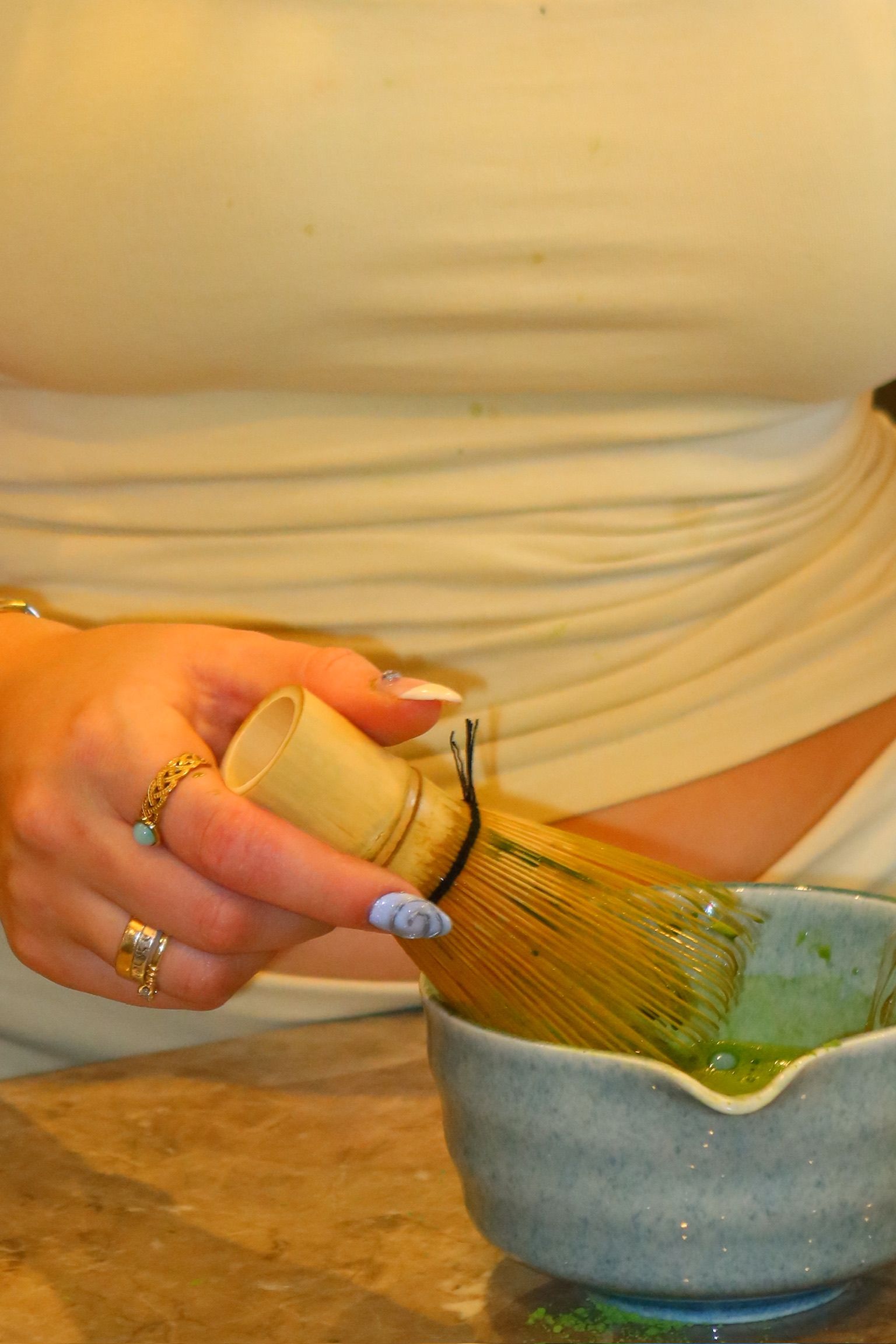
Every matcha starts the same way: a tea plant, sunlight, and time. What separates one tin from another happens almost entirely before harvest, in a decision most drinkers never see. Somewhere in Uji, in Kagoshima, in Shizuoka, a farmer looks at the plant and makes a choice about light. Or more precisely, about the absence of it.
That choice is what we mean when we say first-flush. It is the only harvest we buy.
The plant before the shade
Tea plants spend the winter storing energy. By early spring, new growth begins pushing up through the older leaves, pale and tender, full of what the plant has saved. Left alone, in full sun, this new growth would harden fast. The leaves would thicken, turn a duller green, and load up on the compounds a plant makes when it's working hard to defend itself against light and heat. That's a fine leaf. It's also not the one we want.
So around three to four weeks before harvest, farmers cover the rows. Traditional cultivation uses reed screens laid over bamboo frames; more modern operations use synthetic shade cloth in graduated layers, cutting available light down to a small fraction of what the plant would otherwise get. The plant doesn't stop growing. It changes how it grows.
What actually happens in the dark
Deprived of full light, the plant does something counterintuitive. It produces more chlorophyll, not less, stretching to capture whatever sun makes it through the screens. This is the mechanism behind the color connoisseurs look for first: a first-flush leaf, properly shaded, comes out closer to jade or emerald than the yellow-green of an unshaded leaf. Color is not decoration here. It's a direct readout of how the plant spent its final weeks.
At the same time, without strong sunlight driving photosynthesis at full tilt, the plant has less reason to convert its amino acids into catechins, the bitter, astringent compounds that give tea its sharper edge. Those amino acids, chiefly L-theanine, stay put instead. This is the compound behind matcha's particular calm: the pairing of caffeine with L-theanine that gives a steadier lift than coffee, without the spike or the crash that follows it. A shaded leaf carries dramatically more of it than an unshaded one.
The leaf itself thins. Cell walls that would otherwise toughen under direct sun stay softer, which matters later at the mill, when the leaf is ground to the fine, silk-like powder that separates real matcha from anything whisked from a coarser tea. A tougher leaf grinds tougher. A first-flush leaf, shaded and soft, grinds into something closer to talc than powder.
Put simply: three weeks of shade is the difference between a leaf built to survive the sun and a leaf built to be sweet, smooth, and full of the compound that makes matcha feel the way it feels. Everything downstream, the color in the bowl, the way it froths, the absence of a grassy bite, traces back to those weeks.
Why the timing is the whole game
First-flush isn't a marketing term for "early." It refers specifically to the very first harvest of the season, taken from the first flush of new growth after the shading period ends, typically in late April or May depending on the region. Later harvests, second or third flush, come from growth that emerges after the plant has already been cut back once. That growth is often shaded less carefully, or not at all, because by that point the tea is usually destined for culinary grade rather than ceremonial: baking, lattes, blends where a bit of bitterness gets masked by milk and sugar rather than experienced directly.
There is no legal definition of "ceremonial grade" anywhere in the world. Any tea company can put that phrase on a bag. The only meaningful way to know what you're actually drinking is to know the harvest, the shading window, and the farm. That's why we work directly with growers across Uji, Kagoshima, and Shizuoka rather than buying wholesale from a broker, and why we can tell you the cultivar in your bowl instead of a vague country of origin.
Our current Laguna Blend is milled in Uji from Okumidori and Yabukita, two cultivars chosen for how they behave under shade: how they hold sweetness, how finely they grind, how they froth. Shade-grown, first-flush, nothing later blended in to stretch the batch. That is the whole standard. We don't have a second one.
What this means for taste, not just terminology
The most common objection we hear is some version of "I don't like the grassy, bitter taste of matcha." Almost always, the person describing that taste has had a later harvest, poorly shaded, ground on equipment not suited to matcha at all. It is a real experience. It's just not first-flush matcha they were drinking.
Properly shaded, milled fine, first-flush matcha reads differently on the tongue: creamy before it's bitter, with a spring-fresh brightness rather than a raw, vegetal edge. Dose changes the character further. A stronger preparation, four to six grams, brings out more intensity and is where a connoisseur palate tends to land. A lighter hand, two to four grams cut with a flavored milk, softens things further for someone still building a relationship with the taste. Both are matcha. Neither is a compromise.
None of this is to say bitterness has no place. It's simply not the point of a first-flush leaf. If bitterness is what you're after, later harvests deliver it honestly, and sometimes carry higher raw catechin content as a result, so "healthier across the board" was never an accurate way to talk about grade. First-flush isn't the healthier tea. It's the smoother one, the one built by three weeks in the shade to hold sweetness instead of fighting for survival.
Why we only buy one harvest
We could offer a second grade. Plenty of matcha brands do: a ceremonial tin for show and a culinary bag for the lattes, priced accordingly. We've chosen not to. Every product that carries the Azure name, from the retail tins to what we whisk at a masterclass to what goes into a compote, starts from the same first-flush standard.
Partly that's about consistency. If the leaf changes character between harvests, so does everything built on top of it: the froth, the finish, the way a blend reads against a plant-based milk. Holding to one harvest keeps that steady.
Mostly, though, it's about what we think the point of the ritual actually is. Preparing matcha takes a few unhurried minutes: sifting, building a paste, whisking by hand until it froths. Those minutes only feel worth taking when what's in the bowl deserves the attention. A leaf grown to survive full sun and ground on equipment built for cheaper tea doesn't reward that kind of care. A shaded, first-flush leaf, milled slow and fine, does.
So when a farmer in Uji decides to lay screens over a row of tea plants in early spring, they're not just protecting a crop. They're setting the terms for everything that follows: the color, the sweetness, the grind, the eventual quiet three minutes at your counter with a bowl and a whisk. We wait for that decision every season, because it's the one decision in the whole process we're not willing to skip past.