Matcha Latte Recipe for Beginners (September 2026)
Your matcha latte recipe probably looks fine on paper, but if the result keeps tasting sharp or the powder never fully dissolves, something small is off in the method. The good news is it's usually the same two steps, and both are easy to sort out.
TLDR:
- Sift, paste, then add milk: skipping either step causes clumps and uneven texture.
- Use room temperature filtered water only; warm water pulls bitterness out of the leaf.
- Whole dairy and oat milk give the best foam and let the matcha flavor lead.
- A 3g serving delivers roughly 57-132mg of caffeine with a steadier release than coffee.
- Azure Matcha's Premium Blend uses Okumidori and Saemidori cultivars, stone-ground in Uji, shade-grown for four weeks.
What Is a Matcha Latte
A matcha latte is whisked matcha powder mixed with milk, either hot or cold. Unlike brewed green tea, where leaves steep and get removed, matcha is the whole leaf ground into a fine powder. You consume the entire leaf, suspended in liquid.
The flavor is grassy and earthy with a soft umami depth. Milk rounds that edge out considerably, giving you a creamy, mellow finish that stays true to the matcha underneath.
Matcha Latte Ingredients
Four ingredients. That's all a matcha latte takes.
- Matcha powder (3-6g per cup, with 4g as the working serve): the foundation. Grade matters here. First-flush, shade-grown matcha dissolves smoothly and tastes creamy, not bitter. More powder means a stronger, creamier result. Culinary-grade powder, harvested later in the season with more sun exposure, tends to go harsh in milk.
- Room temperature filtered water (a small splash): used to build the paste before milk goes in, letting the powder fully dissolve instead of clumping.
- Milk of choice (6-8oz): dairy, oat, almond, whatever you prefer. Creamier milks give a richer result.
- Flavoring (optional): an Azure essence or compote for something more layered. Add it during the paste stage so it blends in evenly.
Equipment You Need
A fine-mesh sifter, a wide bowl, a bamboo whisk, and a milk vessel. That's the full kit. If you need matcha to start, the Azure Premium Blend 30g tin is a good entry point.
- Fine-mesh sifter: breaks up clumps before they form. Skip it and you'll spend twice as long whisking with worse results.
- Wide bowl: the whisk needs room to move. A narrow cup restricts your wrist and kills the foam.
- Bamboo chasen (whisk): the W/M motion a chasen makes is what creates dense, even foam. An electric frother can work in a pinch for the final step, but it won't handle the paste stage the same way.
- Milk vessel: a small pitcher or jar works fine. If you're making a hot latte, something you can pour from cleanly matters more than the material.
No fancy equipment, no barista training required.
How to Make a Hot Matcha Latte
Sift 3 to 6g of matcha into a wide bowl. Add about 2oz of room temperature filtered water, just enough to dampen the powder. Whisk in a tight W or M motion until the paste is smooth and glossy, with no dry pockets.
Warm 5 to 6oz of your milk of choice until steaming, then froth if you'd like. Pour the milk slowly over the paste, whisking gently as you go.
The paste stage is what most people skip, and it's why clumps form. Get that right and the rest follows.
- Sift: about 20 seconds to break up any clumps before water touches the powder
- Paste: 30 seconds of firm whisking until the texture is smooth and glossy
- Combine: pour milk slowly while whisking gently to integrate without breaking the paste
How to Make an Iced Matcha Latte
Same process, different order, and that order matters.
Sift 3 to 6g of matcha into a wide bowl. Add a small splash of room temperature filtered water and whisk into a smooth paste using a W or M motion. The paste stage is non-negotiable: cold milk and ice cannot dissolve dry matcha powder, so skipping it means green clumps at the bottom of your glass.
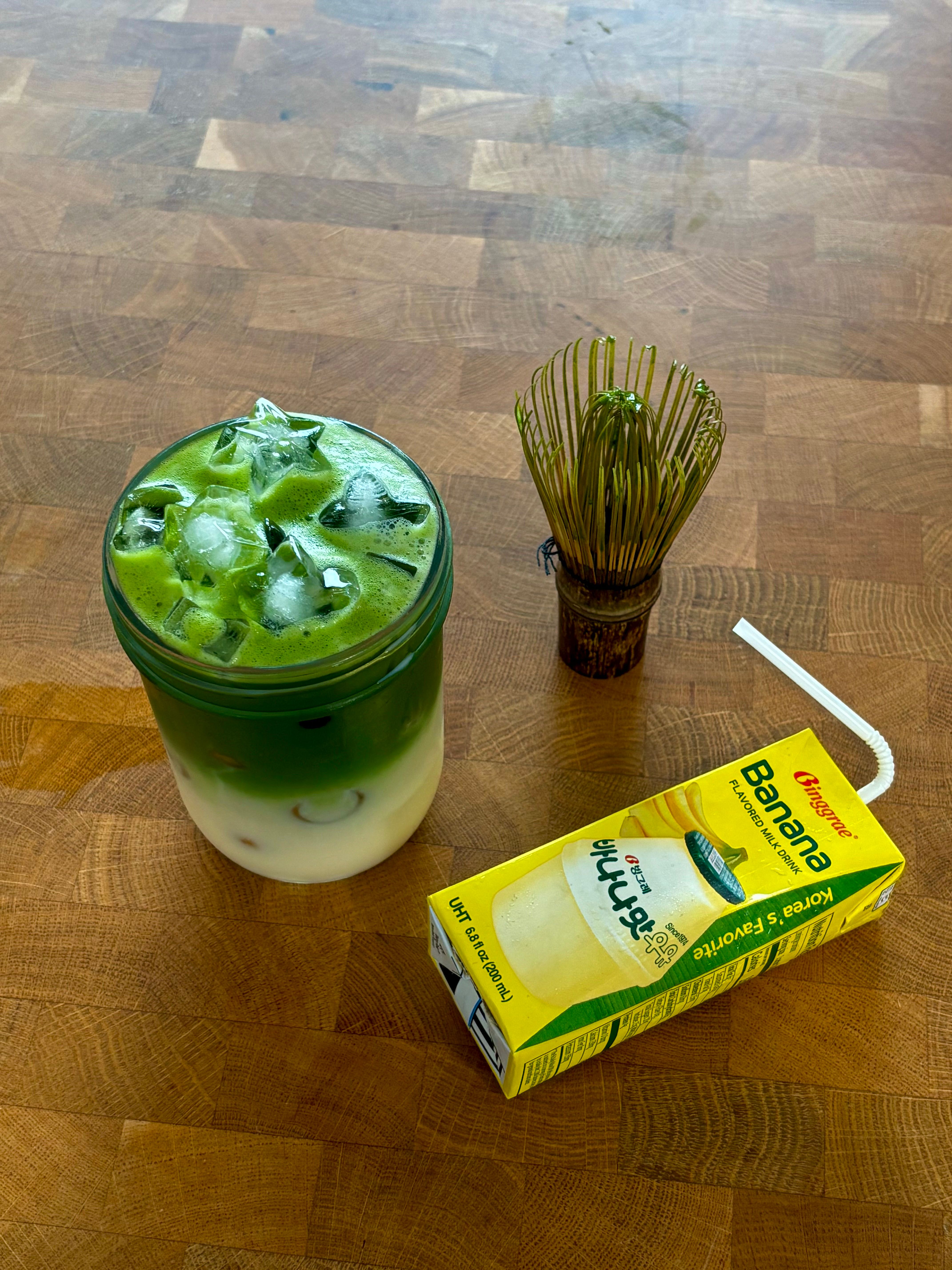
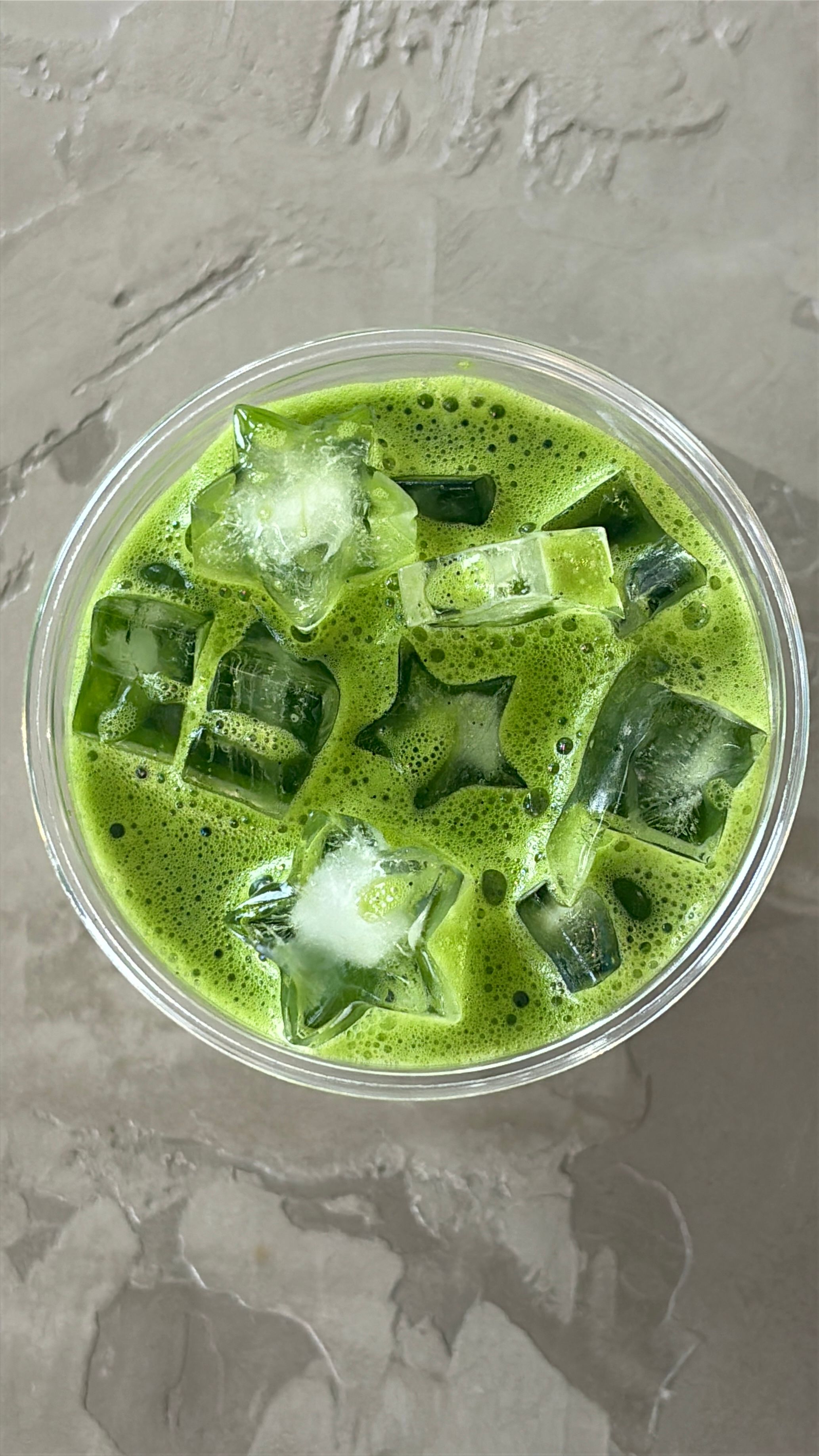
Fill a glass with ice, then pour in 5 to 6oz of cold milk. Slowly pour the matcha paste over the top and watch it cascade through the milk in layers. Stir when ready, or leave it for the gradient.
- Sift, then paste first, always before ice or cold milk touches the powder
- Pour the paste over milk and ice slowly for the layered look
- Stir to combine, or drink it layered if you prefer the visual
The Best Milk for a Matcha Latte
- Whole dairy — Texture: Rich, creamy; Flavor impact: Neutral, lets matcha lead; Foam quality: Excellent
- Oat — Texture: Medium-full body; Flavor impact: Slightly sweet, malty; Foam quality: Very good
- Almond — Texture: Thin; Flavor impact: Mild nuttiness; Foam quality: Moderate
- Soy — Texture: Medium; Flavor impact: Neutral to slightly beany; Foam quality: Good
- Coconut — Texture: Rich; Flavor impact: Pronounced sweetness; Foam quality: Moderate
Whole dairy and oat milk are the most forgiving. They froth well and don't compete with the matcha. Oat milk has become a go-to for iced lattes because its natural sweetness softens the earthy edge without added sweetener.
Almond milk works, though the thinner body means less creaminess. Coconut adds its own pronounced flavor, which can overpower a more delicate matcha. Soy lands in the middle: decent body, fairly neutral once heated.
For iced lattes, creamier milks give a better layered result when poured over the matcha paste.
Matcha Latte Caffeine and Energy
A matcha latte sits in a similar caffeine range to coffee, though the numbers shift depending on how much powder you use. Published sources suggest roughly 19 to 44mg of caffeine per gram, so a typical 3g serving may land somewhere between 57 and 132mg. Treat those as working estimates: preparation and powder quality both affect the final number, and figures vary widely across sources.
What makes matcha feel different from coffee has less to do with total caffeine and more to do with how it moves through you. Matcha contains high levels of catechins, flavonoids that interact with caffeine and support a slower energy release. L-theanine, an amino acid found in shade-grown tea leaves, plays a role in that steadier curve as well.
Matcha Latte Variations
Once the base recipe feels natural, variations are worth trying. Each one follows the same sift-paste-whisk method, with flavoring added during the paste stage so it distributes evenly.
Strawberry Matcha Latte
Add a strawberry compote or essence to the paste before whisking in water. The Laguna Sur Strawberry follows exactly this approach, pairing well over ice with oat milk.
Jasmine Matcha Latte
Add a jasmine tea essence to the paste before whisking in water, then finish with milk of choice and an optional cold foam on top. Edible flowers on the rim pull the whole thing together visually. The Spring Jasmine Matcha is the full version of this approach.
Vanilla Matcha Latte
A touch of vanilla essence rounds out the grassy edge. The Honey Blossom Latte takes a similar approach, softening the flavor without masking it.
Blueberry Vanilla Latte
Add blueberry essence and vanilla bean essence to the paste, along with a touch of citrus. Pour over milk of choice, then finish with ube cold foam and a pinch of dried lavender. The layers of flavor and color are what make this one stand out. See the full Violet Daydream Latte recipe for reference.
Hibiscus Lemonade Matcha
Work a hibiscus essence and a squeeze of citrus into the matcha paste before adding liquid. Finish with milk of choice or housemade lemonade over ice for a tart, floral result that's a little different from a standard latte. The full build is on the Hibiscus Island Refresher page.
Tips for the Best Matcha Latte at Home
Bitterness, clumps, flat color. These are signs of a fixable problem, usually one of four.
- Skipping the sift: dry matcha clumps on contact with liquid and no amount of whisking rescues it afterward. Twenty seconds through a fine-mesh sifter is the simplest upgrade you can make.
- Skipping the paste stage: pouring milk directly over loose powder guarantees uneven texture. The paste step dissolves the powder fully before any volume is added.
- Water that is too warm: heat pulls bitterness out fast, even well below boiling. Room temperature filtered water keeps the leaf's natural sweetness intact.
- Stale matcha: chlorophyll breaks down when exposed to light, air, or heat. Store it sealed, away from light, and use it within a few weeks of opening. The first flush harvest is when chlorophyll and sweetness peak.
If your latte still tastes bitter despite good technique, start at 3g and work up as your palate adjusts.
How Azure Matcha Approaches the Matcha Latte
Our Azure Premium Blend is sourced directly from farms across Uji, Kagoshima, and Shizuoka, using two cultivars: Okumidori and Saemidori. Both are shade-grown for four weeks, hand-picked in the first flush, and stone-ground in small batches in Uji. For regular use, the 80g refill keeps you stocked without running out mid-week. In a latte, that sourcing reads as pistachio, almond, and sweet cream caramel, not sharp or grassy, with a mellow umami underneath.
Cold whisking is the method we always use. Room temperature filtered water keeps the leaf's natural character intact and produces tighter, more stable foam than warm water. For dosing: 3g gives a lighter, milk-forward cup, while 4 to 6g brings more body and depth. All variations are built out further in the Azure recipes collection.
Final Thoughts on the Art of the Matcha Latte
When the base feels right, the variations in the Azure recipes collection are worth working through.