Unique Employee Wellness Ideas Beyond A Run-Club (Sept 2026)

Somewhere along the way, corporate wellness became a competition to see who could announce the weirdest perk. A DJ at the Wednesday all-hands. A coffee rave (yes, this is real). A run club that three people join, two people finish, and no one mentions again. The bar for "doing wellness" kept going up, and somehow the actual thing wellness is supposed to do, which is help people feel less burned out, got left behind in the event logistics.
Make Azure Matcha's hands-on masterclass the starting point for your next team gathering: a shared craft session built around sifting, making a smooth paste, and cold whisking ceremonial-grade matcha. For a movement-led outing, Azure's recurring post-class pop-up at Libra Pilates in Miami pairs a studio visit with matcha and conversation. Its past sound bath collaboration offers another idea to discuss for a private gathering, with availability confirmed directly. Alongside these hosted experiences, this article covers everyday no-cost practices that need no vendor or budget line.
TLDR:
- No, a DJ at your Thursday lunch does not count as a wellness strategy.
- Depression and anxiety cost 12 billion working days a year globally; run-club sign-up sheets are not making a dent.
- Hands-on rituals give teams a shared task outside work mode. Azure's matcha masterclasses put that pause into practice through sifting, making a smooth paste, and cold whisking, without promising a medical benefit.
- For a team gathering, start with Azure Matcha's hands-on masterclass. Ask about movement-and-matcha or sound-and-matcha collaborations, with the format and city availability confirmed directly before booking.
- Start with one consistent activity for 4 to 6 weeks. The format matters less than the repetition.
Why Standard Wellness Programs Fall Short
Gym discounts and a fruit bowl are well-intentioned. They're also easy to ignore. Most employees walk past the sign-up sheet for the annual health fair without a second thought, and the yoga class at noon gets skipped because nobody can actually leave their desk at noon. Then someone in HR gets excited about a coffee rave, a run club kicks off in October, and by November it's three people jogging and one very committed Spotify playlist.
The problem is that most wellness programming chases novelty instead of results. What employees need during the workday is simpler: a real break, a sense of being seen, and something that helps manage stress without a commute attached to it. According to the World Health Organization, depression and anxiety cost an estimated 12 billion working days yearly, at a cost of $1 trillion in lost productivity globally. A novelty event calendar is not closing that gap.
"Poor working environments, including excessive workloads, low job control, and job insecurity, pose a risk to mental health." (World Health Organization)
When wellness programming mistakes "memorable" for "meaningful," participation drops and the investment stalls. The activities that actually hold are the ones that feel like a genuine pause, not a company-branded photo opportunity.
The Business Case for Investing in Employee Wellbeing
The Gallup data makes the business case hard to dismiss: 75% of medical costs are tied to preventable conditions, and 15 to 20% of involuntary payroll turnover is linked to burnout. For anyone pitching a wellness program to leadership, frame it as a retention and cost-containment strategy, not a soft HR initiative. A well-designed program doesn't need a massive budget to move those numbers.
Why Slow, Sensory Rituals Actually Work (The Science Part)
A sensory activity gives a team a shared task that sits outside work mode. Everyone is doing the same thing with their hands, at the same pace, without a deliverable attached. That creates a real pause. What it does not do is prove a physiological benefit: hosting a matcha session or a craft workshop is a grounding format, not a medical intervention, and the two should not be confused.
Three mechanisms worth knowing:
L-theanine and calm focus. Matcha contains both L-theanine and caffeine. Responses to caffeine vary between individuals, so the experience of a preparation session differs from person to person. L-theanine is not a mood supplement or a medical intervention.
Structured breathing. A short optional pause built around slow, patterned breathing gives the body a chance to shift out of a stress state. No equipment is needed. Participants who find breath holds uncomfortable can breathe normally or simply sit quietly for the duration. Research points to measurable effects from structured breathing patterns, though individual response varies.
Hands-on attention. Keep a craft session free of work updates, timed challenges, and judging. In an Azure matcha masterclass, let participants practice at their own pace and ask questions about the tea. The aim is time spent learning together, not a perfect bowl or a promised change in wellbeing.
Mental and Emotional Wellness Activities for Employees
Stress doesn't announce itself with a calendar invite. It accumulates quietly, and by the time a team feels it, it's already affecting focus and output. Mental wellness doesn't require a therapist on retainer or a dedicated room with floor cushions.
A few accessible practices that fit into a workday:
- Journaling prompts at the start of staff meetings (one sentence, no sharing required)
- Tech-free focus blocks, 25-minute windows where notifications go off and no one is expected to respond
- A rotating "mental reset" slot on Fridays: five minutes of silence, stretching, or freewriting before the last meeting of the week
None of these require a vendor or a budget line. They do require consistency. Running a breathing exercise once at an all-hands doesn't move anything. Building it into a weekly rhythm does.
Physical Wellness Ideas That Go Beyond the Gym
Movement doesn't have to mean a membership. Physical wellness habits with the lowest drop-off rate tend to fit around the workday, not against it.
- Walking meetings for any call that doesn't need a screen
- A 5-minute stretch sequence posted in Slack every Monday morning
- Standing desk rotations, where teams take turns using adjustable setups if full access isn't possible
- A monthly step challenge tracked on a shared spreadsheet, no app required
- Ergonomics resets: a short guide sent quarterly reminding people how to adjust their chair, monitor height, and keyboard position
Zero friction is the common thread.
Social and Community Wellness Activities for Teams
Isolation quietly compounds. Someone who feels disconnected doesn't announce it; they start doing the minimum and looking for the exit. Real social connection comes from doing something together that isn't about work. A few ideas that land:
- Skill swap sessions: one person teaches a 20-minute skill (a language phrase, a cooking technique, origami) to a small group during lunch
- Peer recognition rituals: at the end of each weekly meeting, each person names one thing a colleague did well that week, kept to one sentence
- Volunteer half-days: a quarterly group outing where the whole team works on a local project together, outside the office
- "Two truths, one goal" check-ins: each person shares two things about their week and one thing they're working toward, under five minutes total
These work because they create reciprocity. People learn something about each other that doesn't come from a performance review.
Creative and Sensory Wellness Workshops
"Creative workshop" usually means a trust fall or a cheese board arranged by someone who ran out of ideas. What it should mean is a format that pulls people out of analytical mode and into something slower and sensory. A few real examples of what that looks like in practice:
Matcha Masterclass and Wellness Social. For teams wanting a hands-on gathering built around learning a craft together, this is the format to book. Azure Matcha runs it at SLS Lux Brickell's Altitude Pool rooftop in Miami, where participants sift ceremonial-grade matcha to a fine powder, work it into a smooth paste with room-temperature water, then cold whisk until the surface lifts into froth. The preparation asks for real attention and slow hands, which creates a shared focus that a catered lunch does not. It works as an offsite anchor or a team gathering with something concrete to walk away with. See the full matcha masterclass and wellness social format for details.
Pilates and Matcha. Azure Matcha runs a recurring post-class pop-up at Libra Pilates in Miami, pairing movement with matcha in a single session. A Los Angeles collaboration with Dripped Pilates in Encino on October 11, 2026, brings the same spirit to the West Coast, with matcha selections available during social hour. Either event gives teams a ready-made outing that moves first and slows down after. For a private gathering built around your group, ask Azure about options and discuss accessible participation formats with the host studio.
Matcha and Sound Bath Ceremony. Azure's September 2025 collaboration with Inner Landing in London paired matcha with a sound bath. For a team retreat, that past event offers inspiration for a gathering built around listening and shared matcha. It is a format to discuss with Azure, not a confirmed recurring package or a promise of stress relief.
Other sensory formats that work well for in-person and hybrid teams:
- Blind sketching circles: participants draw a subject without looking at the paper, shared over video or in person, no artistic skill required
- Clay or texture crafting: a 30-minute session with air-dry clay where the only goal is to make something with your hands
- Scent mapping: teams work through a curated set of oils or food-grade aromatics and write one-word associations, a simple sensory reset that sparks conversation
For hybrid teams, the matcha session travels well as a shared video ritual. Online tins are currently in early sign-up, with pre-orders opening in October and a full launch planned for November, so confirm product availability and delivery timing with Azure before scheduling a group preparation session. Once supply is confirmed, a tin of Uji matcha sent to each remote participant gives the ritual a shared anchor across cities.
Financial Wellness Activities Employees Actually Use
Financial stress sits underneath a lot of what looks like distraction at work, yet financial wellness programming tends to get a single slide in an onboarding deck and nothing else.
A few formats that employees actually show up for:
- Lunch-and-learn sessions on budgeting basics: keep it under 30 minutes, invite a local financial planner, and let questions drive the agenda
- Anonymous Q&A with a financial advisor: submitted in advance via a form, answered live without attribution, which removes the shame barrier entirely
- Debt literacy workshops: a focused session on how interest compounds, minimum payments, and payoff sequencing, covered plainly without sales pitches for any product
- A shared resource library: one internal page with links to free tools like budget calculators, credit monitoring services, and retirement basics
Keep the format anonymous where possible, and avoid any setup that asks people to share personal numbers publicly.
No-Cost and Low-Cost Wellness Ideas for Any Budget
The most effective wellness activities often cost nothing. They require intention and a consistent schedule, not a budget line. Free ideas worth trying:
- Peer mentorship pairings: match people across departments for a monthly 20-minute conversation
- Outdoor walking routes: map a few nearby routes and share them in a company channel
- Digital detox challenges: a voluntary week of no-phone lunches, tracked casually on a shared doc
- Communal reading: one short article or book chapter shared monthly, with a 10-minute discussion slot
Low-cost add-ons for teams with a small budget include a shared journal kept in a common space and a deck of conversation prompt cards for meetings. A 30g tin of Azure matcha is a future option for a group preparation session, subject to availability. Check the product page for sign-up and release details before planning around it.
5-Minute Wellness Activities for Staff Meetings
Five-minute slots at the start or end of a meeting clear the participation bar because nothing needs to be scheduled or attended separately. Four formats that work:
- Two-minute box breathing: inhale four counts, hold four, exhale four, hold four. One shared round for the whole group, led by whoever opened the meeting. It takes less time than reading last week's recap.
- One-question check-in: a single rotating prompt like "what's one word for where your head is right now?" No elaboration required unless someone wants to give it.
- Desk stretch sequence: shoulders back, neck rolls, wrist circles, thirty seconds each. Post the sequence in your team channel before the call so no one has to mimic awkwardly.
- Gratitude share: the final minute of a meeting where one or two people name something that went well. Keep it voluntary, keep it brief.
Rotate through these instead of defaulting to the same one every week.
Measuring Whether Your Wellness Initiatives Are Working
Participation numbers are a starting point, not a verdict. A room full of people doing a breathing exercise tells you the activity ran. It doesn't tell you whether anyone feels less burned out two weeks later.
The signals worth tracking fall into two categories: quantitative and qualitative.
Quantitative measures to watch:
- Quantitative — Signal: Absenteeism rates; How to Track: Month-over-month comparison
- Quantitative — Signal: Voluntary turnover; How to Track: 90-day window after program rollout
- Quantitative — Signal: Engagement scores; How to Track: Quarterly or annual surveys
- Quantitative — Signal: Healthcare utilization; How to Track: Benefits provider data, if available
- Quantitative — Signal: Program participation; How to Track: Monthly pulse survey: "Did you participate?"
- Qualitative — Signal: Perceived impact; How to Track: Monthly pulse survey: "Did it affect how you felt at work?"
- Qualitative — Signal: Morale and psychological safety; How to Track: VOI tracking: open-ended team feedback
A two-question pulse survey sent monthly ("did you participate in any wellness activity this month" and "did it affect how you felt at work") gives you directional data without survey fatigue.
For leadership conversations, distinguish ROI (reduced absenteeism, lower turnover costs, fewer sick days) from VOI, meaning value on investment, which captures morale, psychological safety, and whether employees feel the company sees them as people. According to Gallup, these outcomes compound slowly. Give any program at least two quarters before drawing conclusions.
How Azure Matcha Fits Into a Workplace Wellness Experience
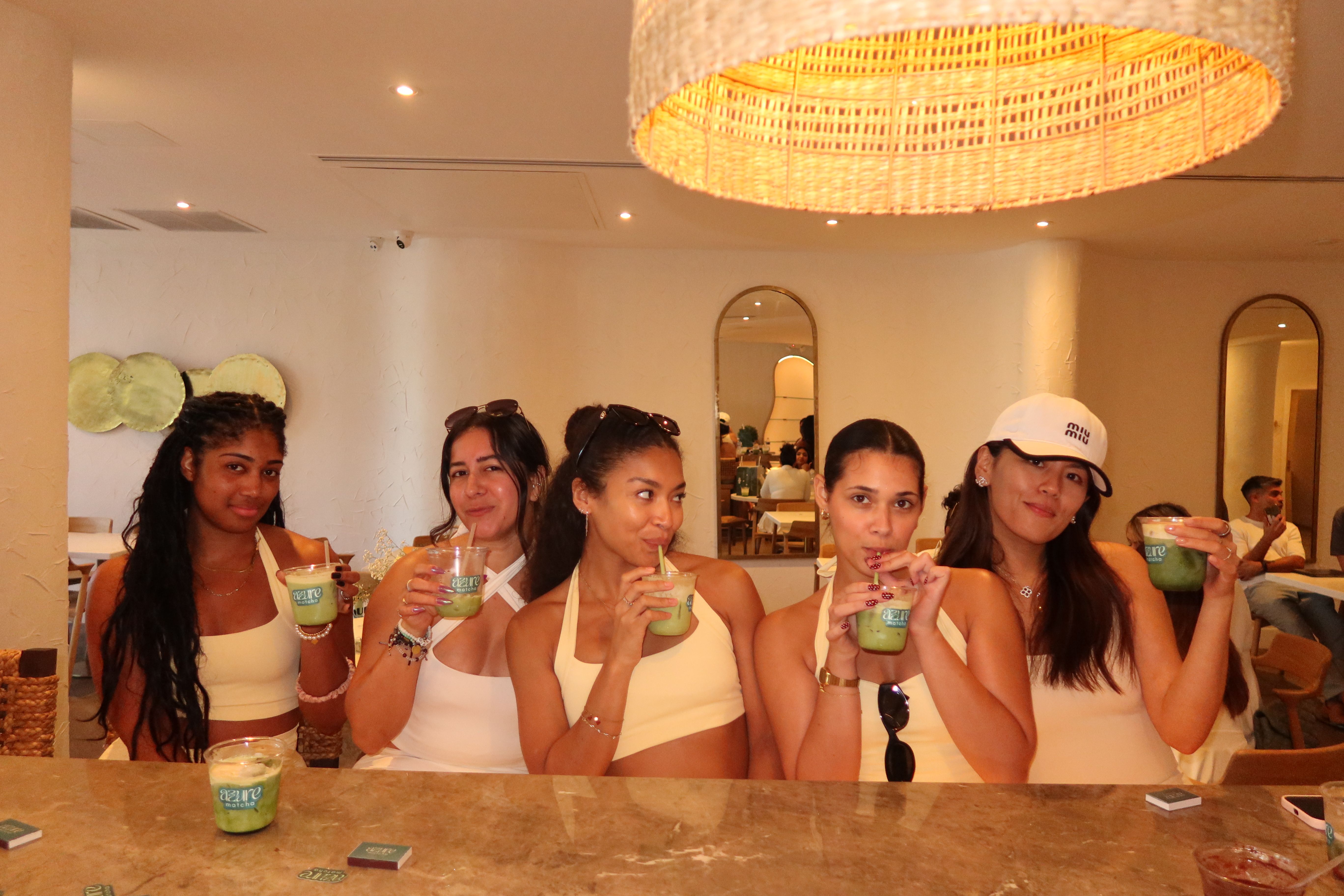
Matcha prepared by hand using Azure's blend and method, from sifting through whisking, asks you to slow down in a way that's hard to fake. That quality is what separates it from a catered platter or a novelty snack station. The ritual requires attention, not performance, and that distinction matters in a workplace context.
Before contacting Azure, ask your team what would make the gathering comfortable to attend. Can people join during paid work time? Would they prefer to take part or observe? Does anyone need a caffeine-free option? Bring those requests to the booking conversation so the hosts can confirm what they can provide.
For private team bookings, the Matcha Masterclass and Wellness Social page is the right starting point. Confirm with Azure that the format suits your group size, that ceremonial-grade matcha materials and instruction will be provided for your headcount, and that your preferred date is available. Inclusions and logistics should be agreed directly with Azure before any commitments are made.
For a private movement-and-matcha pairing, contact Azure to discuss studio formats in your city. Confirm the class, refreshments, and accessible participation options with the hosts before booking. If your team wants to learn Azure's cold-whisking method after class, request a guided workshop separately; instruction should not be assumed to be part of a studio pop-up.
For a sound-and-matcha gathering inspired by Azure's full range of hosted experiences, focus on participant comfort: sound levels, seating, and an option to sit out.
Azure's sourcing network spans Uji, Kagoshima, and Shizuoka. Its flagship blend uses hand-picked first flush harvests and is stone-ground in Uji; ask which blend will be served at your event. To plan a private team gathering, visit the full range of hosted experiences page. Share your city, preferred date, group size, and preferred format: a masterclass, guided tasting, or wellness collaboration. Azure will confirm availability and inclusions for your group.
Final Thoughts on Wellness Activities for Employees That Go Beyond the Basics
The DJ will be forgotten by Friday. The run club will be three people by November. The coffee rave will become a story someone tells at a future onboarding, mostly for laughs. None of that is wellness. It's scheduling.
The programs that hold are the ones that become unremarkable: a stretch before the Monday sync, a matcha ritual before the quarterly all-hands, a one-word check-in at the top of a meeting that people stop noticing because it's just how things go now. That disappearing act is the goal. When a wellness habit stops feeling like a program and starts feeling like Tuesday, it's working.
Pick one thing. Run it for six weeks. See who comes back the second time without being reminded. That's your answer.