Ceremonial and Culinary Matcha Grades Explained (Sep 2026)
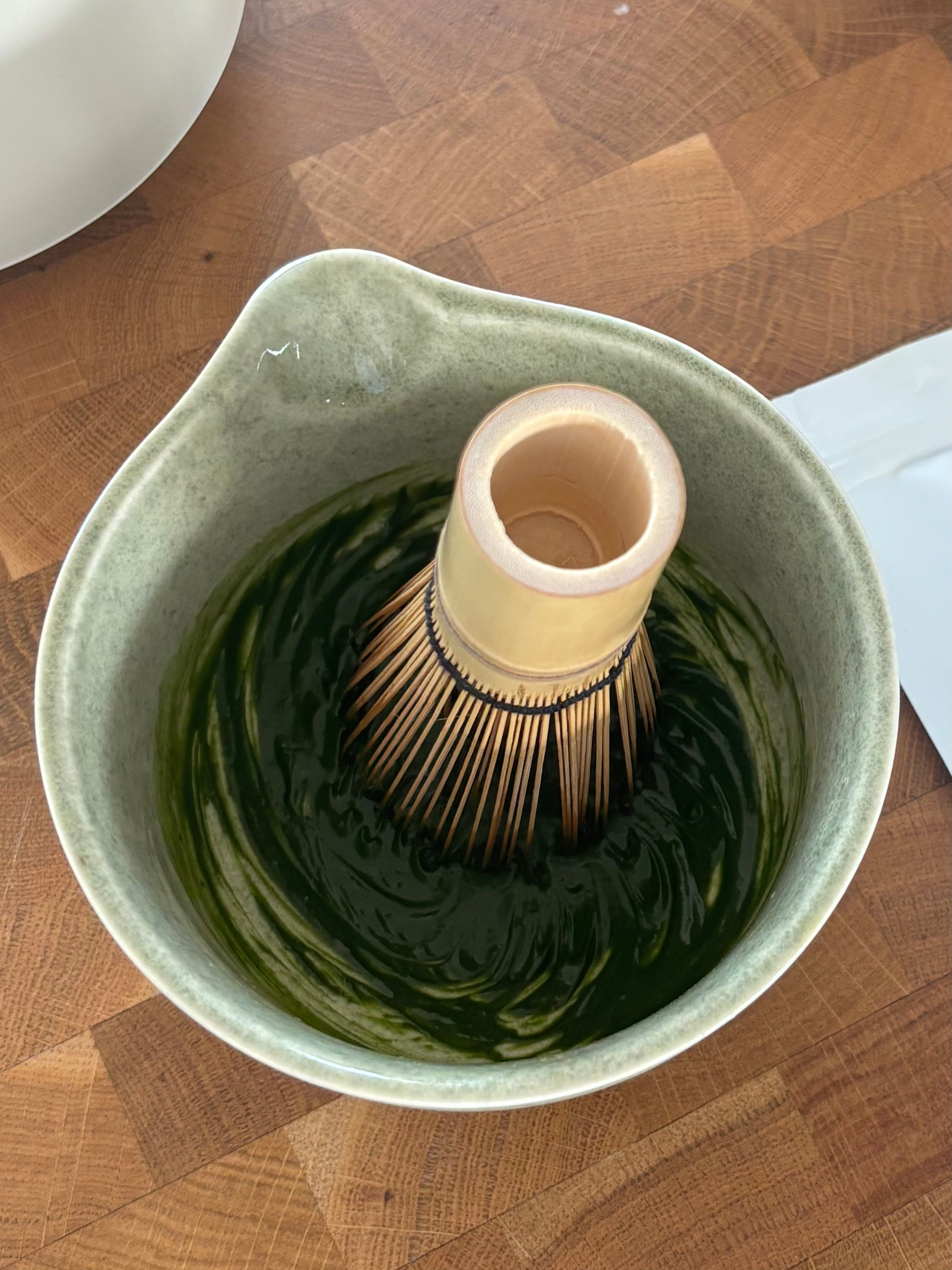
Matcha can be confusing to buy, especially when every tin seems to say "ceremonial" but your cup tells a different story. The grades are real in the sense that they track actual differences in leaf quality, harvest timing, and how the powder was processed. But without knowing what those differences look like in practice, it's hard to match the right grade to how you actually drink it.
TLDR:
- "Ceremonial grade" has no legal definition. Named cultivar, harvest order, and origin tell you more than the label.
- First-flush leaves produce sweeter, less astringent powder. Later harvests yield bolder flavor suited for baking and lattes.
- Check color, aroma, and texture before brewing. Vivid jade, a fresh grassy scent, and talc-fine powder signal quality.
- Culinary grade can carry higher raw catechin content than ceremonial. The healthier option is not always the most delicate one.
- Azure Matcha sources farm-direct from Uji, Kagoshima, and Shizuoka, using first-flush Okumidori and Saemidori, stone-ground in small batches.
What Are Matcha Tea Grades?
Matcha tea grades are the industry's way of sorting powder by quality, but no official governing body defines them. "Ceremonial" and "culinary" are descriptive labels, not standardized categories, which is why two brands can use the same word to describe products that taste completely different.
The labels do reflect something real. Grade distinctions track back to leaf quality, harvest timing, and processing. First-flush leaves, picked in early spring from shade-grown plants, produce a smoother, more refined powder. First harvest matcha carries a distinct character that later picks simply cannot replicate. Later harvests yield a stronger, more astringent result suited for blending over sipping straight.
Grades exist to match the matcha to the method. A powder whisked into plain water needs a different character than one folded into a batter or steamed milk.
How Matcha Is Made: From Shade to Stone Mill
Every matcha grade starts the same way: shading the Camellia sinensis plant for several weeks before harvest. Blocking sunlight triggers the plant to produce more chlorophyll and L-theanine, the amino acid responsible for matcha's smooth, savory character. Research published in peer-reviewed literature confirms that shade cultivation directly increases both compounds in the leaf, which is why properly shade-grown matcha looks vivid and tastes round, not sharp.
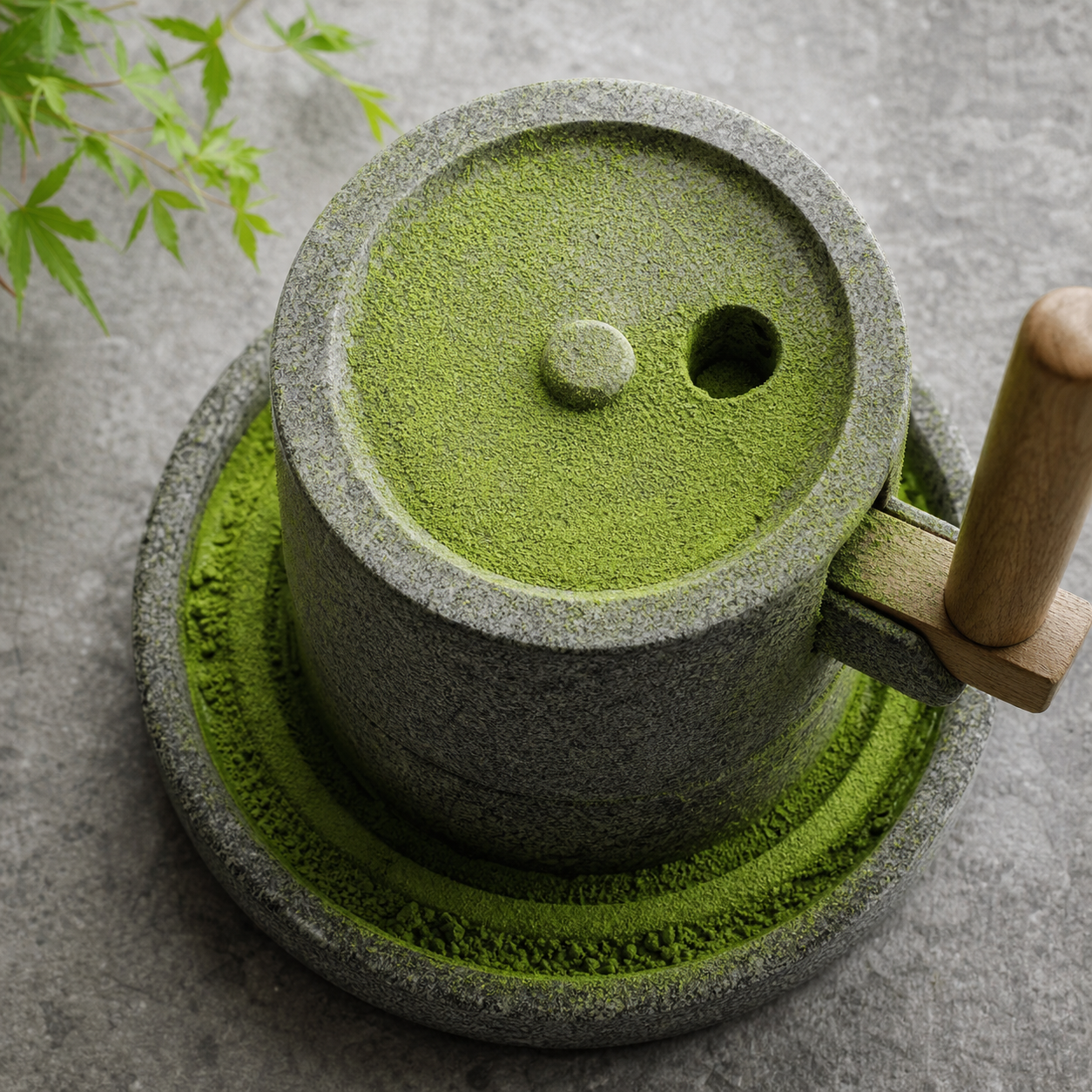
After harvest, the leaves are steamed, dried, and stripped of stems and veins to produce tencha, then stone-ground into the fine powder you whisk. Grade diverges before the stone mill: which leaves are selected, which harvest they come from, and how carefully the stems are removed.
Why Harvest Season Drives Grade Differences
In Japan, most tea harvests begin mid-April and run through the beginning of June. That first picking, the first flush, draws from leaves that spent the winter dormant and grew slowly under shade in early spring. The result is a leaf with concentrated L-theanine and chlorophyll, producing a powder that tastes sweeter and less astringent than anything from a later pick.
Second and third-flush leaves develop under more sunlight and grow faster, which changes the chemistry. Higher catechin levels mean more bitterness, and the color dulls from vivid jade to a yellower, murkier green. That profile holds up fine blended with milk or baked into a recipe, but it falls flat in a bowl of plain whisked water.
Ceremonial Grade Matcha: What It Actually Means
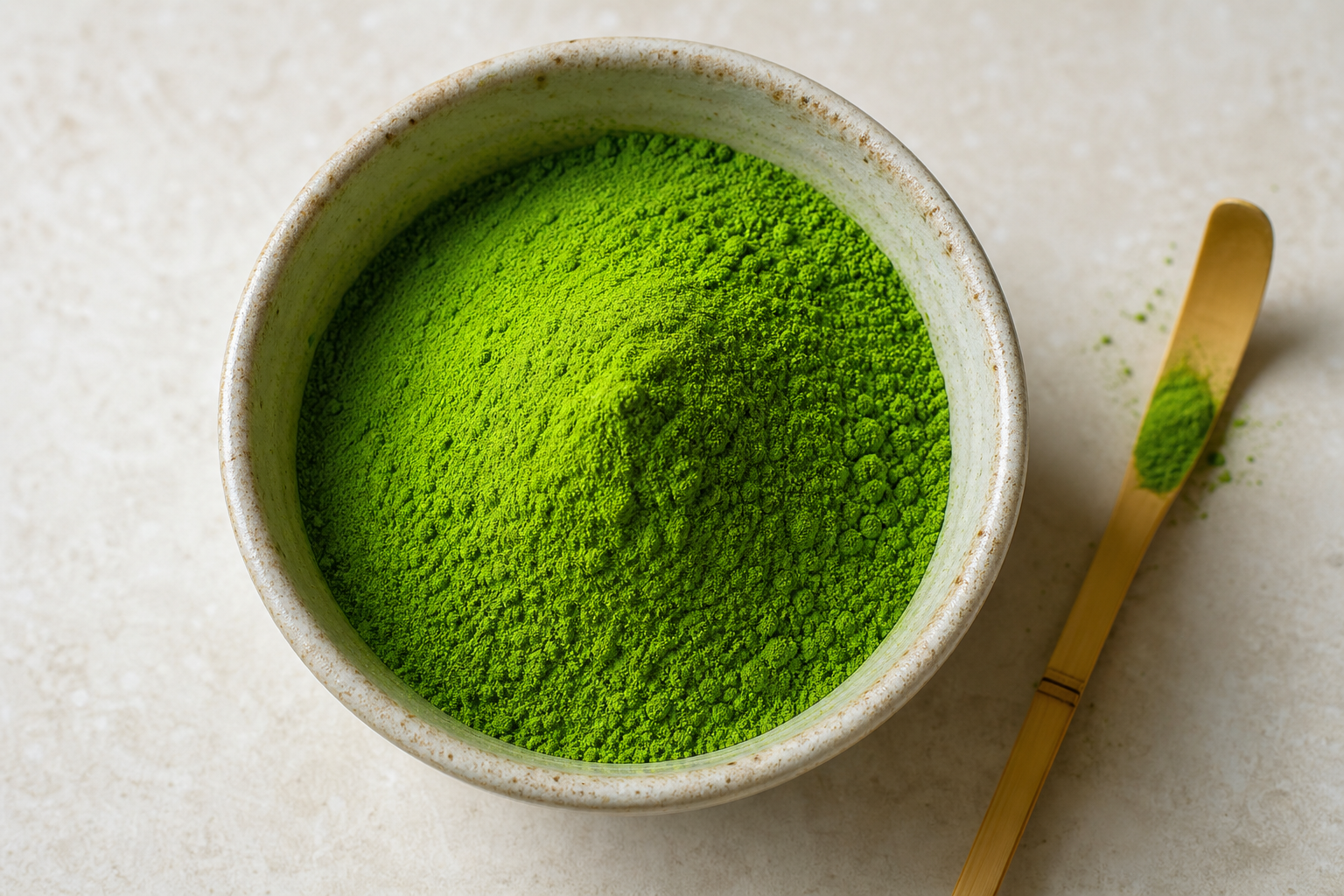
Ceremonial grade matcha, at its best, comes from first-flush leaves shade-grown for three to four weeks, stone-ground in small batches, with stems and veins carefully removed before milling. The resulting powder is vivid jade-green, fine as talc, and smooth and umami-forward: never sharp or grassy.
The label itself means nothing legally. No regulatory body defines or enforces "ceremonial grade," which is why it appears on tins ranging from genuinely exceptional to thoroughly ordinary. What actually signals quality is the specifics: the cultivar (Okumidori and Saemidori produce exceptionally smooth, rounded cups), the harvest (first-flush only), the region, and how the powder was processed. Quality ceremonial-grade matcha is consistently described as "smooth, full-bodied, delicately grassy, and never bitter" when whisked with water alone.
That preparation is the point. Ceremonial-grade powder is intended for a bowl of plain water, no milk, no sweetener. The three minutes that make the cup matter as much as the grade itself. When the leaf quality is there, nothing needs hiding.
Culinary Grade Matcha: Uses, Flavor, and When to Choose It
Culinary grade matcha comes from leaves harvested in the second or third flush, after first-flush picking is complete. More sun exposure during those later harvests raises catechin levels and moves the flavor profile toward something sharper, more bitter, and less refined than first-flush powder. The grind is also typically coarser, contributing to a slightly grainier texture.
That profile is a feature in the right context. A matcha brownie or latte needs a powder with enough intensity to cut through butter, sugar, or milk without disappearing. Azure matcha recipes show how culinary grade performs in each of these contexts. Culinary grade holds its presence where a delicate first-flush leaf would not.
Common applications where culinary matcha performs well:
- Baking: cakes, cookies, mochi, and bread where a bold flavor can stand on its own
- Smoothies and blended drinks that pair matcha with other strong ingredients
- Milk-forward lattes, where the matcha strength anchors the flavor against dairy or oat milk (see the Azure Classic for a reference preparation)
- Savory cooking: noodles, sauces, and marinades that benefit from an earthy, grassy note
One detail worth knowing: because later-harvest leaves receive more sun, culinary grade can carry higher raw catechin content than ceremonial grade. In terms of raw catechin content, ceremonial grade is not automatically the higher-antioxidant choice.
The Range Between Ceremonial and Culinary
Between ceremonial and culinary sits a middle tier that many brands label "premium," "latte grade," or "daily grade." These names are unregulated, but they typically point to something real: first-flush leaves that are slightly more forward in flavor than the gentlest ceremonial powder, processed to a standard higher than bulk culinary matcha.
Latte-grade matcha typically comes from standard first-harvest leaves that produce a stronger, slightly bitter cup when whisked with water alone, but pair well with milk or a milk substitute. When matcha shares a cup with oat milk or steamed dairy, a delicate ceremonial powder can disappear entirely. A latte-grade powder holds its ground.
If you drink matcha primarily in milk-based preparations, a mid-tier first-flush powder often makes more practical sense than spending up for ceremonial grade.
Color, Aroma, and Texture as Grade Indicators
Before you open a tin, three things tell you where the matcha lands: color, smell, and how it feels between your fingers.
- Color: higher-grade first-flush powder is a vivid jade green, almost electric. Lower-grade or later-harvest matcha goes olive, dull, or yellowish, reflecting less chlorophyll and more sun exposure during growth.
- Aroma: good matcha smells fresh, grassy, and lightly sweet. Culinary-grade powder tends toward flat, hay-like, or faintly sour. If you open a tin and smell nothing distinct, that tells you something.
- Texture: ceremonial-grade matcha is stone-ground fine enough to feel like talc. Rub a pinch between your fingers and it should dissolve without grit. Coarser grinds clump, resist the whisk, and leave a rough mouthfeel.
None of these require equipment. A good tin announces itself before you ever add water.
How Cultivar and Region Shape Matcha Grade Quality
Cultivar and region are the two signals that actually tell you what's in the tin. Grade labels describe intended use; cultivar and origin describe the leaf itself.
Japan has hundreds of registered Camellia sinensis cultivars, but only a handful appear in quality matcha. Okumidori and Saemidori produce cups that are distinctly smooth, with rounded sweetness and low bitterness. Gokou is richer and more full-bodied, with deeper umami. Yabukita, the most widely planted cultivar in Japan, yields a reliably clean, grassy flavor, though it lacks the complexity of the others. A cultivar named on the tin means the producer knows exactly what they grew and chose it deliberately.
Region matters for the same reasons. Uji, in Kyoto Prefecture, is Japan's most storied matcha origin. Its clay-rich soil, misty climate, and centuries of cultivation knowledge produce leaves with concentrated flavor and vivid color. Kagoshima and Shizuoka grow at larger scale and can yield excellent matcha, particularly from first-flush harvests, though the terroir differs. A tin listing only "Japan" as origin tells you very little.
A ceremonial-grade label from an unnamed region and unnamed cultivar is a weaker signal than a tin listing first-flush Okumidori from Uji. The specifics are the grade.
How to Buy Matcha by Grade: Matching Grade to Use
Matching grade to use comes down to a few principles that hold across any label. A few principles help when reading labels across any grade.
For whisked matcha, the label specifics matter most: look for first-flush harvest, a named cultivar like Okumidori or Saemidori, a named region, and stone-ground processing. For lattes, a mid-tier first-flush powder often serves better than spending up for the most delicate ceremonial option. For baking, bulk culinary matcha is the practical choice.
One rule holds across all grades: if the tin lists no harvest order, no cultivar, and no specific origin, the grade label alone tells you very little.
- Whisked with water only — Grade to Choose: Ceremonial; What to Look For: First-flush, named cultivar, Uji or Kyoto origin, stone-ground
- Milk-based lattes — Grade to Choose: Latte or premium; What to Look For: First-flush, slightly more full-flavored, holds up against dairy
- Baking and cooking — Grade to Choose: Culinary; What to Look For: Second or third-flush, strong flavor, coarser grind is fine
- Smoothies and blends — Grade to Choose: Culinary or latte; What to Look For: Bold enough to cut through fruit, protein, or milk
The Matcha Market in 2026
The global matcha market has grown steadily in recent years, and as the category scales, so does the noise. More brands entering the market means more grade labels, more unverified claims, and more tins using "ceremonial" as a marketing word instead of a quality signal. Knowing how to read those labels matters more now than it did five years ago.
Azure Matcha's Approach to Sourcing and Grade
Farm-direct sourcing from Uji, Kagoshima, and Shizuoka means no distributors between us and the leaf. Every decision traces back to cultivar, harvest timing, processing method, and origin, all on record.
Our Azure Premium Blend uses Okumidori and Saemidori, shade-grown for four weeks, hand-picked at first flush, and stone-ground in Uji in small batches. The flavor profile reflects those choices: pistachio, almond, mellow umami, and sweet cream caramel. The Azure Premium Blend 30g tin is a practical starting point for tasting that profile. That character comes from first-flush leaves grown slowly under shade, not from additives or blending shortcuts.
We back the ceremonial-grade label with specifics, not the word alone.
Final Thoughts on How Matcha Tea Grades Actually Work
Grade labels are marketing until the specifics make them real. Knowing what to look for, harvest order, cultivar, and origin, puts you in control of what ends up in your cup. That knowledge travels with you to every tin you pick up.