Azure Matcha: Brand, Blend, Method (September 2026)
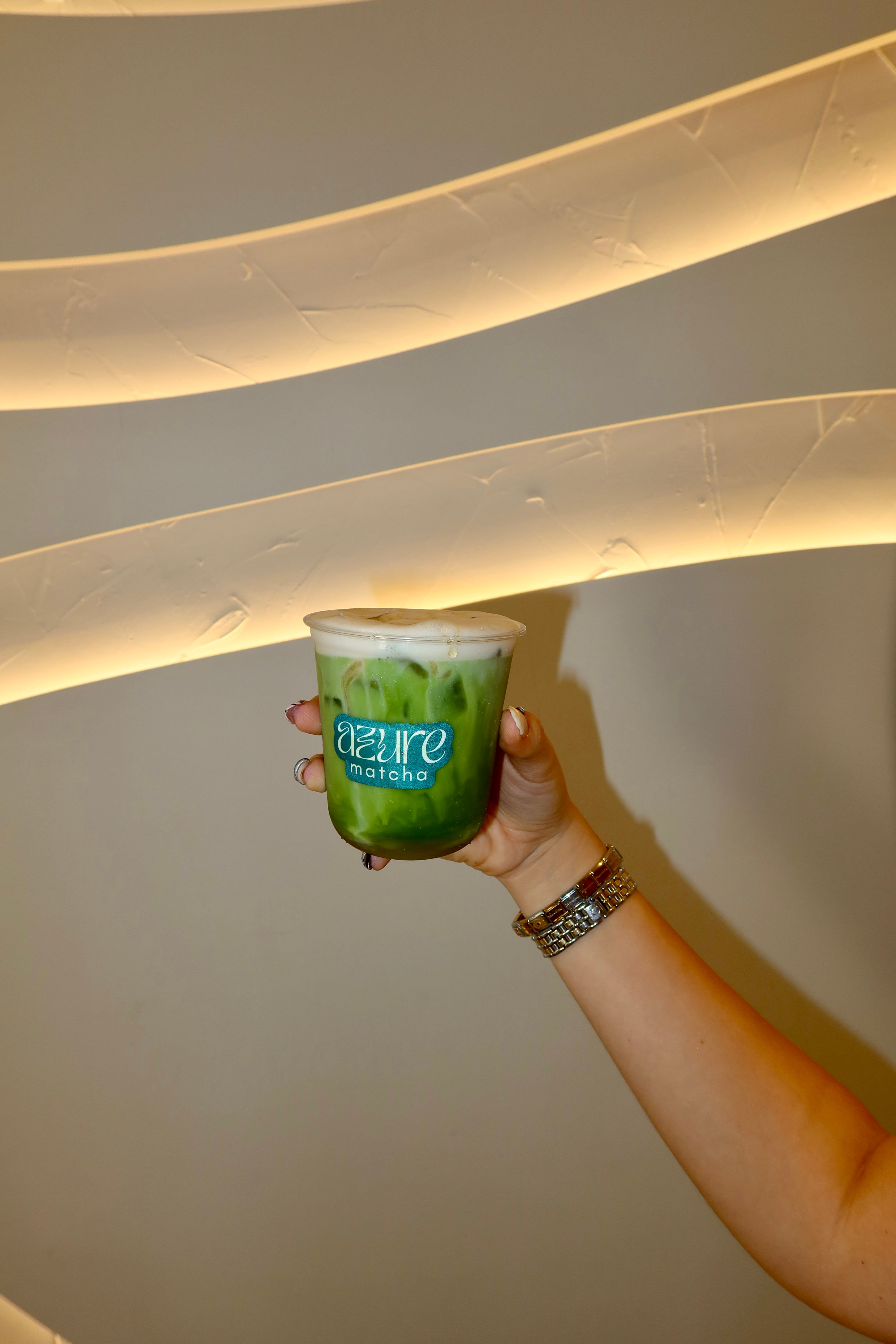
Cold water, two cultivars, one specific sequence of steps. The way matcha is prepared shapes what you taste as much as where the leaf was grown. If your bowls have felt inconsistent or flat, the fix is usually somewhere in those details, and it's simpler than most guides make it sound.
TLDR:
- Matcha suspends the whole leaf in water, delivering stronger flavor than steeped tea.
- "Ceremonial grade" has no legal definition; cultivar, region, and harvest timing are what matter.
- Cold whisking with room-temperature water extracts L-theanine while keeping bitterness low.
- Sift, paste, then whisk in a W or M motion: skip one step and the others cannot compensate.
- Azure Matcha sources Okumidori and Saemidori cultivars farm-direct from Uji, Kagoshima, and Shizuoka.
What Matcha Is
Matcha is a finely ground powder made from shade-grown leaves of the Camellia sinensis plant. The shading process, typically three to four weeks before harvest, restricts sunlight and pushes the plant to produce more chlorophyll and L-theanine. What comes off the stone mill is a vivid green powder with a depth of flavor that a standard green tea bag never reaches.
The key difference from steeped tea is that you consume the entire leaf. With loose-leaf or bagged green tea, you steep and discard the leaves, extracting only a fraction of what the plant contains. With matcha, the ground leaf is fully suspended in water, so every sip carries the whole thing.
That completeness is partly why matcha delivers a stronger flavor and a steadier energy curve than regular green tea, and why preparation matters so much. The powder has nowhere to hide.
Matcha has always carried a dual identity: beverage and ritual. In Japan, the tea ceremony built an entire philosophy around how you prepare and receive a bowl of matcha. The act of making it is as deliberate as drinking it.
Ceremonial Grade vs. Culinary Grade
"Ceremonial grade" carries no legal definition. Any brand can print it on a tin without meeting a single enforceable standard. The label alone tells you nothing.
What actually matters is the specifics. Ceremonial-grade matcha typically comes from the first-flush harvest, leaves picked earliest in the season when L-theanine content is highest and bitterness is lowest. The shading period runs longer, usually three to four weeks, and stone-grinding happens in small batches to preserve the leaf's character. The result is a brighter color, a smoother flavor, and almost no astringency.
Culinary grade comes from later harvests with less shading and more sun exposure, producing more bitterness and a yellower hue that disappears in baked goods but shows plainly in a plain bowl.
- Harvest timing — Ceremonial Grade: First-flush (earliest of the season); Culinary Grade: Later harvests
- Shading period — Ceremonial Grade: 3 to 4 weeks; Culinary Grade: Less shading, more sun exposure
- L-theanine content — Ceremonial Grade: Highest; Culinary Grade: Lower
- Bitterness — Ceremonial Grade: Low to none; Culinary Grade: More pronounced
- Color — Ceremonial Grade: Bright, vivid green; Culinary Grade: Yellower hue
- Best use — Ceremonial Grade: Plain bowl, cold whisked; Culinary Grade: Baked goods, blended drinks
- Stone-grinding — Ceremonial Grade: Small batches; Culinary Grade: Standard processing
When we describe our matcha, we skip the grade label and go straight to the details: cultivar, region, harvest timing, and processing method.
Where Matcha Comes From: Japan's Growing Regions
Japan grows matcha across several distinct regions, and where a leaf is grown shapes what ends up in the cup as much as how it's processed.
Uji, just outside Kyoto, is the historic benchmark. Centuries of cultivation, mineral-rich soil, and a cool misty climate produce leaves with deep umami and a sweetness that other regions work hard to match. Most ceremonial-grade matcha that serious drinkers reference traces back to Uji farmers and their methods.
Kagoshima sits at the southern tip of Kyushu, with volcanic soil and a warmer growing season. The terroir there tends toward a brighter, cleaner cup with vivid green color and a smooth finish. Shizuoka is Japan's highest-volume tea region, with flavor profiles that range widely depending on elevation and shade practices.
Demand across all three regions is rising. Japan exported 5,092 tons of matcha in 2024, driven by global adoption across beverages, desserts, and wellness products. The global matcha market was valued at $4.17B in 2025, projected $4.61B in 2026, growing at a CAGR of 10.6%. We source across all three regions directly, because no single region covers every cup we want to make.
Cultivar and How It Shapes Flavor
Cultivar refers to the specific variety of Camellia sinensis plant used to grow the leaf. Like grape varieties in wine, different tea cultivars produce meaningfully different results in the cup, even when grown in the same region under the same conditions.
Most matcha on the market offers no cultivar disclosure at all. Leaves come from wherever the price is right, blended to hit a cost point over a flavor one.
The Okumidori and Saemidori Blend
Our flagship blend uses two cultivars working in balance.
- Okumidori brings body: a full, rounded umami with real weight behind it.
- Saemidori lightens that with a clean, spring-forward sweetness that keeps the cup from feeling heavy.
Together, they produce the pistachio, almond, and sweet cream caramel notes in our tasting profile. Neither cultivar alone gets there.
Knowing the cultivar also lets you hold a quality claim to something real. "Ceremonial grade" can be printed on anything. Okumidori, stone-ground in Uji, first harvest matcha, cannot.
What Farm-Direct Sourcing Actually Means
Most matcha moves through brokers or distributors before it reaches a brand. Each step between farmer and buyer adds margin, reduces traceability, and creates room for quality to slip without anyone being accountable for it.
Working directly with farmers changes what's possible. We know which farm, which harvest, which processing run. When a batch is exceptional, we can go back for more. When something changes, we catch it early because the relationship is direct.
It also opens access to small-batch, single-harvest lots that never enter the commodity market. Those lots don't appear in a distributor's catalog.
The supply pressures behind this are real. Japan's tea-farming workforce is aging, and cultivated land has been shrinking for years. Direct relationships offer some insulation from those pressures, but they require genuine investment in the farmers themselves, and in the product they produce.
The Cold Whisking Method
Cold whisking uses room temperature water instead of the near-boiling water most preparation guides default to. The result is a cup that reads smoother and sweeter, because cold water extracts L-theanine while avoiding the bitterness that heat-driven extraction introduces. As Senbird Tea notes, cold water extracts L-theanine, reducing bitterness that comes from heat-driven catechin extraction.
Cold whisking also removes the risk of scorching first-flush leaf. Even water well under boiling can draw out an astringent edge that the leaf, at that harvest, shouldn't have.
Where the method requires more discipline is the paste stage. Sifting first, then whisking with just a small splash of water into a smooth, glossy paste before adding the rest, is what prevents clumping. The W or M wrist motion during the final whisk matters too. Circular motion just moves liquid; the W or M pattern builds the dense, fine foam that holds together over ice or into cold milk. Those details are broken down further in the three minutes that make the cup.
The Sift, Paste, Whisk Sequence
Three steps, done in order, produce a consistent bowl. Skip one and the others cannot compensate.
Sift
Push your matcha through a fine-mesh sifter into a wide bowl before adding any water. Matcha powder clumps on contact with moisture, and those dense pockets don't dissolve during whisking. They move around and end up in the foam or at the bottom of the bowl. Twenty seconds of sifting prevents that entirely.
Paste
Add a small splash of room temperature water, just enough to dampen the powder. Whisk it tight and fast until you have a smooth, glossy paste. This fully hydrates the powder before dilution and is the right moment to add any flavoring. Compote, essence, or sweetener whisked into the paste disperses evenly. Added after full dilution, it tends to settle unevenly.
Whisk
Add the remaining water slowly, continuing in a W or M motion at the wrist. Circular motion moves liquid without trapping air. The W or M pattern builds the fine, dense foam that holds its structure. Stop when the surface looks slightly matte and the bubbles are small and tight.
What an Omakase Matcha Experience Is
Omakase means "I leave it to you." In Japanese dining, it describes a meal where the chef decides every course based on what's best that day. Applied to matcha, the same logic holds: each serve is chosen for you, in sequence, by someone who understands the sourcing behind every bowl.
The Azure beachfront omakase is not a café visit. You order nothing. The experience moves through a progression of preparations, each built around a specific blend, paired with housemade essences or compotes, and contextualized along the way. By the end of a sitting, you've tasted how cultivar, region, and preparation method all shift what's in the cup, without needing prior knowledge of any of those terms.
It's also distinct from a traditional Japanese tea ceremony, which is a codified ritual with ceremonial meaning and specific choreography. Azure's omakase format draws on that spirit of intentionality, but it's designed to be accessible and conversational, with the tasting itself doing the educating.
Azure has been running omakase-style matcha experiences since August 2025, starting at Moxy Hotel in Miami and expanding through pop-ups and residencies in New York and Los Angeles, including the matcha masterclass and wellness social.
Azure Matcha: Where the Brand, the Blend, and the Method Come Together
Azure Matcha was founded in April 2025 by Miya Lapin and Sameer Ghai, two friends from Laguna Beach, California, who built the brand around a simple belief: matcha is a ritual worth slowing down for. The name comes from a street and lookout point on the coast they grew up on, and that grounding shows up in everything from how we source the leaf to how we ask you to prepare it.
The flagship Azure Premium Blend is shade-grown for four weeks, hand-picked in the first flush, and stone-ground in small batches in Uji. It uses Okumidori and Saemidori cultivars, producing a flavor profile of pistachio, almond, mellow umami, and sweet cream caramel. We source farm-direct across Uji, Kagoshima, and Shizuoka, with no distributors between us and the farmers.
The product line includes 30g tins and 80g bags, with pre-order opening in October 2026 and full launch in November 2026 via our website and TikTok Shop. Alongside retail, we run omakase-style matcha tastings, masterclasses, pop-ups, and private events across Miami, New York, and Los Angeles, including an ongoing matcha residency.
The Azure Method is cold whisking with room-temperature water, treating preparation as part of the experience, not a step before it. It preserves the leaf's actual character without masking it, and it treats preparation as part of the experience.
Final Thoughts on What Azure Matcha Is
Good matcha asks something of you: a few minutes, a sifter, and a little attention. What you get back is a cup that actually reflects the leaf. That's the whole point, and it's a ritual worth building.