Building a Matcha and Pilates Morning (September 2026)

Matcha and Pilates keep showing up together in morning routines, and the pairing actually works. Both ask you to slow down, pay attention, and stay with what you're doing. Once you see how their effects line up, building them into one routine feels less like doing two things and more like doing one thing twice.
TLDR:
- Matcha: approximately 4g pre-session (3g for a lighter post-session bowl)
- Liquid: room temperature filtered water, whisked
- Timing: 30 to 45 minutes before your Pilates session
- Prep time: under 2 minutes
What Pilates Actually Does to Your Body
Pilates asks you to move with precision, not simply effort. Every rep is deliberate, every breath coordinated with movement. That continuous attention trains focus the same way it trains muscle. The work lives in slow eccentric holds, spinal articulation that asks each vertebra to move in sequence, and the constant low-level engagement of the transverse abdominis and pelvic floor, muscles most people have never consciously felt. Brute effort gets you nowhere here; controlled breath does.
Why Morning Is the Right Time for Both
Morning is when the body is primed for intentional movement. Core temperature is rising, your nervous system is shifting into an alert state, and morning Pilates builds focus and consistency that carries through the day. Matcha fits that same window: taking a few minutes to sift, paste, and whisk is a cue to slow down before you start, not rush toward the mat. The act of whisking becomes a threshold, a quiet signal that sleep-mode is over and directed attention has begun. Repeated in the same window each morning, the two habits stop feeling separate and start reinforcing each other, so that over days the combined ritual sets a tone the rest of the morning tends to follow.
What Matcha Brings to a Pre-Pilates State
Matcha contains two compounds that work in tandem: caffeine, which stimulates alertness by blocking adenosine receptors, and L-theanine, an amino acid that moderates that stimulation. The result is calm, steady focus without the spike or crash that interferes with breath control and precise movement.
That combination matters for Pilates in particular. A 2026 study published in Frontiers in Nutrition found that combined caffeine and L-theanine supplementation improved both physical and cognitive performance in athletes compared to placebo. Pilates asks for deep, continuous attention and controlled exertion, so a steady energy state serves the practice far better than a stimulant jolt would.
The Mind-Body Overlap Between Matcha and Pilates
Both matcha preparation and Pilates share the same underlying demand: you have to actually be present. Whisking a bowl of matcha requires the same quality of attention that a Pilates instructor keeps asking you to return to mid-session. You can't rush either and get what you came for.
There's also a shared cultural thread. Matcha has its roots in Zen Buddhist practice, where preparation was a form of meditation, not a step before the point. Pilates, developed by Joseph Pilates in the early 20th century, was similarly built around disciplined daily movement as a practice, not a performance.
"It connects mind and body, builds strength and stability, and promotes a sense of calm and focus, whether you practice it first thing in the morning or as a way to close out your day." -- Pilates of San Diego
The ritual of cold-whisking matcha, sifting the powder, building the paste, pulling the whisk through it in deliberate strokes, works as a pre-session anchor. By the time you reach the mat, your nervous system has already shifted from reactive to focused.
Matcha as a Post-Pilates Recovery Companion
After a Pilates session, controlled cumulative effort still creates oxidative stress, and that's where matcha's antioxidant profile becomes relevant.
Matcha is a concentrated source of catechins, particularly EGCG, because you're consuming the whole ground leaf instead of steeping and discarding it. Research published in Physiology and Behavior found that green tea extract supplementation reduced exercise-induced oxidative stress markers, including malondialdehyde. Matcha's amino acid profile, including L-theanine, also supports the parasympathetic shift a cooldown period aims for, helping the body move from exertion back to rest more smoothly. Unlike a protein shake or sugary recovery drink, a whisked bowl keeps the post-session moment quiet and intentional, matching the tone Pilates sets.
A post-session bowl fits the rhythm of a cooldown: whisk and drink the Azure Classic as breath settles and the session closes.
How to Time Your Matcha Around a Pilates Session
- 30 to 45 min before — Recommendation: Drink your matcha. Caffeine and L-theanine peak roughly here.
- Right before — Recommendation: Skip it. You want the compounds active, not still absorbing.
- Post-session — Recommendation: A second bowl works as a cooldown ritual, not a stimulant top-up.
If you train on an empty stomach, matcha is generally well-tolerated. A small snack alongside it, a few nuts or a piece of fruit, can help if you're sensitive to caffeine without food. Matcha is mildly diuretic, so drink a glass of water before your pre-session bowl.
For post-session use, the goal changes. You're winding down, not gearing up. A lighter preparation, around 3g whisked into room temperature filtered water from the Azure 30g tin, gives you the antioxidant benefit without re-stimulating a nervous system that has already done its work for the morning. More powder gives a stronger, creamier result if you prefer more body in the cup.
Building the Ritual: From Whisk to Reformer
The room is quiet, your nervous system still settling. Don't reach for your phone.
Sift your matcha into a wide bowl. Add a small splash of room-temperature water and whisk it into a paste, tight and glossy, before adding the rest. By the time you pull the whisk through in slow, deliberate strokes, you've already made a decision about the kind of morning this will be.
Drink it somewhere still. Then roll out the mat, or head to the studio. Your body arrives focused, not dragged there.
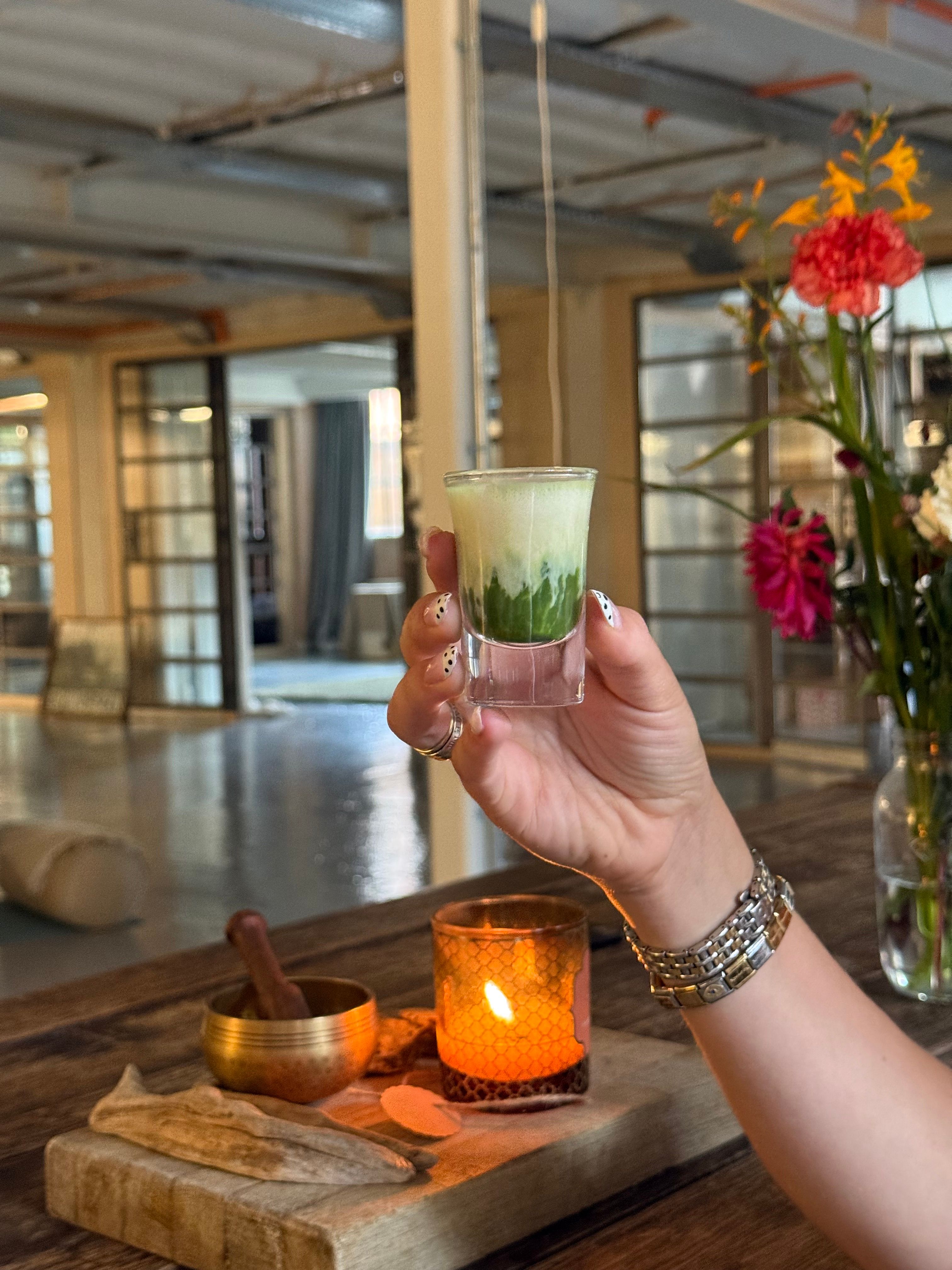
The sequence matters less than the consistency. Some mornings the matcha comes first and Pilates follows an hour later. Other mornings they're closer together. What holds the routine together is the intention behind each part, not the clock.
How Azure Matcha Fits This Routine
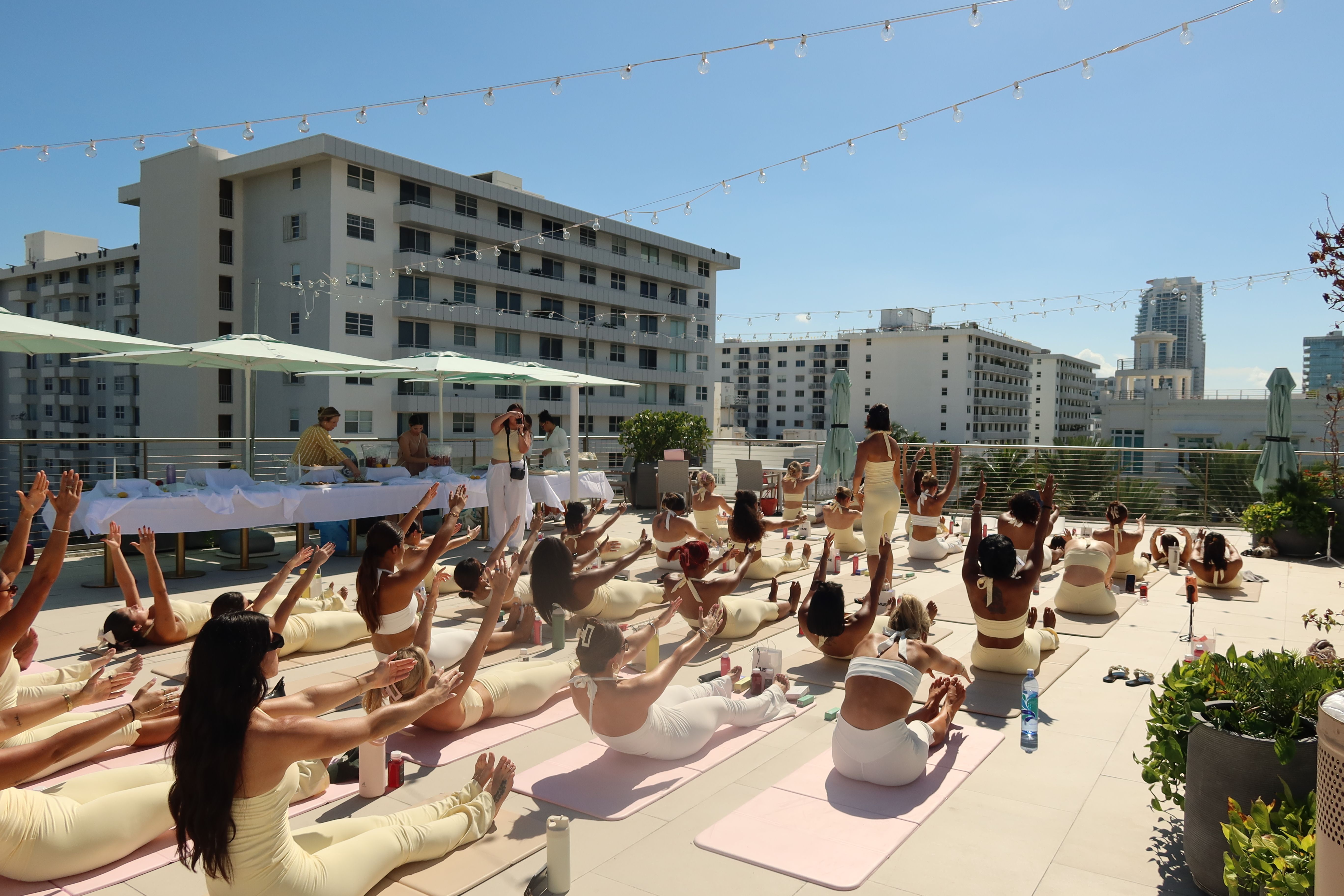
Our Azure Premium Blend is built from Okumidori and Saemidori cultivars, shade-grown for four weeks and hand-picked in the first flush, then stone-ground in small batches in Uji. No harsh edge, no bitterness to work through before a session. Our housemade essences and compotes are additive-free and refined-sugar-free, made with clean plant-based milks. The pairing with movement runs through our live programming too: our matcha masterclass and wellness socials regularly run alongside Pilates and yoga studios. Past activations include Inner Landing Yoga and Breath Work paired with a mini matcha omakase, an outdoor morning Pilates class built around a full matcha omakase tasting, and our recurring Libre Pilates x Azure Matcha sessions in Miami. Each one pairs movement with whisked matcha served post-class, so the ritual carries from the mat to the bowl.
Final Thoughts on the Matcha and Pilates Ritual
Most routines add a step. This one trades a scattered start for a directed one: two minutes at the bowl, then movement. The ritual shapes the morning before the session begins.
Give it one week. Each morning, whisk the Azure Classic 30 to 45 minutes before your session and move through your practice as normal. Same time each day is all the consistency this needs to show what it can do.