Event Matcha Cart Hiring Guide: What to Look For (Sept 2026)
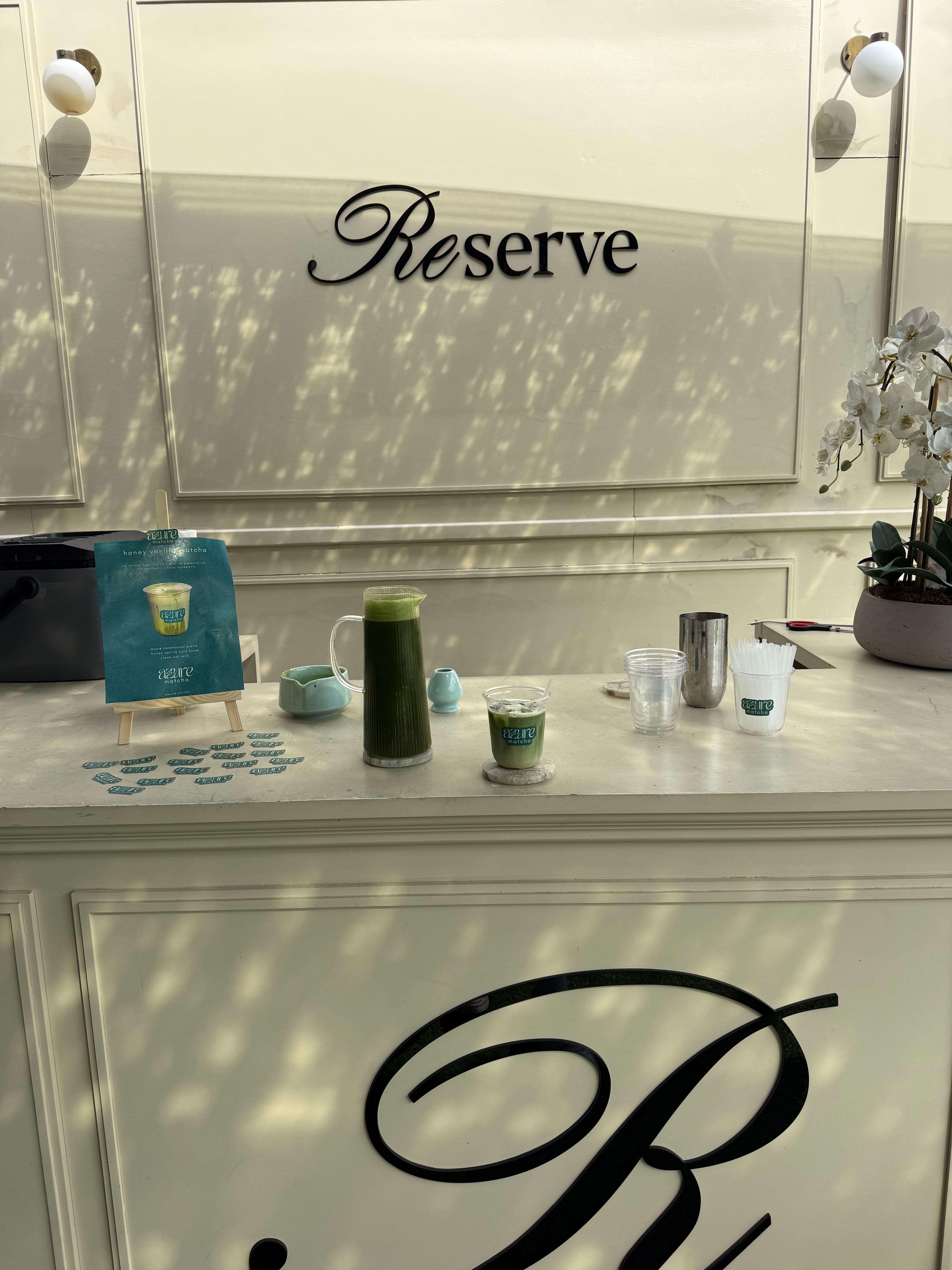
Planning an event with a matcha cart involved means making a handful of decisions that aren't obvious until something goes wrong. What grade of matcha is actually being used? Can the team keep up when guests pile in at once? What does the venue need to approve? This guide walks through what to look for so you're not finding out the hard way.
TLDR:
- "Ceremonial grade" has no legal definition, so ask for the cultivar, region, and harvest before booking.
- Request a tasting before you commit: flat or vegetal matcha in milk is what your guests will taste.
- A 3-to-5-item menu prepared well outperforms a long list that strains the cart team.
- Guest count and service duration move quotes more than anything; confirm capped vs. unlimited servings upfront.
- Azure Matcha runs cart events, pop-ups, and omakase-style tastings across Los Angeles, New York City, and Miami.
What a Matcha Cart for Events Includes
A matcha cart for events is not a single thing. The format depends on the scope of the event, the venue, and how you want guests to experience the service.
The most common setup is a staffed mobile cart, where one or two baristas prepare drinks to order from a self-contained station. Guests approach, choose from a set menu, and watch the drink get whisked in front of them. A venue-based matcha bar works similarly but sits in a fixed spot inside the space, sometimes with a longer counter and more elaborate display. An omakase-style tasting is a different experience: guests move through a guided sequence of small servings, each prepared and explained as part of a structured course.
Any proposal you receive should spell out:
- Equipment included (cart, tables, vessels, whisks, refrigeration)
- Number of staff and their roles
- Ingredient sourcing, including matcha grade, milks, and any flavored additions
- Service window and whether setup and breakdown time are included
- Guest capacity per hour
- Cleanup responsibilities
If any of these are missing, ask before signing. Vague proposals tend to produce day-of surprises.
Matcha Quality Beyond the Ceremonial-Grade Label
"Ceremonial grade" appears on a lot of catering menus, but the term has no legal definition. Any supplier can use it.
What actually matters is whether the supplier can tell you where the matcha was grown, by whom, and how it was processed. Ask for the cultivar, the growing region, and the harvest. Stone-ground, shade-grown, first-flush leaves from Uji or Kagoshima will behave very differently in the cup than a later-harvest powder from an unnamed source, regardless of what either label says.
Before booking, request a tasting. Good matcha has a clean aroma, forward umami, and a sweetness that builds and does not cut off. Bitterness should be present but not sharp. If it tastes flat or vegetal with milk, that will be what your guests experience all evening. A supplier confident in their sourcing will welcome this.
Preparation That Balances Craft and Guest Flow
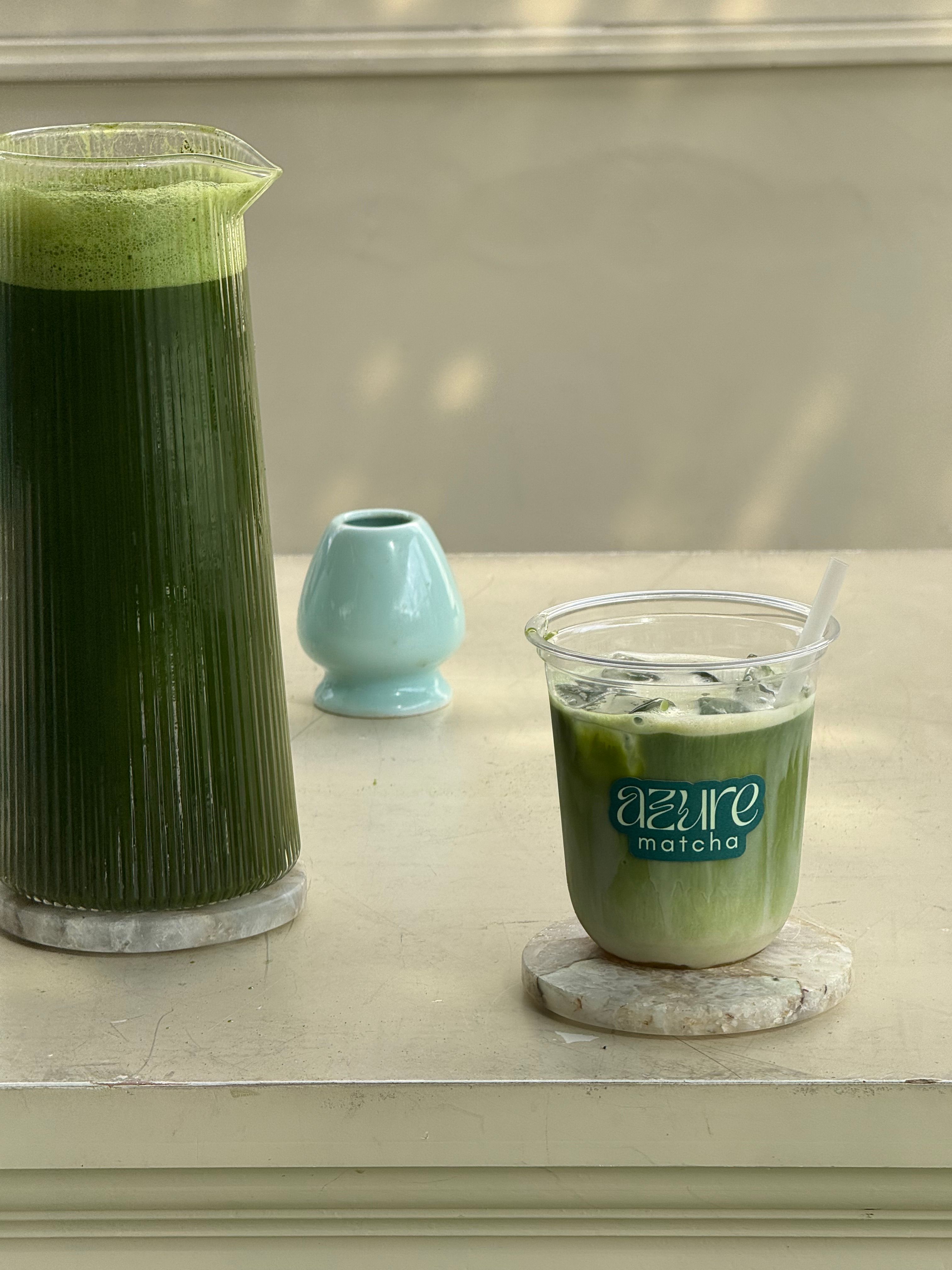
Good matcha preparation at an event has a visible quality to it. Guests should watch the powder get sifted, whisked into a paste with a small amount of water, then brought up to volume with controlled pours. Consistent color, no visible clumps, and a drink that looks the same at the 10th pour as the first are all signs of a well-run cart.
Some carts prepare matcha cold-whisked, building from paste instead of adding powder directly to liquid. Individual preparation takes more time per drink, which works well at a slow cocktail hour but can bottleneck fast when 40 guests arrive at once.
Before booking, ask the supplier to walk you through how they handle volume. How many staff are on the cart, and what is each person's role? A capable team will know their numbers and show it in practice, not recite it.
A Matcha Bar Menu Built Around Flavor and Choice
A well-structured menu keeps service moving and gives guests real choices without overwhelming them.
Look for a cart that offers an unsweetened option, at least one milk-based drink, and one or two house specials built around flavored additions like essences or compotes. Short menus work best. Three to five options prepared well beats a long list that strains the team.
When tasting for balance, the matcha should remain perceptible even in sweetened or fruit-forward drinks. If a flavored addition drowns it entirely, you are paying for sugar water with a garnish.
A few things worth confirming before signing off on a menu:
- Whether milk options are available on request or fixed per drink
- Whether at least one fully unsweetened preparation is offered
- What goes into each flavored addition and whether ingredients can be disclosed
- How the team handles cross-contact for guests with dietary concerns
If a team is vague about what goes into their housemade additions, that is worth noting before you commit.
Matcha Carts for Weddings, Brand Activations, and Corporate Events
The right format depends heavily on the type of event you are planning.
- Wedding — Best Service Format: Staffed mobile cart; Pace: Slow to moderate; Key Consideration: Time the cart around welcome hour or cocktail hour; avoid competing with other catering
- Brand Activation — Best Service Format: Staffed mobile cart; Pace: Fast; Key Consideration: Presentation and guest flow matter as much as the drink; guests should approach, get served, and move on
- Corporate Event — Best Service Format: High-volume staffed cart; Pace: Fast, concentrated; Key Consideration: Demand concentrates into short breaks; staff for volume without sacrificing consistency
- Wellness Gathering — Best Service Format: Omakase-style tasting; Pace: Deliberate; Key Consideration: Guided sequence of small servings; confirm whether lower-dose or non-caffeinated options are available
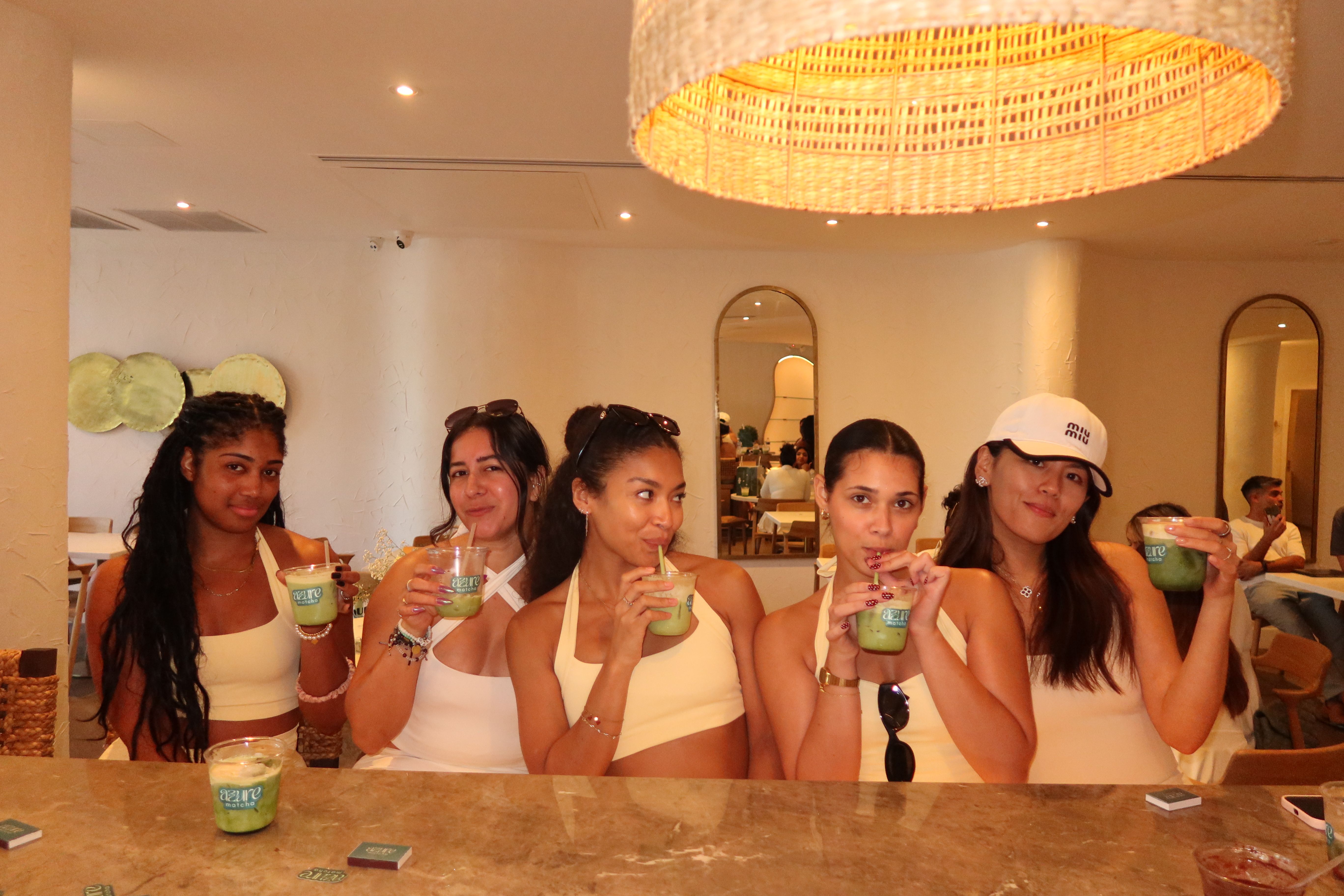
At weddings, a matcha cart works best during moments when guests need somewhere to settle: a welcome gathering before the ceremony, a cocktail hour, or a morning brunch. The pace is naturally slower, which suits individual preparation well. Coordinate the cart's service window around other catering so there is no competition for guests' attention at the same moment.
Brand activations require a different approach. The cart becomes part of the visual story, so presentation and guest flow matter as much as the drink itself. Guests should be able to approach, get served, and move on without creating a line that blocks the rest of the space.
Corporate events tend to concentrate all demand into short breaks between sessions. A supplier who has done this before will staff for it and know how to move drinks quickly without sacrificing consistency.
Wellness gatherings suit a slower, more deliberate tasting format. A guided sequence of small servings, like a matcha masterclass and wellness social, can work here in a way it would not at a high-volume reception. Confirm with the supplier whether they offer this format, and whether the menu includes non-caffeinated or lower-dose options for guests who want to participate without a full serving.
Presentation and Customization That Support Service
A cart that photographs well but confuses guests about where to stand or order is a service problem dressed up as an aesthetic one.
The practical baseline: a tidy prep area, vessels that match the drink format, and a menu guests can read from a few feet away. Branded cups, custom signage, and coordinated linens are worth asking about directly. Some suppliers include them; many do not.
A few things to confirm before assuming they are included:
- Branded or custom cups and sleeves
- Cart signage or printed menus
- Tablecloths, florals, or styling beyond the equipment itself
- A layout with a clear order point separate from pickup
That last one matters more than it sounds. When ordering and pickup happen at the same spot, guests hover while drinks are being made, slowing service and creating an awkward cluster. A well-planned cart separates these, even informally.
Ask the supplier how they handle installation at your specific venue. A setup that works in an open courtyard may not translate to a narrow reception hall.
Venue Setup, Food Safety, and Outdoor Service
Logistics tend to get treated as an afterthought, but they determine whether a cart can actually run at your venue.
Start with the physical basics: cart dimensions, doorway clearance, and whether there is a load-in path that works for wheeled equipment. An outdoor courtyard with a ground-level entrance is straightforward. A ballroom on the third floor with no freight elevator is a different conversation. Confirm all of this before the booking is finalized.
Power and water access matter too. Most carts need at least one outlet for refrigeration, and water access is required for handwashing at the station. Perishable ingredients like fresh milk and housemade compotes require cold storage. The FDA Food Code sets cold-holding at 41°F (5°C) or below for foods requiring temperature control. Ask your supplier how they maintain that during service, and confirm what your local health jurisdiction requires, since state and county rules vary.
For outdoor events, ask directly about weather contingencies. A cart in direct sun in July needs a plan for ingredient temperature that a shaded indoor setup does not. Ask how they handle wind, heat, and unexpected rain, and whether they carry backup refrigeration.
Waste handling and cleanup responsibilities should be spelled out in the contract.
Matcha Catering in Los Angeles, New York, and Miami
Matcha catering searches are local by nature. Someone looking for matcha bar catering in Los Angeles is asking a different set of questions than someone planning an event in Miami or New York, even if the setup looks nearly identical.
Confirm upfront whether a supplier services your venue's zip code and whether travel fees apply beyond a certain radius. Some suppliers list a city but serve a wide metro area spanning multiple counties; others cover only a small radius around a home base and charge travel fees beyond that.
Permitting varies by location. In Los Angeles County, vendors serving food at community events are required to submit a Temporary Food Facility application, with late fees for applications submitted fewer than 14 calendar days out. That requirement does not automatically apply to every private wedding or corporate gathering. Ask your supplier which permit category your event falls under and who handles it. LA rules do not transfer to New York or Miami.
Venue access varies by city too. Dense urban venues often have strict delivery windows, freight elevator requirements, or loading dock rules that affect cart setup. Confirm with your venue and supplier together.
What Shapes a Matcha Bar Catering Quote
Guest count and service duration move a quote more than anything else. A two-hour cocktail hour for 80 guests and a four-hour wedding reception for 200 are priced very differently, even if the cart setup looks similar.
Menu complexity adds cost beyond those basics. A three-item menu of whisked matcha drinks is simpler to staff and supply than a six-item menu with housemade additions, multiple milk options, and garnishes.
Other line items worth asking about before you sign:
- Whether the quote covers capped servings or unlimited service across the window
- Travel and parking fees, particularly for dense urban venues
- Overtime charges if the event runs long
- Setup and breakdown time, and whether staff hours during those windows are billed separately
The value in a catering quote is the quality of what goes into each drink, how it is prepared, and how the team manages service under real event conditions. A low quote built around undisclosed matcha sourcing and minimal staff will show up in the cup and in the line.
Details to Confirm Before Booking
A short checklist prevents the gaps that tend to surface on the day itself. Before committing to a supplier, confirm:
- Event date, venue location, and load-in path
- Expected guest count and arrival pattern (steady flow vs. concentrated rush)
- Menu selections and any dietary or allergen needs
- Service window, including setup and breakdown time
- Presentation requirements: cups, signage, styling, table setup
Everything agreed on verbally should appear in the contract. Pay close attention to what is included in the quote versus what costs extra, the payment schedule, and cancellation terms on both sides. Permit and insurance responsibilities should be assigned clearly in writing.
If the supplier offers tastings, take one. It is the fastest way to assess both the matcha and the team behind it. For outdoor service, ask how they handle heat, wind, or rain, and confirm that plan is in the contract.
Planning an Azure Matcha Event in LA, NYC, or Miami
Azure Matcha runs private events, pop-ups, masterclasses, and omakase-style tastings across Los Angeles, New York City, and Miami. Every event is built around our Azure Premium Blend: Okumidori and Saemidori cultivars, shade-grown for four weeks, hand-picked in the first flush, and stone-ground in small batches in Uji, Japan. Drinks are prepared cold-whisked, using housemade essences and compotes with no additives, refined sugar, or dyes.
If you are planning an event in any of our three core markets, reach out through azurematcha.com with your event brief. Cart availability, branding options, capacity, and package pricing should be confirmed directly before booking.
Final Thoughts on Matcha Bar Catering and What to Look For
Most of what separates a great matcha cart experience from a forgettable one gets decided before the event date. Ask the sourcing questions, confirm the contract details, and take the tasting. That groundwork is what your guests actually taste.