Matcha in Miami: Craft, Sourcing, and Scene (Sept 2026)
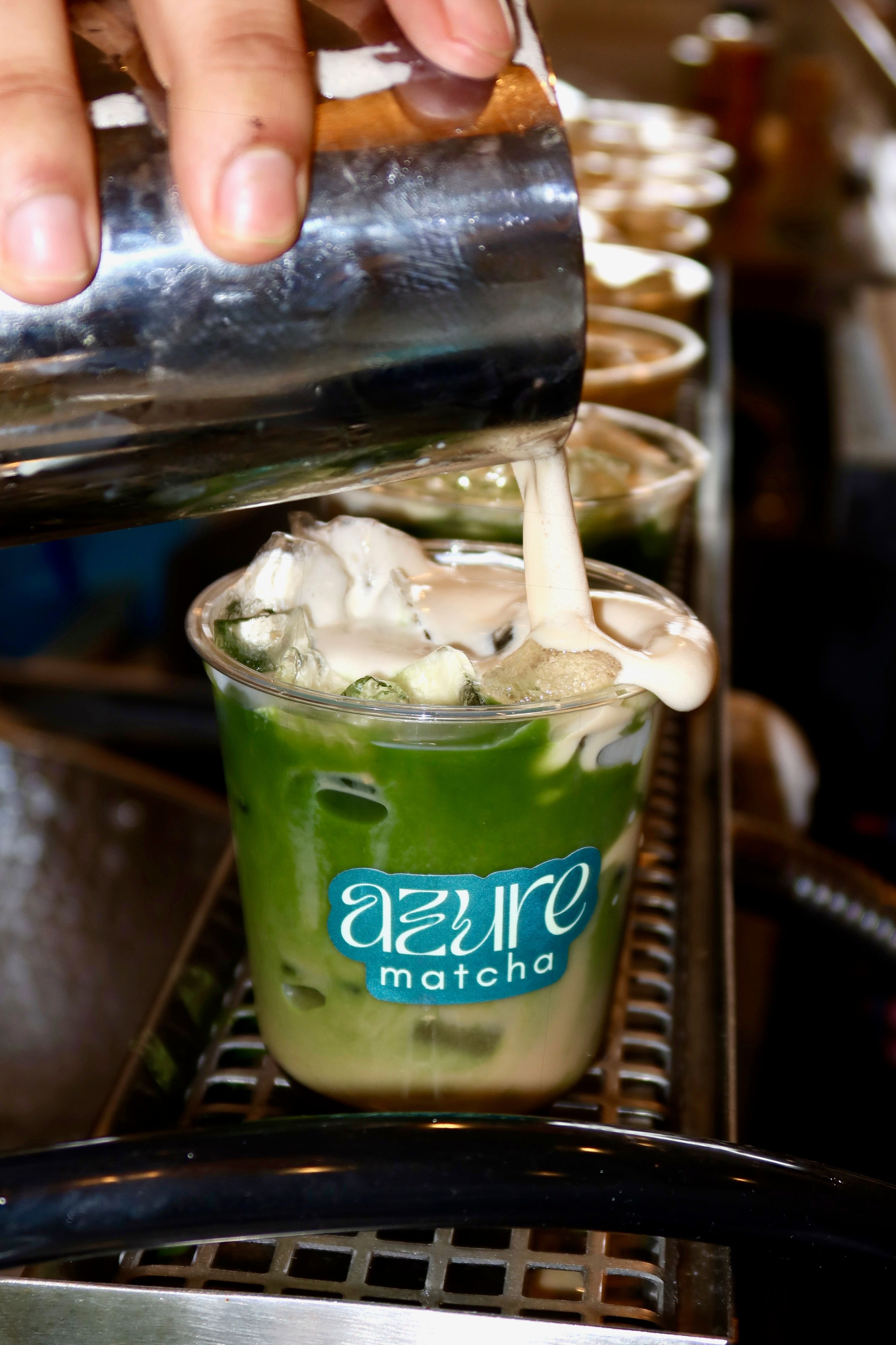
Cold-whisked, smooth, and surprisingly grounding on a hot morning, matcha has found a real home in Miami. But the range in quality is wide, and most people don't know what separates a cup worth drinking from one that's just green and expensive. Here's what the city's matcha scene actually looks like right now.
TLDR:
- Miami's matcha scene spans five distinct neighborhoods, from ceremonial in the Design District to experimental in Wynwood.
- "Ceremonial grade" has no legal definition; shade time, harvest flush, cultivar, and region are what actually matter.
- Sift first, build a paste with room-temperature water, then whisk in a W or M motion for a smooth cup at home.
- L-theanine paired with caffeine produces a steadier energy curve, which is why matcha fits Miami's wellness circuit.
- Azure Matcha sources farm-direct from Uji, Kagoshima, and Shizuoka, using first-flush Okumidori and Saemidori, stone-ground in small batches.
Why Matcha Has Taken Hold in Miami
Miami runs on outdoor living. The heat, the coast, the culture around movement and food create a city already primed for matcha. Cold-served, bright green, and grounding without a crash, matcha fits into a Miami morning the way little else does.
The broader numbers tell part of the story. The global matcha market valued at $5.1 billion and is projected to reach USD 8.9 billion by 2033, with North America identified as the fastest-growing market. At the consumer level, US at-home matcha sales have grown sharply, reflecting genuine adoption, not a short-lived trend.
Miami accelerates all of this. Its wellness community, built around pilates studios, yoga, and clean eating, pulls matcha in naturally, a pattern traced further in Laguna to Miami. Cultural diversity means adventurous palates, already fluent in Japanese, Latin, and Caribbean food traditions, open to something with real depth and history behind it. Year-round heat makes a cold-whisked bowl a practical daily ritual, not a novelty.
The History Behind the Cup
Matcha's story starts well before it landed in South Florida. Zen Buddhist monks brought matcha to Japan, where matcha became central to temple life and, eventually, the formal tea ceremony. The samurai class adopted it for focus and endurance. Monks used it for stamina during long meditation sessions. The ritual was never incidental. It was the whole point.
The tea ceremony, or chado, formalized that intentionality into a practice built around preparation, presence, and respect for the craft. Every movement had a reason. The bowl, the whisk, the water temperature, the pace of it all carried meaning. What looks like a slow and unnecessary process from the outside is, from the inside, a deliberate choice to be somewhere fully.
That history shapes what serious matcha drinkers respond to today. When someone reaches for a properly whisked bowl over a pre-mixed bottle, they're participating in something with centuries behind it, even if they can't name it.
What Separates Good Matcha from Commodity Matcha
Most matcha sold in cafes and grocery stores is culinary-grade: later harvests, less shade time, industrial milling. The result is a coarser powder, more bitter, often muddier in color. Worth knowing if you're paying a real price for the opposite.
A few specifics actually matter:
- Shade time: quality matcha is covered for three to four weeks before harvest, which slows growth and raises L-theanine content, producing characteristic sweetness and depth
- Harvest flush: first-flush leaves, picked in early spring, are younger and more delicate than later cuts
- Milling: stone-ground in small batches preserves flavor; industrial milling generates heat that degrades it
- Cultivar: Okumidori, Saemidori, and Yabukita each carry distinct flavor profiles
- Region: Uji, Kagoshima, and Shizuoka are Japan's three key growing areas, each with different terroir (see first harvest matcha explained for more on why the harvest order matters)
"Ceremonial grade" has no legal definition and no regulatory body enforcing it. The label alone means nothing. What matters is knowing where the leaf came from, when it was picked, how long it was shaded, and how it was processed.
The Matcha Scene by Neighborhood
Miami's matcha scene varies by zip code, with each neighborhood bringing its own approach to the cup.
- Miami Design District — Where to Go: Maman, BIGFACE, Pura Vida; What to Expect: Whisked preparations with care; Maman's staff treat each cup with ceremonial-level attention
- Wynwood — Where to Go: Multiple cafes and pop-ups; What to Expect: Creative, fusion-forward drinks; matcha as a canvas for seasonal flavors
- Coconut Grove — Where to Go: Navi Coffee and Flowers, Baker and Barista; What to Expect: Relaxed and neighborhood-first; matcha alongside specialty coffee in a slower setting
- Little Haiti — Where to Go: Panther Coffee; What to Expect: Coffee-centric but matcha-aware; minimal frills, high sourcing standards
- Midtown Miami — Where to Go: Heal Cafe; What to Expect: Wellness-focused; matcha fits a menu built around clean ingredients
The Design District leans ceremonial. Wynwood leans experimental. Coconut Grove keeps it low-key. How any of those cups actually come together is covered in the three minutes that make the cup. Across all of them, matcha has moved past novelty into a standing menu fixture.
Pop-Ups and the Rise of Experiential Matcha in Miami
Pop-up culture and matcha are a natural fit, and Miami has become a proving ground for both. Low overhead, real foot traffic, and a city where people show up for experiences over purchases make it the right place to test something new.
The logic behind the format is straightforward. As the Miami Herald reported on the city's pop-up food scene, existing business owners using the model reported improved market visibility, increased sales, and stronger social media engagement. For a matcha brand, that calculus matters even more: a tasting table lets you show someone exactly how the cup should taste and feel, which no product listing can do on its own.
That's how Azure started in Miami. Before tins, before wholesale, before any of it, we were at pop-ups, whisking to order and letting the matcha speak for itself. The format let us build a real audience before building a retail line.
What a Matcha Omakase Experience Actually Is
Omakase, in its original Japanese context, means "I'll leave it to you." The guest hands trust to the presenter, and the presenter builds a progression, course by course, that the guest wouldn't have known to ask for. Applied to matcha, the format makes particular sense. There's genuine range in what a high-quality leaf can express, and most people never experience more than one or two preparations in a sitting.
How the Format Works at Azure
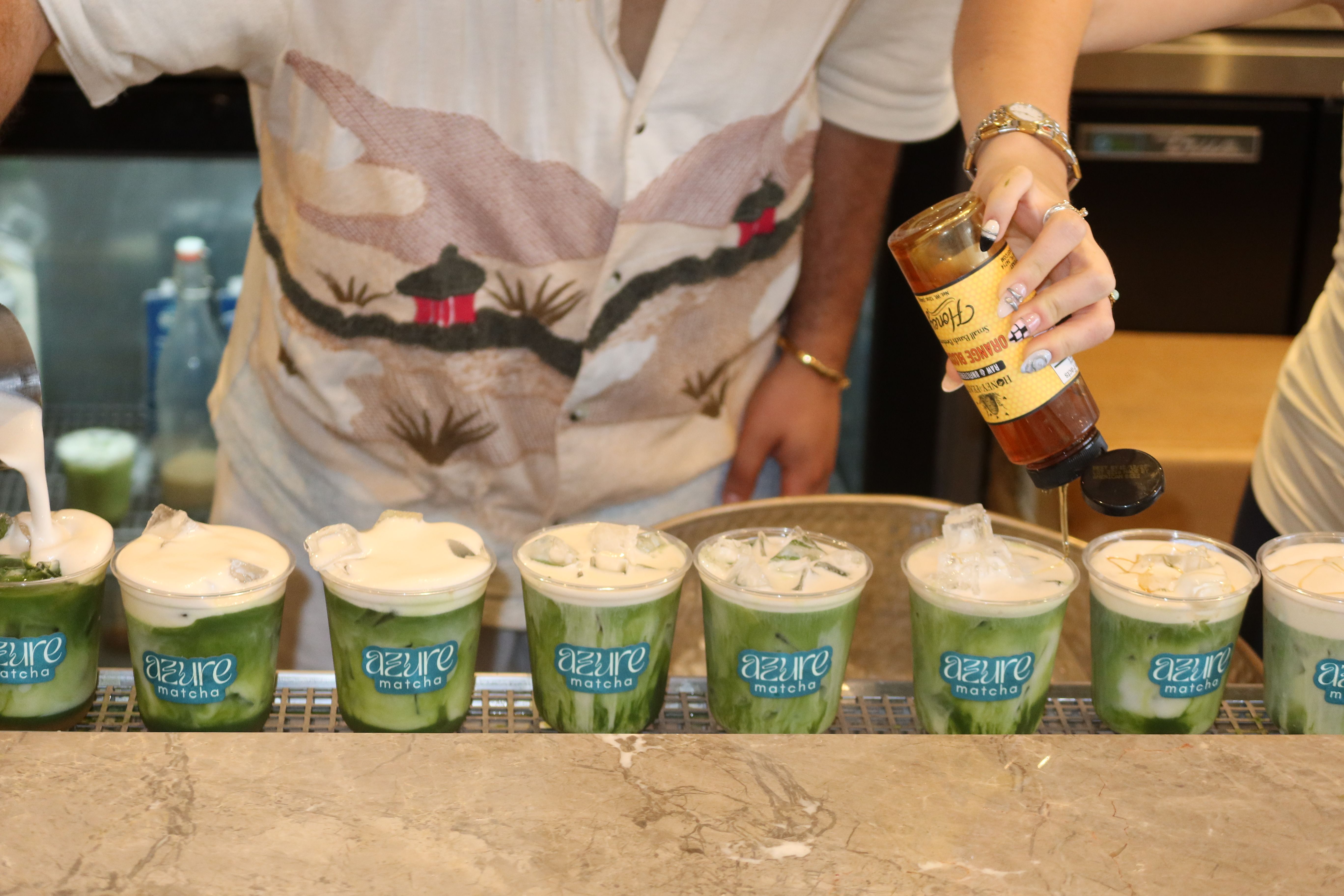
At Azure, a matcha omakase runs as a multi-course tasting, each course built around a different preparation. A session might move through a traditional cold-whisked bowl, a paired compote or housemade essence folded into the paste, a milk-forward pour, and a deeper concentrated serving that draws out the umami and grassy character of the leaf. The sequence is curated to build and contrast, moving through flavor without repeating it.
The format also suits matcha's ceremonial history. Tea ceremony was always a guided, intentional progression. Omakase borrows that same logic and brings it somewhere more approachable without losing the craft. The presenter walks through sourcing, preparation method, and what each flavor note is doing, so the experience teaches as much as it satisfies.
Azure has hosted omakase-style tastings in Miami Beach, including a session with Donna Trana in January 2026, as part of our ongoing Azure Beachfront Omakase series. Each session is small, intentional, and built around the same farm-direct matcha we source from Uji, Kagoshima, and Shizuoka.
Matcha and Miami's Wellness Community
Miami's wellness community didn't adopt matcha by accident. Pilates studios, yoga spaces, and movement-focused social circles have built real rituals around it, and the functional reason is worth knowing.
Matcha contains both caffeine and L-theanine. Many drinkers report a steadier energy curve than coffee, without the sharp spike. For someone heading into a pilates class or a long training session, that difference is meaningful.
The social layer has built up around that. Matcha now shows up at post-class socials, studio pop-ups, and matcha masterclass and wellness social events across Miami in a way that coffee rarely does. It photographs well, travels well as a cold-whisked cup, and fits the clean-ingredient values that drive these communities. Azure has been part of that circuit from early on, with recurring pop-ups at Azure x Libre Pilates and ongoing programming tied to wellness venues like SLS Lux Brickell's rooftop.
How to Prepare Matcha at Home the Right Way
Sift first. That single step separates a smooth cup from a lumpy one, and most people skip it. Push your matcha through a fine-mesh sifter into a wide bowl before adding any water. Thirty seconds of effort that fixes a problem no amount of whisking can correct later.
From there, the paste stage is everything. Add just enough room-temperature water to dampen the powder, then whisk tight and fast until the mixture looks smooth and glossy. This is where flavor distributes evenly. Skip it, and you get pockets of dry matcha releasing bitterness unevenly and flattening the whole profile. If you're adding a sweetener or compote, fold it in here before the paste thins out.
Once the paste is smooth, slowly add the rest of your water while whisking in a W or M motion. The wrist does the work. Circular strokes just move liquid around. The back-and-forth pulls air in and builds that pale, dense foam on the surface.
One thing worth noting: use room-temperature water, never hot. Even water well below boiling can pull an astringent edge from a first-flush leaf that shouldn't have one. Cold water keeps the character intact, rounder and sweeter, which is exactly what you want from a quality matcha.
Azure Matcha: Miami Roots, Farm-Direct Standards
Azure launched in April 2025, rooted in Laguna Beach, with Miami as the first city where we hosted pop-ups and omakase tastings. Before there were tins or a retail line, there were bowls whisked to order at events across the city.
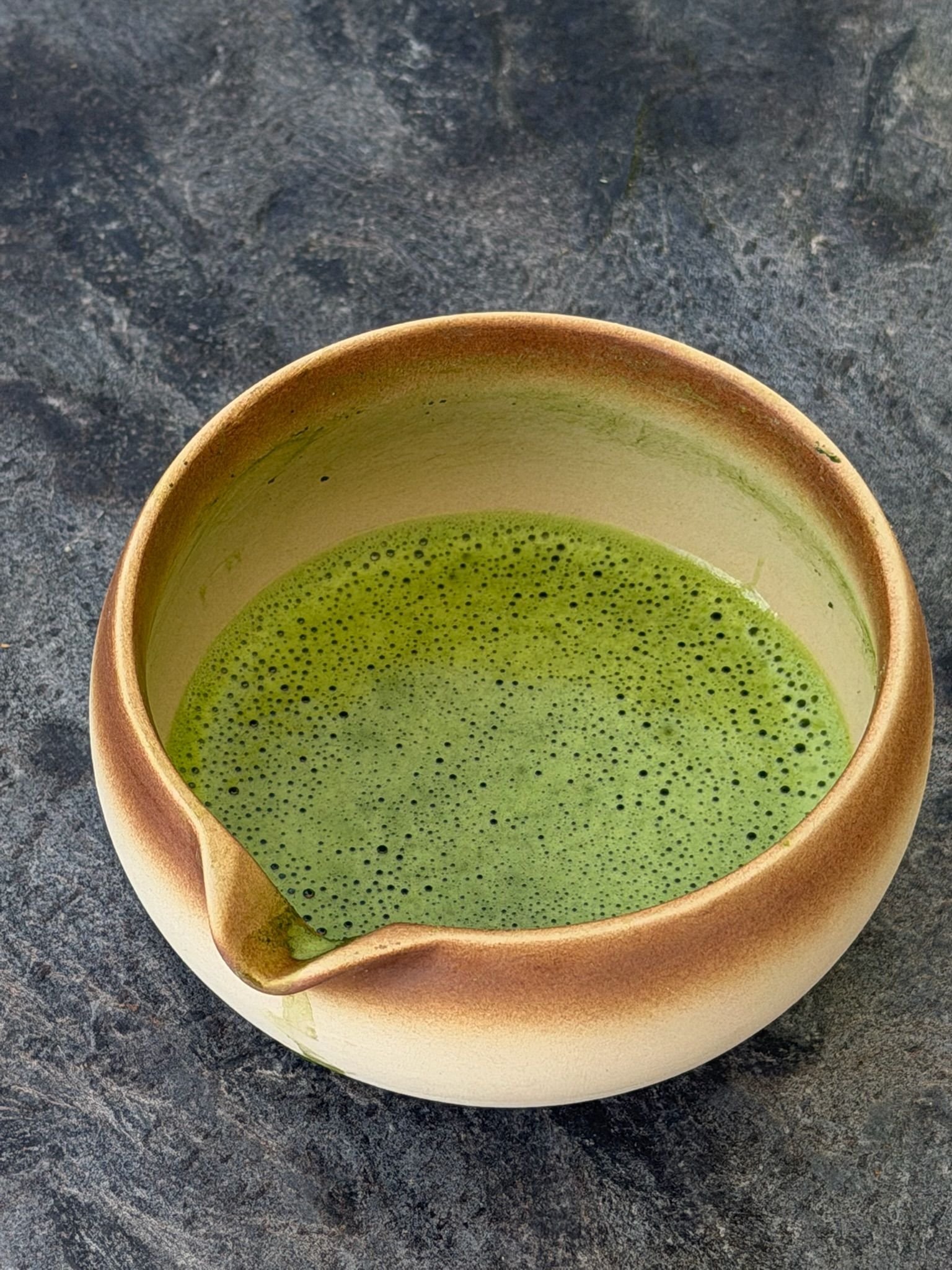
The sourcing behind those bowls has stayed consistent. We work directly with farmers across Uji, Kagoshima, and Shizuoka. No distributors between us and the leaf. Our Azure Premium Blend uses Okumidori and Saemidori cultivars, shade-grown for four weeks, hand-picked in the first flush, and stone-ground in small batches in Uji. Cold-whisking preserves what that process produces: creamy, smooth froth, delicate floral notes, soft balanced finish.
Final Thoughts on Matcha and Miami's Growing Tea Scene
The craft is here, the sourcing standards are here, and your options for experiencing matcha the right way in Miami keep growing. Worth finding your cup, one bowl at a time.