What Does Matcha Mean? Word, History, Ritual Sep 2026
Matcha is one of those words that feels familiar until you try to explain it. The Japanese characters 抹茶 translate directly to "ground tea," and that definition points to a specific leaf, a specific process, and a ritual refined for centuries. That is a lot more than any latte menu will tell you.
TLDR:
- Matcha (抹茶) means "ground tea": finely powdered green tea whisked directly into water.
- True matcha requires shade growth, tencha processing, and stone milling.
- "Ceremonial grade" has no legal definition. Ask for cultivar, harvest flush, and milling method instead.
Matcha Meaning in Japanese and English
The Japanese word matcha (抹茶) means "ground tea" or "powdered tea." The first character, 抹, refers to rubbing or grinding. The second, 茶, means tea. Together, they name exactly what the product is: tea leaves ground into a fine powder.
Pronounced "MAH-chah," the word refers to the powder itself and the drink made from it. Matcha is a tea, not a flavoring, a latte style, or a wellness philosophy: finely ground green tea, prepared by whisking the powder directly into water.
Matcha’s History From China to Japan
Whisked powdered tea did not begin in Japan. Long before matcha became central to Japanese culture, monks in China were already preparing a powdered tea called Mo Cha (末茶) during the Song dynasty. As documented at Jingshan Chan Temple near Hangzhou, this practice wove together ritual etiquette, meditation, and scholarly gathering into formal tea banquets held in Chan Buddhist monasteries.
Japanese monks traveling to China in the 12th and 13th centuries encountered this culture firsthand and brought the techniques home. Japan took the method and built something new around it: shade cultivation, stone-grinding, and eventually a codified tea ceremony. Uji, Kyoto's tea region, became central to that refinement. Powdered tea faded from Chinese culture over time, while Japan continued refining it for centuries into what we now call matcha.
How Tea Leaves Become Matcha
Matcha starts as a shaded tea plant. Around four weeks before harvest, farmers cover the plants to block direct sunlight. That shade pushes the leaves to produce more chlorophyll and L-theanine and matcha caffeine. The result is matcha's vivid color and smoother flavor compared to most steeped green teas.
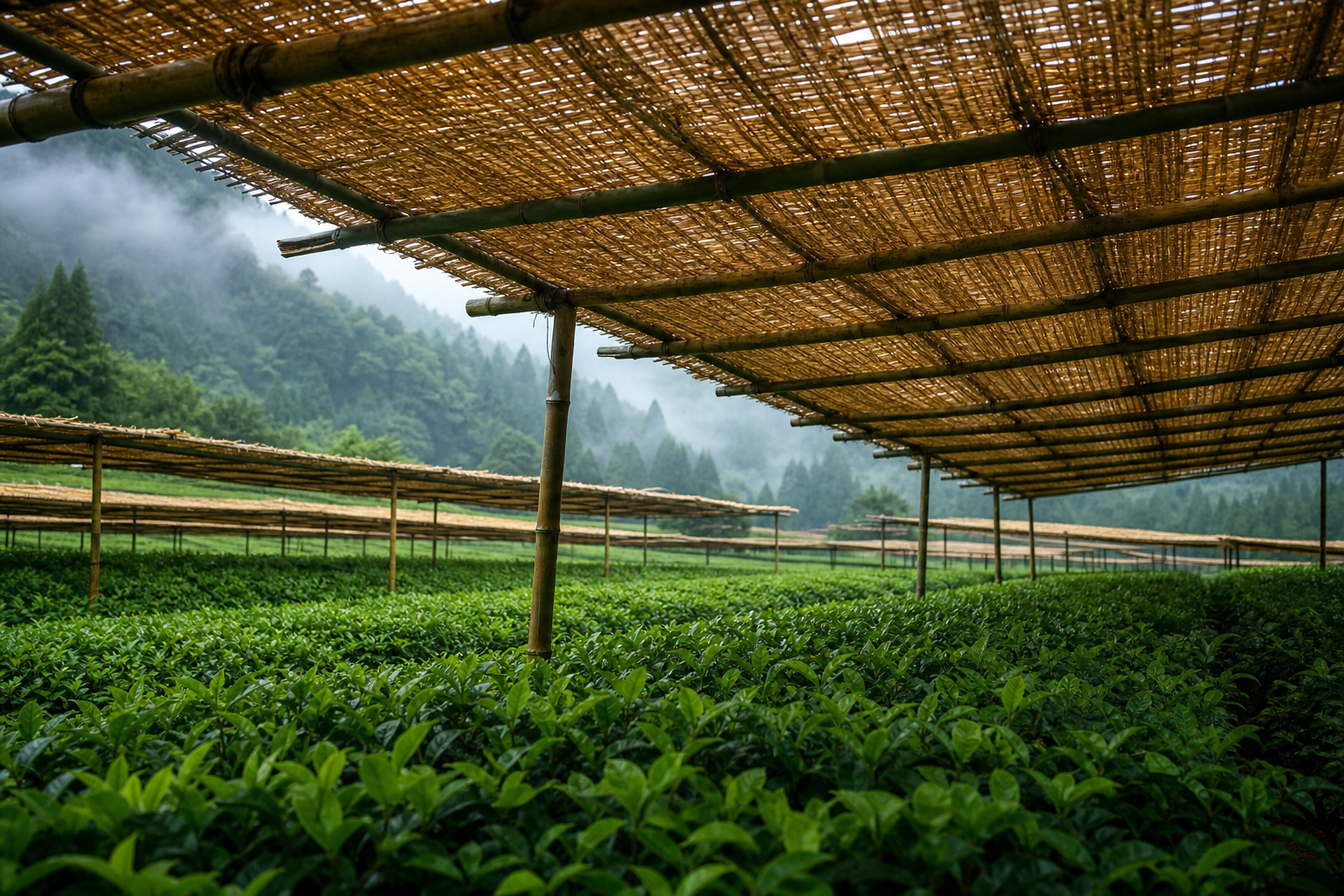
At harvest, the youngest, most tender leaves are picked by hand during the first flush. They're steamed quickly to stop oxidation, dried, and stripped of their stems and veins. What remains is a flat, dried leaf called tencha, the direct precursor to matcha.
That grinding step is where things slow down considerably. Tencha is milled on granite stone wheels, a small amount at a time, to produce the fine, silky powder that suspends fully in water without sinking.
Not every green tea powder is matcha. A tea ground without shading, without tencha processing, or without stone milling will behave and taste differently.
Matcha’s Taste Compared With Steeped Green Tea
Matcha tastes different from steeped green tea in ways that go beyond intensity. Expect vegetal notes, umami depth, and a natural sweetness that varies with cultivar and harvest timing. Some matcha carries a clean bitterness; others lean creamy and round. Processing, freshness, and preparation all shift the result. A flat or harsh cup often traces back to matcha preparation technique, not the leaf itself.
The clearest structural distinction: with matcha, you consume the whole leaf. With steeped tea, the leaves are removed before drinking.
- Leaf form — Matcha: Ground powder; Steeped Green Tea: Whole or rolled leaf
- Preparation — Matcha: Whisked into water; Steeped Green Tea: Steeped, then removed
- Texture — Matcha: Thick, frothy; Steeped Green Tea: Thin, clear
- Flavor intensity — Matcha: Concentrated, layered; Steeped Green Tea: Lighter, more delicate
Matcha’s Role in the Japanese Tea Ritual
Chanoyu (茶の湯) and chadō (茶道) are the two names most often attached to the Japanese tea ceremony, and they describe overlapping but distinct things. Chanoyu refers to the practice of preparing matcha for a guest. Chadō, as Urasenke describes it, means "the way of tea," a spiritual and aesthetic discipline directed toward self-refinement. Both center on matcha, but the frame is hospitality and attention, not recipe.
Sen Rikyū, the 16th-century tea master most credited with shaping this tradition, was once asked to explain what the Way of Tea involves. His answer, as recorded by Urasenke, came down to seven practical rules:
"Make a satisfying bowl of tea; Lay the charcoal so that the water boils efficiently; Provide a sense of coolness in the summer and warmth in the winter..."
The rest follow the same pattern: prepare the flowers, prepare early, be ready for rain, give your guests every consideration. Nothing abstract. Just steady, practiced attention to another person.
The ceremony is a learned cultural discipline with its own training, etiquette, and lineage, quite different from a daily matcha habit. The ceremony asks you to slow all the way down. An everyday cup asks something smaller: a moment of care before the day begins.
What Ceremonial and Culinary Labels Mean
"Ceremonial grade" appears on a lot of matcha tins, but no legal or industry standard defines it. The ceremonial and culinary matcha grades distinction is brand-made, with no governing body behind it. A label alone tells you nothing about cultivar, harvest timing, growing region, or how the leaf was processed.
In practice, ceremonial and culinary labels are shorthand for intended use. Ceremonial-grade matcha is typically first-flush, shade-grown leaf stone-ground fine enough to whisk smoothly into water on its own. Culinary-grade tends to come from later harvests with more sun exposure, producing a stronger, more bitter powder suited to baking, lattes, or recipes where other flavors are present. First harvest matcha, by contrast, offers noticeably more sweetness and depth.
The more useful questions to ask when buying:
- Where was it grown, and by which cultivar?
- Was it a first flush or a later harvest?
- Stone-ground or otherwise milled?
Azure Matcha’s Approach to Craft and Daily Ritual
We source Okumidori and Saemidori cultivars, shade-grown for four weeks before the first flush, hand-picked at peak, then stone-ground in small batches in Uji.
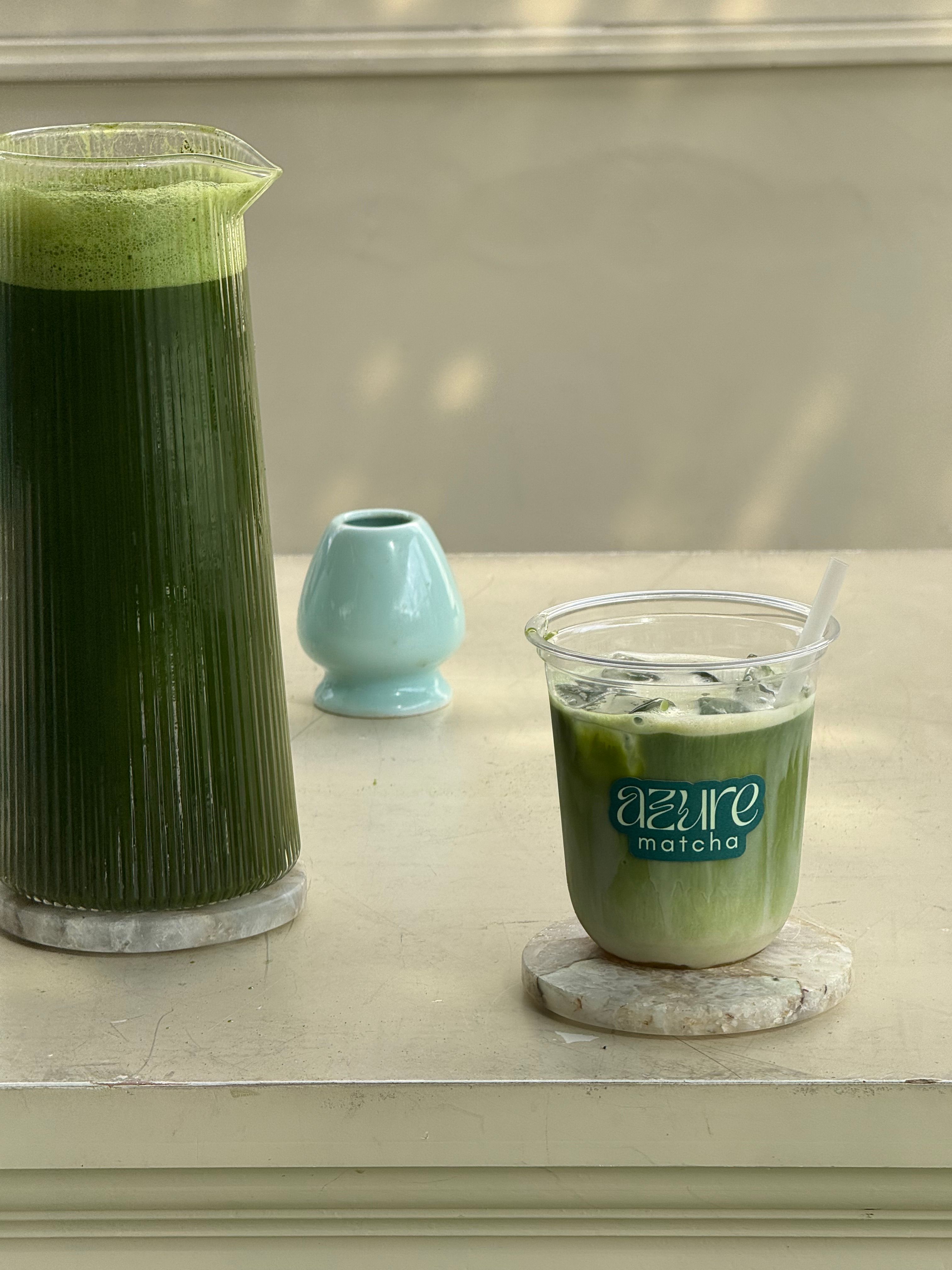
Our Azure Premium Blend cold-whisking method follows three steps: sift, paste, whisk. Start with 3 to 6g of matcha per cup (4g is the working serve). More powder gives a stronger flavor and a creamier result, so adjust to your preference. Sift the matcha into a wide bowl first. Add a small splash of room temperature filtered water and work it into a smooth, glossy paste before any more water goes in. Then whisk steadily in a W or M motion, wrist-driven, until the foam is fine and dense. This practice keeps the leaf's character intact without heat pulling out bitterness it should not have. The full Azure Matcha blend and method details each step in depth.
Final Thoughts on the True Meaning of Matcha
Matcha rewards the people who look past the label. The cultivar, the harvest flush, the milling method: these are not niche details for enthusiasts. They are the difference between a cup that falls flat and one that makes the ritual worth repeating.