Okumidori: The Matcha Cultivar Explained (Sep 2026)
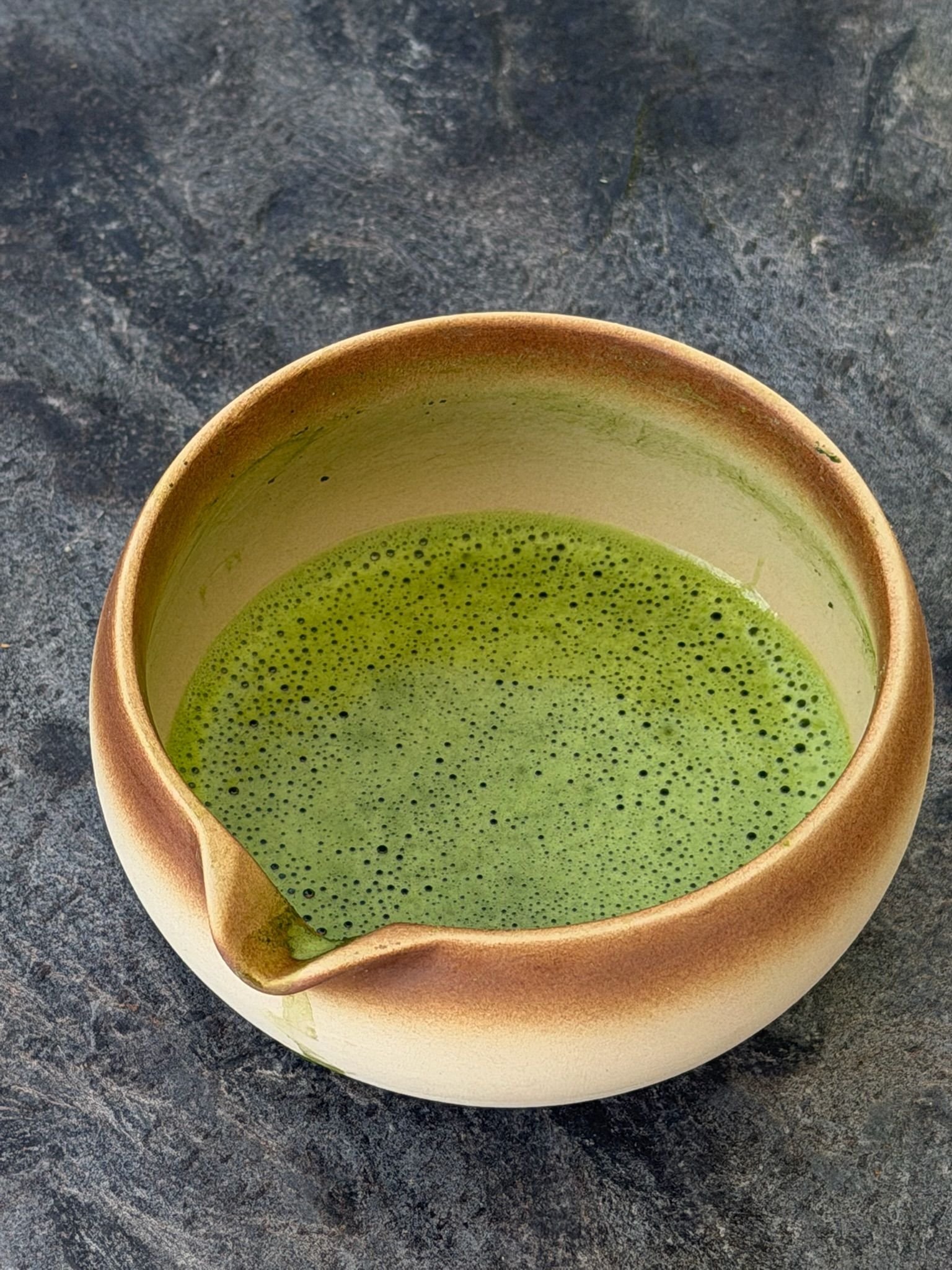
The word 'cultivar' gets skipped over a lot in matcha conversations, but it's one of the more useful things to understand if you drink matcha regularly. Okumidori is a good place to start. It has a clear flavor character, a well-documented growing history, and it shows up across some of the best matcha being made right now.
TLDR:
- Okumidori is a cultivar (a breed), not a grade or region. It drives flavor more than any label.
- Its later harvest timing means more time under shade, which builds L-theanine and lowers astringency.
- Expect deep umami, rounded sweetness, and a rich saturated green. Lower bitterness than Yabukita.
- When buying, look for cultivar name, growing region, first-flush harvest, and stone-ground processing.
- Azure Matcha pairs Okumidori with Saemidori, sourced farm-direct from Uji, Kagoshima, and Shizuoka.
What Okumidori Actually Is
Okumidori is a cultivar, a selectively bred variety of Camellia sinensis, the plant behind every tea from sencha to gyokuro to matcha. The name translates roughly to "deep green." As explained by FKRO, it is a breed, not a grade, region, or quality tier. That distinction matters because the cultivar drives the flavor, color, and character of your cup far more than a label like "ceremonial grade" (which has no legal definition) ever could.
Japan has over 100 registered tea cultivars, but only a handful are used for shade-grown, stone-ground matcha. Okumidori is one of them.
How Okumidori Was Developed
Okumidori was developed at Japan's national tea research station in Kanaya, Shizuoka, by crossing Yabukita with a native strain called Shizuoka Zairai No. 16. It was registered as cultivar No. 32 in 1974. The breeding goal was practical: frost resistance and a later budding period to reduce crop loss. Yabukita already covered roughly 70% of Japan's tea fields, and breeders needed a variety that could handle the cold without sacrificing yield.
The flavor story came later, once tencha producers began shading Okumidori for extended periods before harvest. That process changed how the plant behaved entirely, drawing out deep color and higher amino acid content. What started as a cold-hardy workhorse turned out to be one of the more sought-after cultivars for high-grade matcha.
Why Okumidori Responds So Well to Shade
Shade cultivation is where Okumidori's natural timing becomes an advantage. Because its leaves mature about eight days after Yabukita, the plant spends a longer window under the shade canopy before harvest. That extra time matters biochemically.
Sunlight drives photosynthesis, which converts L-theanine into catechins. Catechins are responsible for bitterness and astringency. Less light means less of that conversion, so L-theanine accumulates instead of getting stripped away. The result is a leaf with higher amino acid content and lower astringency than you'd get from a faster-maturing cultivar under the same shading conditions.
The Flavor Profile of Okumidori Matcha
Okumidori matcha is known for deep, clean umami, a rounded sweetness, and a smooth finish with low astringency. The color is characteristically vivid, a rich and saturated green that holds well even in a bowl. Where some cultivars read sharp or grassy upfront, Okumidori tends to be balanced and structured.
Region, farm, and producer will shift the expression. A Kagoshima-grown Okumidori can taste different from one processed in Uji, even with the same cultivar. Soil, climate, and shade coverage all play a role. The core character stays consistent: lower bitterness than Yabukita, more amino-forward, with a finish that doesn't drop off abruptly.
Where Okumidori Is Grown
Okumidori grows across several of Japan's major tea-producing prefectures. Uji in Kyoto is the most historically associated region, where shade-growing traditions run deep and processing infrastructure for high-grade tencha is well developed. Kagoshima, at the southern end of Kyushu, has become increasingly central to Japanese matcha supply, with a warmer climate that allows earlier harvests and a long picking season. Okumidori also appears in Mie as kabusecha and in Fukuoka for gyokuro production.
The supply context is worth knowing. According to Japanese tea region data from First Agri, Kyoto's traded volume of hand-picked tencha fell 21% in 2025 while its average auction price rose 135%, and Kagoshima overtook Shizuoka as Japan's leading crude tea producer in 2024. In that environment, Okumidori's consistently strong yield makes it a cultivar sourcing teams take seriously for both flavor and reliability.
Okumidori Compared to Other Matcha Cultivars
The table gives a quick read on where each cultivar lands across the key variables that matter for sourcing and cup quality.
Saemidori draws attention for its color and clarity, but it is more fragile in growing conditions and fades faster with less careful processing. Gokou is richer and often more complex, but harder to source and less consistent across farms. Yabukita covers the bulk of Japan's tea acreage, and at lower grades it is where most bitterness complaints originate.
Okumidori sits between these practically. Its umami depth runs closer to Gokou than to Yabukita, but its yield and growing consistency give it wider availability. Where Saemidori is chosen for visual brightness and Gokou for depth, Okumidori earns its place through reliability: the flavor holds across regions and harvest conditions more predictably than most cultivars can claim.
- Okumidori — Flavor Profile: Deep umami, rounded sweetness; Color: Rich, saturated green; Astringency: Low; Common Use: Blends and single-origin matcha
- Saemidori — Flavor Profile: Delicate, floral, lighter body; Color: Bright, vivid green; Astringency: Very low; Common Use: High-end ceremonial matcha
- Gokou — Flavor Profile: Intense umami, full-bodied; Color: Deep green; Astringency: Low-medium; Common Use: Premium single-origin matcha
- Yabukita — Flavor Profile: Fresh, slightly grassy; Color: Medium green; Astringency: Medium; Common Use: Everyday and blended matcha
Single-Origin Okumidori vs. Okumidori in Blends
Okumidori appears in two distinct contexts: as the sole cultivar in a single-origin matcha, or as one component in a blend. Neither is inherently better.
Single-origin Okumidori is worth seeking when you want to understand what the cultivar actually tastes like on its own. The umami comes through cleanly, without another cultivar's character layering over it. If you're building familiarity with Japanese tea or comparing cultivars side by side, single-origin is how you learn.
In blends, Okumidori tends to play a structural role. As noted at japanesetea.sg, it contributes "rich color, clean umami, and a rounded sweetness that does not fight with anything else in the cup," which is exactly why blenders reach for it and why it anchors our Azure Premium Blend. A cultivar like Saemidori might be added for brightness; Okumidori holds the base together.
For most drinkers, a well-constructed blend is the better everyday choice. Single-origin suits the curious or the comparative.
How to Brew Okumidori Matcha
Okumidori's low astringency means it responds well across preparation styles, including the Azure Classic, but a few variables shift the cup meaningfully.
Start with dose. For a lighter, everyday cup, 2-4g works well. For a traditional usucha bowl where the umami comes through with more presence, 4-6g is the range. Koicha, the thick preparation, amplifies everything: the sweetness, the body, the amino-forward finish. If you want to understand what Okumidori actually tastes like, koicha is the clearest read.
Water temperature matters more than most people assume. Near-boiling water pulls harshness from even the smoothest cultivars. Room temperature water keeps Okumidori's character intact: rounder, sweeter, no cooked edge. Sift first, then build a paste with a small splash before adding the full amount. That paste step determines texture more than anything else. Skipping it is where most flat, grainy cups start. The three minutes that make the cup covers the full sequence.
What to Look for When Buying Okumidori Matcha
Most matcha tins skip cultivar information entirely. If the label doesn't name Okumidori, you're guessing at what's inside. That cultivar listing is the first thing worth checking.
Beyond that, look for:
- Growing region: Uji, Kagoshima, and Shizuoka each produce Okumidori with distinct character, so knowing the source tells you something real about what you're drinking.
- Harvest timing: first-flush spring harvests are the standard for high-grade matcha, when the leaves are youngest and the amino acid content is at its peak.
- Stone-ground processing: high-speed milling generates heat that degrades both flavor and color, so how the leaf was ground matters as much as where it was grown.
"Ceremonial grade" has no standard definition. Any brand can use it. The specific details above tell you far more than a grade label ever will.
Okumidori in Azure Matcha's Premium Blend
Our Azure Premium Blend pairs Okumidori with Saemidori, sourced farm-direct from Uji, Kagoshima, and Shizuoka. No distributors, no middlemen. The leaves are shade-grown for four weeks, hand-picked in the first harvest ichibancha flush, and stone-ground in small batches in Uji.
The result is pistachio, almond, mellow umami, and sweet cream caramel, available in a 30g tin. Okumidori carries that sweetness and clean finish. Saemidori adds brightness. Together, they produce a cup that is structured without being sharp, and rich without tipping into heavy. For everyday use, the 80g refill is the practical choice.
Final Thoughts on Okumidori and What It Brings to Your Cup
Okumidori's story starts in a breeding program and ends in your bowl. The cultivar, the region, the processing method: those details matter more than any grade label. Knowing them puts you in a much better position to find matcha you actually love.
FAQ
What makes Okumidori matcha different from Yabukita or Saemidori?
Okumidori sits between the two in practical terms. It carries deeper umami than Yabukita and lower astringency, without the fragility and sourcing inconsistency that comes with Saemidori. Its later budding period means it spends more time under the shade canopy, which lets L-theanine accumulate instead of converting into the catechins responsible for bitterness, giving it a more amino-forward, rounded cup across regions and harvest conditions.
How do I know if I am actually buying high-quality matcha from Japan?
The buying checklist above covers the four signals that matter most: cultivar name, growing region, harvest timing, and processing method. Those specifics tell you far more than any grade label.
Okumidori single-origin vs. Okumidori in a blend: which should I buy?
Single-origin is worth it when you want to taste what the cultivar does on its own, particularly useful if you are comparing cultivars or building familiarity with Japanese tea. For everyday drinking, a well-constructed blend is the better choice. Okumidori's clean umami and rounded sweetness make it a natural base, which is why it pairs well with something like Saemidori, which adds brightness without the two characters working against each other.
What is stone-ground matcha and why does it taste different from other matcha?
Stone-grinding keeps the leaf cool during milling, which preserves both flavor and color. High-speed industrial grinding generates heat that degrades the amino acids and chlorophyll responsible for matcha's sweetness and vivid green. The result with stone-ground matcha is a finer, more even particle that dissolves cleanly into a bowl and holds its character from the first sip to the last.
How do I brew Okumidori matcha to get the full flavor?
Start with room temperature filtered water, not hot. Heat pulls harshness from even low-astringency cultivars, and it strips the rounded sweetness that makes Okumidori worth seeking out. See the brewing section above for the full W/M whisk method.