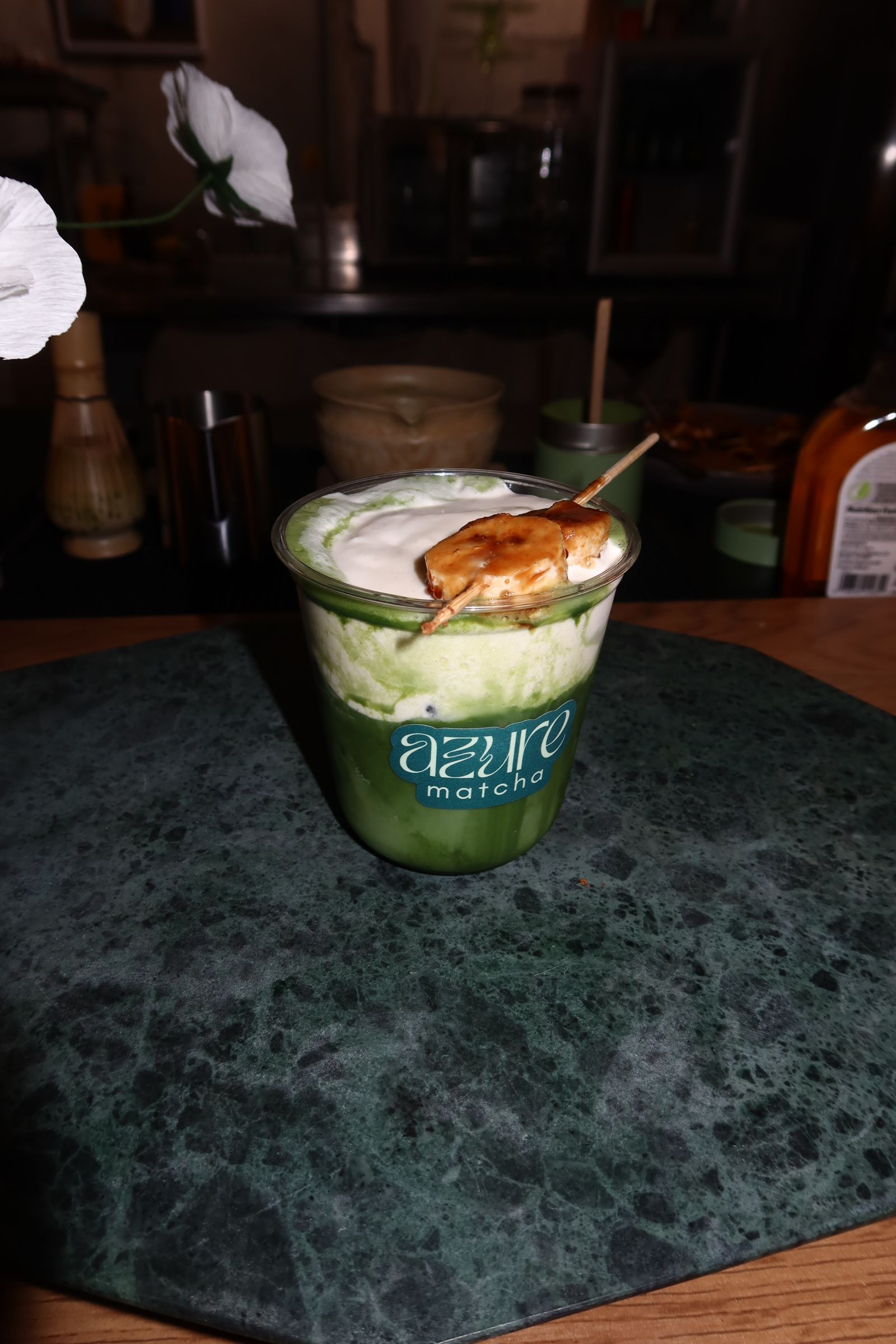
If you've been making the same matcha latte all summer, fall is a good time to change things up. Earl grey, maple with gold flakes, banana brulee, brown sugar, rose saffron: each one pairs with matcha in a different way, and the cup you end up with is more interesting than either ingredient alone. The one thing that ties all of these recipes together is the base, and getting that right is where it all starts.
TLDR:
- Matcha: 4g per cup (3g lighter, 5-6g stronger and creamier)
- Liquid: room temperature filtered water for the paste, cold oat milk to fill (about 120-150ml)
- Key add-ins: Azure earl grey essence and bergamot cold foam, light maple essence with pink Himalayan salt and 24k gold flakes, banana compote with bruléed bananas, Azure brown sugar essence, or rose essence and saffron essence with edible flowers
- Prep time: about 3 minutes
Why Matcha Works So Well in Fall Drinks
Matcha has an earthiness that fall flavors seem designed to meet. The grassy, vegetal depth of a good first-flush leaf sits naturally alongside cinnamon, cardamom, and clove in a way that coffee or black tea simply does not. Those warm spices round matcha out without overpowering it.
Maple syrup echoes matcha's subtle umami without competing with it. Apple, pear, and pumpkin carry a natural sweetness that balances matcha's slight bitterness, pulling the cup toward something softer and seasonal.
Cold-whisked matcha builds a dense, creamy foam that holds up well under fall add-ins.
The Matcha Latte Base: Getting It Right Before You Add Fall Flavors
Every fall recipe here builds on the same base. Get it right and the seasonal add-ins do their job; rush it and even a good compote sits unevenly in the cup.
The method is three steps: sift, paste, whisk.
- Sift your matcha through a fine-mesh strainer into a wide bowl first
- Add a small splash of room temperature water and whisk tight until you have a smooth, glossy paste
- Add remaining room temperature water slowly, whisking in a W or M motion to build dense, fine foam
The paste stage is where fall flavors go in. Compotes, essences, and sweeteners disperse evenly at this stage, before there is enough liquid for them to pool. Skip it and you get clumps, uneven sweetness, and foam that collapses fast.
On dose: 4g is the working serve. Pull it to 3g for a lighter, milk-forward cup or up to 5-6g when you want the matcha to hold its ground against bold fall spices.
We always cold-whisk. Heat pulls bitterness out of first-flush leaf quickly. Room temperature water keeps the foam tighter and the flavor cleaner.
Earl Grey Matcha Latte (Island Fog)
Bergamot's citrus brightness cuts through matcha's vegetal depth in a way that feels sharp and clean, while earl grey's tannic body gives the cup real structure. The two settle into something aromatic and layered, each one distinct but neither pulling ahead of the other.
Ingredients:
- 4g Azure matcha, sifted
- Earl grey essence
- Non-dairy earl grey-infused milk
- Bergamot cold foam to top
Sift the matcha, form a paste with the earl grey essence and a small splash of room temperature water, whisk until smooth, then pour over ice. Top with the non-dairy earl grey milk and bergamot cold foam. See the full recipe on the Island Fog Latte page.
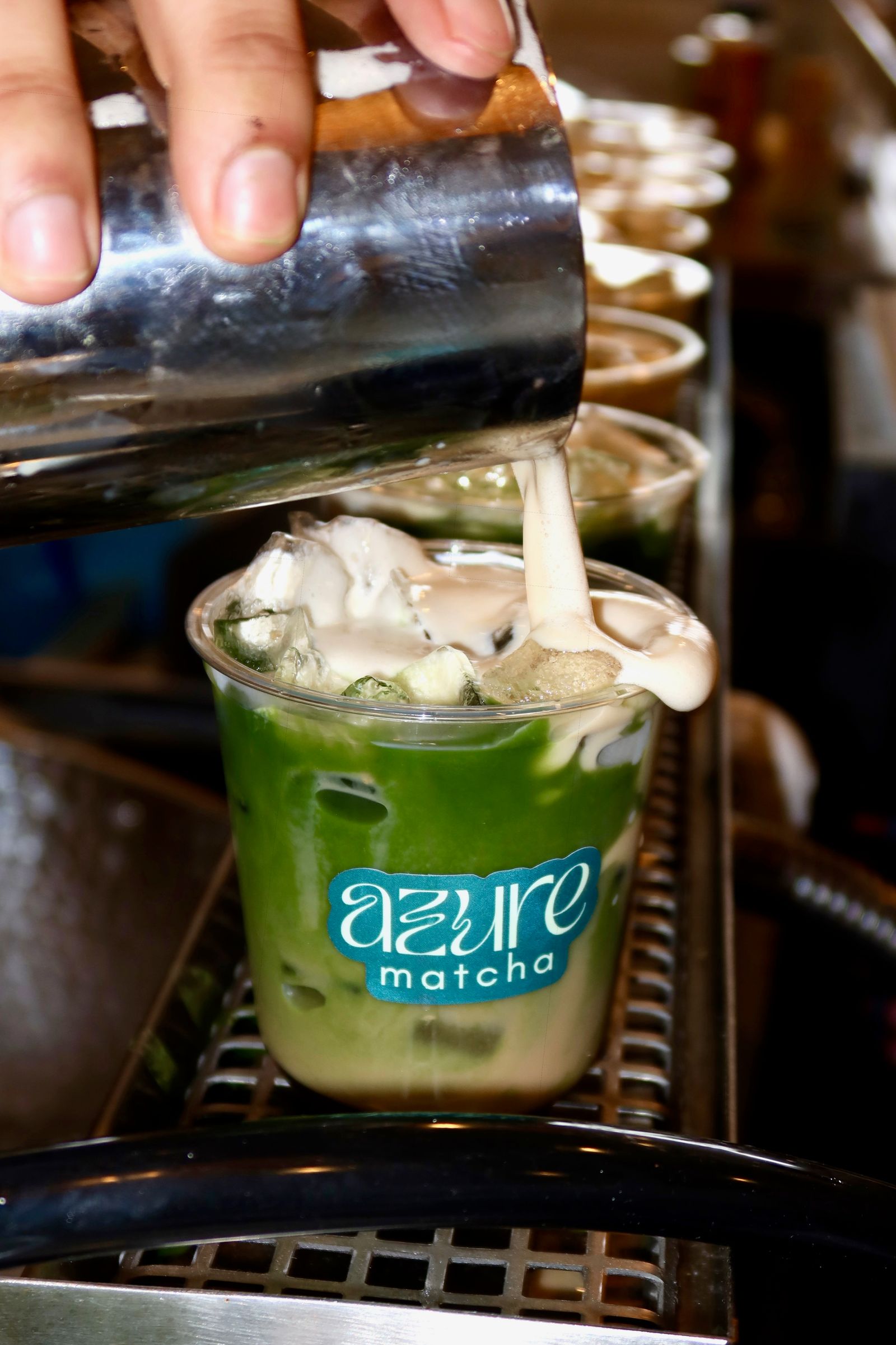
Dripped in Gold (Maple Matcha Latte)
Maple's caramel depth mirrors the sweet cream finish in first-flush leaf, pulling the two together without either taking over. A pinch of pink Himalayan salt sharpens every note, making the maple read brighter and the matcha read deeper. The 24k gold flakes are the finishing touch that makes each cup feel like an occasion.
Ingredients:
- 3-4g Azure Premium Matcha Blend, sifted
- Light maple essence
- Room temperature filtered water
- Milk of choice to fill
- Pinch of pink Himalayan salt
- 24k gold flakes to finish
Sift the matcha, form a paste with the light maple essence and a small splash of room temperature water, whisk until smooth, then pour over ice and top with milk of choice. Finish with a pinch of pink Himalayan salt and 24k gold flakes.
Banana Bruleé Matcha Latte
Banana compote brings a caramelized sweetness that rounds out matcha's grassy edge, pulling the cup toward something rich and layered without losing the leaf's character. The bruléed banana topping adds a crackling warmth that makes every sip feel considered. Together, they give matcha a fall direction that is softer and more dessert-like than spice alone.
Ingredients
- 4g Azure Premium Matcha Blend, sifted
- 1 spoonful banana compote (condensed coconut milk, sugar-free plant-based vanilla pudding mix, mashed bananas, water, sugar, vanilla bourbon, simmered about 35 minutes until caramelized, then immersion blended)
- Organic oat creamer, to taste
- Milk of choice, to fill
- Bruléed banana slices, to top
Sift the matcha, form a paste with a spoonful of banana compote and a small splash of room temperature water, whisk until smooth and glossy, then pour over ice. Add oat creamer and milk of choice, then top with bruléed banana slices.
Rose Saffron Matcha Latte
Rose and saffron bring a floral, golden warmth that sits naturally alongside matcha's earthy depth. The saffron's honeyed bitterness finds a natural counterpoint in the leaf's own umami, drawing the two together without either taking over. This is the most perfumed drink in the lineup, one that rewards a lighter matcha dose so the florals can breathe.
Ingredients
- 3-4g Azure Premium Matcha Blend, sifted
- 1 tsp rose essence
- 1 tsp saffron essence
- Cold oat or almond milk to fill
- A pinch of saffron threads and edible flowers to finish
Sift the matcha, form a paste with the rose and saffron essences and a small splash of room temperature water, whisk until smooth and glossy, then pour over ice. Top with cold oat or almond milk and finish with saffron threads and edible flowers.
Brown Sugar Matcha Latte
Brown sugar brings a molasses depth that white sugar can't replicate: a faint bitterness of its own, a caramel richness that sits alongside matcha's umami edge without washing it out.
This is also the most approachable drink for someone newer to matcha: the deep sweetness and creamy body soften any grassy sharpness without burying the matcha entirely.
Ingredients
- 4g Azure matcha, sifted
- 1 tsp Azure brown sugar essence
- Room temperature filtered water
- Cold oat milk to fill
Sift the matcha, whisk the brown sugar essence into the paste, add water slowly, then pour over ice and top with cold oat milk. Start at 4g and adjust down if you want a lighter, sweeter cup.
Ceremonial vs. Culinary Grade: Which One to Use for Fall Drinks
"Ceremonial grade" has no legal definition, so the label alone tells you little. What actually matters: first harvest order (first flush is smoother), shade-growing duration, cultivar, and whether the leaf was stone-ground in small batches.
For these drinks, first-flush, shade-grown matcha holds up better. Culinary-grade tends toward bitterness that turns harsh against bold spiced or sweet add-ins. You want a leaf with enough natural sweetness to stay present through the flavoring, not fight it.
How to Customize Fall Matcha Drinks for Your Taste
A few notes on how to read the table:
Start with dose. Matcha at 3g reads light and milk-forward; at 5 to 6g, the vegetal character pushes through sweeteners and add-ins like maple essence, banana compote, or rose and saffron. If a drink tastes too green, pull the dose before changing anything else.
Milk type changes texture. Oat adds body and softens bold flavors; almond lets the matcha read more cleanly.
Control sweetener intensity at the paste stage. Taste before adding water, and adjust while the paste is still thick enough to absorb it evenly. All base recipes are on the Azure drinks page.
- Matcha dose. Lighter/Milder: 3g; Stronger/Bolder: 5 to 6g
- Milk type. Lighter/Milder: Oat (creamier, softens fall spices); Stronger/Bolder: Almond (cleaner, more matcha-forward)
- Sweetener. Lighter/Milder: 1/2 tsp essence or compote; Stronger/Bolder: 1 to 2 tsp
- Temperature. Lighter/Milder: Over ice; Stronger/Bolder: Room temperature or less ice
Azure Matcha's Approach to Fall Drinks
All five recipes here use the Azure Premium Blend: Okumidori and Saemidori cultivars, shade-grown for four weeks, first-flush, stone-ground in Uji. The natural sweetness in this blend holds up under bold fall add-ins without turning harsh. For frequent brewing, the Azure 80g refill keeps the tin stocked through the season.
Final Thoughts on Pairing Matcha With Fall Flavors
The most interesting thing about these pairings is how little the base changes. Six different directions, and the method stays the same: sift, paste, whisk. Once that's instinct, the seasonal variations take care of themselves.
FAQ
Several directions work well. Earl grey and bergamot bring a floral, citrus lift that pairs cleanly with matcha's vegetal base. Maple with salt and gold adds caramel depth and a savory edge. Banana compote brings a soft, creamy sweetness that rounds out matcha without overpowering it. Brown sugar contributes a molasses richness that sits alongside matcha's umami. Rose and saffron take the cup in a more aromatic direction, adding warmth and floral complexity that matcha carries well.
First-flush, shade-grown matcha holds up better in fall recipes. Culinary-grade tends toward bitterness that can turn harsh when paired with spiced or sweet add-ins like pumpkin compote or maple essence. Look past the label and check for harvest order, shade-growing duration, and whether the leaf was stone-ground in small batches.
Compotes, essences, and sweeteners disperse evenly at the paste stage, before there is enough liquid for them to pool. Skip it and you get clumps, inconsistent sweetness, and foam that collapses fast.
Yes. Room temperature water keeps foam tighter and flavor cleaner. Hot water pulls bitterness from first-flush leaf fast.
Start by changing the matcha dose before adjusting anything else. At 3g the cup reads light and milk-forward; at 5 to 6g, the vegetal character holds its ground through spices and sweeteners. Milk type also changes the result: oat adds body and softens fall spices, while almond lets the matcha read more cleanly.