Jasmine Matcha Latte Recipe (Sep 2026)
Making a jasmine matcha latte at home sounds fancy, but the actual process is straightforward once you get a couple of details right. The biggest one most people miss is when to add the jasmine syrup. Get that step in the right order and the flavor carries through the whole drink instead of just sitting on top.
TLDR:
- Jasmine's floral brightness cuts through matcha's savory depth, making the two balance without either fading.
- Azure's Spring Jasmine Essence is housemade and additive-free, ready to whisk straight into your matcha paste.
- Always sift first, whisk with room temperature water, and add essence during the paste stage, not after.
- First-flush, shade-grown matcha from Uji or Kagoshima produces a mellow base that lets jasmine come through cleanly.
- Azure Matcha's Premium Blend uses Okumidori and Saemidori cultivars, shade-grown and stone-ground in Uji, built for this drink.
Why Jasmine and Matcha Work Together
Matcha carries a grassy, umami-forward depth that can sometimes feel intense on its own. Jasmine pulls in the opposite direction: light, floral, faintly sweet. Together, the two soften each other's edges without either one disappearing.
The pairing works because jasmine adds top-note brightness that cuts through matcha's heavier, savory base. As one recipe writer put it, jasmine's aroma blends with matcha's earthy richness. That contrast is the whole point.
First-flush matcha tends to be sweeter and less astringent, and jasmine's floral notes feel natural alongside that freshness. First flush timing is worth understanding before you shop.
What You'll Need
- Matcha powder: 3-6g for a latte (the working serve is roughly 4g). More matcha means a stronger, creamier result, so adjust to your preference. Go higher if you want the matcha to hold its own against the jasmine; lower if you prefer the floral notes up front. Use a first-flush, shade-grown powder for the smoothest flavor. See the spring jasmine matcha drink page for our ratios.
- Spring Jasmine Essence: Azure's housemade jasmine tea essence, additive-free and built to carry floral notes through the entire drink when whisked into the paste. Because it disperses at the paste stage, the jasmine runs through every sip rather than sitting on the surface.
- Milk: oat milk froths well and adds a mild sweetness, making it the most common latte choice. Whole dairy works if you prefer. Strongly flavored milks like coconut or pistachio can work in specific variations (see below) but will pull focus from the jasmine.
- Room temperature filtered water: for whisking the matcha paste. Not hot.
About Spring Jasmine Essence
Azure's Spring Jasmine Essence is made in-house in small batches from jasmine green tea. No additives, no dyes, no preservatives. The floral character is clean and layered, the same essence poured at Azure's omakase tastings and pop-ups across Miami, New York, and Los Angeles.
A small pour goes a long way. Add it during the paste stage so the jasmine disperses evenly through the matcha before any milk or water dilutes it. Start with about a teaspoon per cup and adjust from there. The aroma should be noticeable on the first sip without covering the matcha underneath.
How to Make a Jasmine Matcha Latte
Sift 3-6g of matcha into a wide bowl to break up clumps before they set. Add a small splash of room temperature filtered water, just enough to wet the powder, then whisk tight and fast until you have a smooth, glossy paste with no dry pockets, similar in consistency to a thin ganache. The whisking at this stage matters more than most people expect: it is the paste, not the final pour, that sets the texture and delivers even flavor distribution. A bamboo chasen handles this stage better than an electric frother, which lacks the control needed to work the powder into a true paste.
Add your Spring Jasmine Essence directly into the paste at this stage so the flavor distributes evenly. Pour in the remaining room temperature water (about 2 oz) and whisk in a W or M motion until fine, dense foam forms on top.
Fill a glass with ice, add 4 to 6 oz of your milk of choice, then slowly pour the matcha over the back of a spoon for a clean layered finish before stirring.
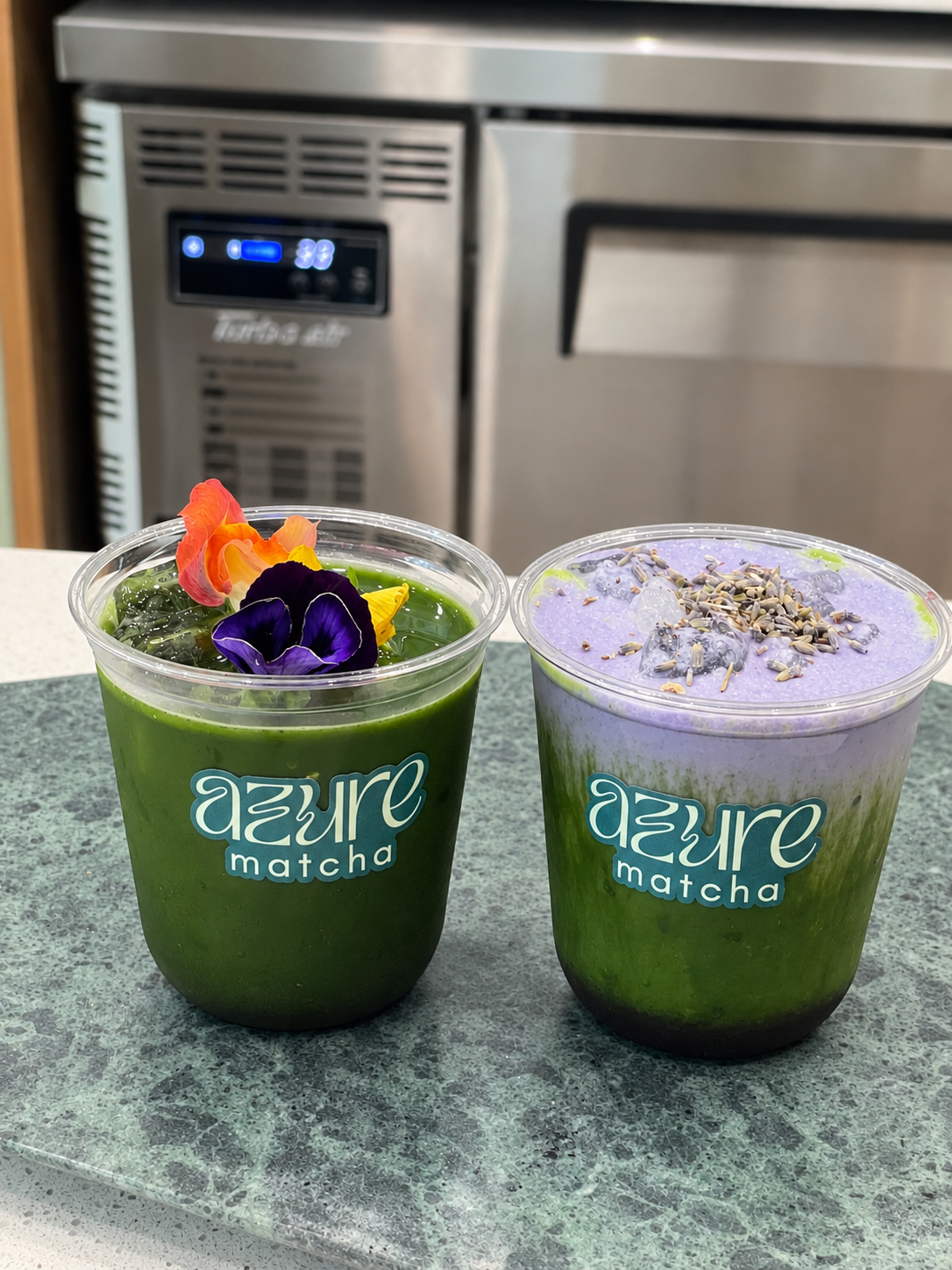
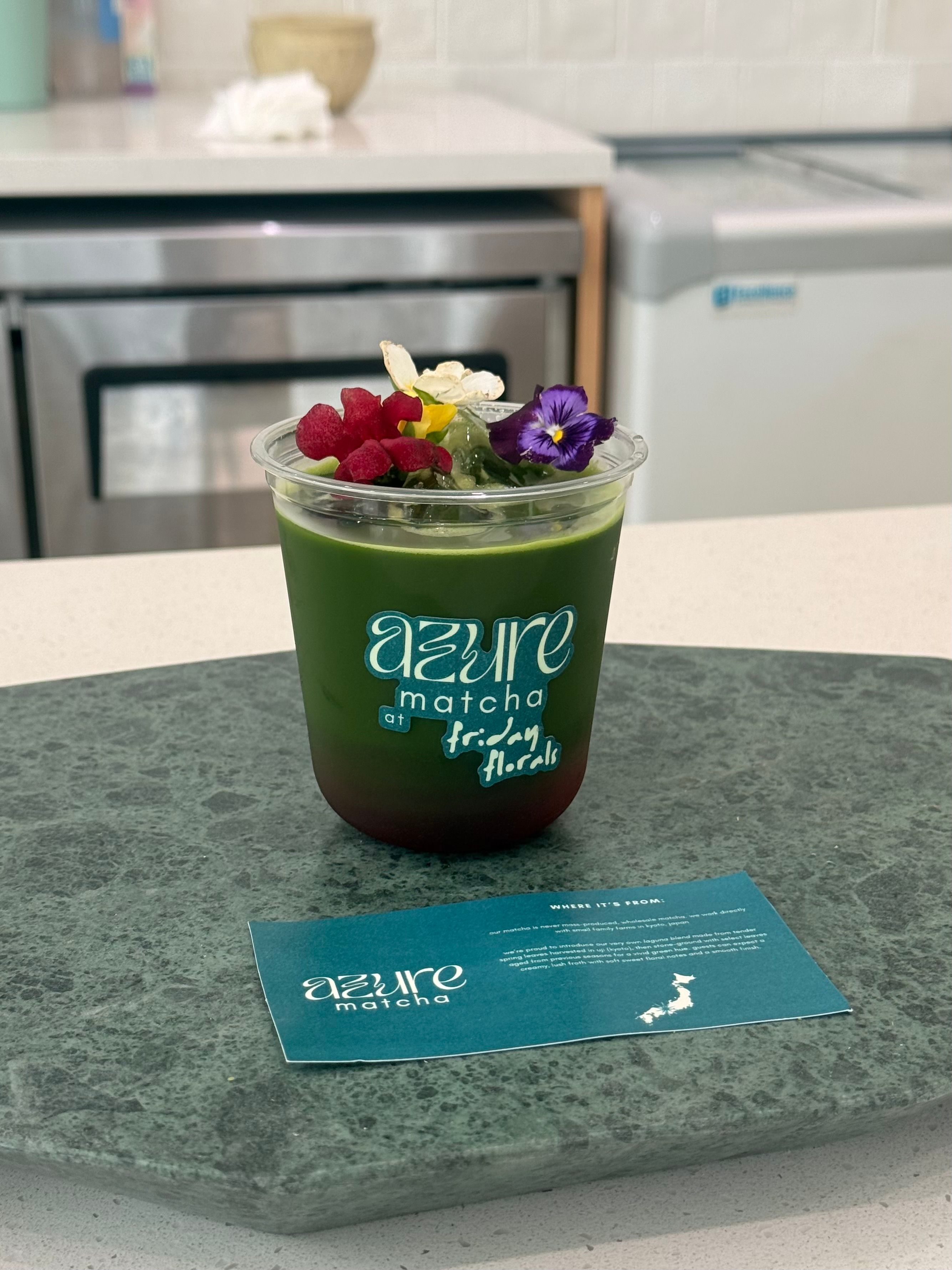
For the finishing touch, top with a few edible flowers and a layer of cold foam if you want the full Spring Jasmine presentation.
Iced vs. Hot: Which to Choose
Both versions work. The choice mostly depends on how much you want the jasmine to come forward.
Served iced, the floral notes stay bright and distinct. Cold temperatures slow flavor integration, so the jasmine and matcha sit in contrast rather than blending together. That separation is part of the appeal, and the layered look holds better in a cold glass.
Served hot, the two ingredients merge more fully. Heat opens up the aromatic compounds in jasmine, so the floral character becomes warmer and softer. For a simpler hot preparation without the jasmine, the Azure Classic is a good reference point. The matcha's umami comes through more clearly too. For the hot version, warm your milk separately, then pour it directly over the matcha paste after whisking. The flavor is more cohesive, even if the layered visual is less dramatic.
Choosing the Right Milk
Each milk brings something different to the drink. The choice comes down to how much you want the jasmine and matcha to stay distinct versus how much body and richness you want in the cup.
- Oat (full-fat) — Flavor Impact: Mild sweetness, lets jasmine lead; Frothing: Excellent
- Whole dairy — Flavor Impact: Rich, creamy, slightly savory; Frothing: Very good
- Almond — Flavor Impact: Nutty undertone, thins the floral note; Frothing: Moderate
- Coconut — Flavor Impact: Tropical sweetness, bold pairing (see the Island Fog Latte); Frothing: Poor
Full-fat oat milk is the most forgiving choice here. It froths well and stays neutral enough that neither the jasmine nor the matcha gets buried. Avoid anything low-fat if you plan to froth; the texture will be watery, not creamy.
Choosing the Right Matcha
Matcha quality shapes the drink more than any other variable. A later-harvest or sun-grown powder tends toward bitterness and a rougher texture, which fights the jasmine instead of working alongside it. First-harvest matcha is sweeter and more amino acid-forward, giving the floral notes room to come through cleanly.
The term "ceremonial grade" appears on many tins but has no legal definition, so it tells you very little on its own. Better signals are cultivar, harvest timing, growing region, and processing method. Shade-grown, stone-ground matcha from regions like Uji or Kagoshima produces a smooth, layered base that jasmine can complement.
For this drink, we use our Azure Premium Blend: Okumidori and Saemidori cultivars, shade-grown for four weeks, hand-picked in the first flush, and stone-ground in Uji in small batches. The flavor profile is creamy and mellow with soft umami, pairing well with jasmine's floral brightness without either one overpowering the other.
Recipe Variations to Try
Four directions worth trying once you have the base recipe down (more ideas in our Azure recipes collection):
- Lavender-jasmine: add 1/2 teaspoon of lavender essence alongside the Spring Jasmine Essence in the paste stage. Keep the lavender restrained or it will overwhelm everything else. [FLAG: confirm with Miya - not verified on drinks page]
- Coconut-jasmine: swap oat milk for full-fat coconut milk. The tropical sweetness pairs well with jasmine, though it pulls focus from the matcha. Use 4g of matcha to compensate.
- Bamboo salt variation: skip the sweetener and finish with a small pinch of bamboo salt stirred in at the end. The mineral note adds depth and makes the jasmine smell sharper.
- Jasmine cold brew base: steep loose-leaf jasmine green tea in cold water overnight (1 tablespoon per cup), then use that cold brew in place of both the syrup and added water when building your paste. The flavor is more subtle than syrup but more layered than plain water. [FLAG: confirm with Miya - not verified on drinks page]
Common Mistakes and How to Fix Them
Three habits account for most jasmine matcha lattes that fall flat. Each one is easy to fix once you know what to look for.
The sift takes twenty seconds but saves the whole drink. Without it, dense matcha pockets form on contact with water, and no amount of whisking breaks them apart. Run the powder through a fine sieve and you can already smell the difference: brighter, cleaner, ready to bloom into a smooth paste.
Room temperature water matters more than it sounds. Hot water pulls bitterness out of first-flush leaf fast, turning a naturally sweet, mellow powder sharp and astringent. Use filtered water straight from the tap or rested on the counter and the paste will be glossy, grassy, and smooth.
Add your Spring Jasmine Essence during the paste stage, before any additional water goes in. That is the moment the matcha is most receptive: open, concentrated, ready to absorb the floral note fully. Added after whisking, the essence floats on the surface and never integrates, leaving jasmine on top and matcha at the bottom instead of woven together.
How Azure Matcha Approaches This Drink
The Azure Premium Blend 30g tin is a good starting size for trying this drink at home. An 80g refill is available for pre-order beginning mid-October 2026, with full launch in November 2026 on the website and via TikTok Shop at @azure.matcha.
Final Thoughts on Making a Jasmine Matcha Latte
A good jasmine matcha latte should taste like something you would order twice: floral but grounded, smooth without being flat. Make it slowly enough to notice the difference, and it becomes the kind of morning ritual that is hard to give up.