You already make matcha at home, so would a masterclass teach you anything new? The name alone won’t tell you whether you’ll compare cultivars, get feedback on your whisking, or sip drinks prepared by a host. Choosing a matcha workshop starts with knowing what you want to learn, then checking whether the session gives you time to learn it.
TLDR:
- Choose a hands-on matcha workshop with individual feedback if you are a beginner.
- Pick tastings for flavor comparisons and Uji grinding classes for tea production.
- Ask about cultivar and harvest. “Ceremonial grade” has no legal definition.
- Confirm your practice time, tools, fees, current dates, and cancellation terms before booking.
- Azure Matcha teaches cold whisking: sift, form a paste, then whisk in a W or M motion.
What a Matcha Workshop Includes
A matcha workshop can take several forms. A hands-on making class lets you prepare a drink; a guided tasting focuses on comparing flavors. A masterclass suggests deeper instruction, but the title alone says little about practice time.
Check the itinerary for the skills you want to take home:
- Understanding the matcha powder you use.
- Handling the tools with confidence.
- Preparing a drink you can repeat at home.
- Describing the flavors you taste.
Whisking Classes, Tastings, and Wellness Socials Suit Different Goals
Choose a matcha workshop by your experience and what you want to learn.
- Beginner. Look for: Guided preparation with individual feedback
- Curious drinker. Look for: A tasting with time for questions
- Experienced enthusiast. Look for: Discussion of cultivar, processing, and sensory differences
A wellness pop-up, like one built around a matcha and pilates morning, may focus on socializing. Check how much matcha instruction is scheduled.
For private groups, confirm customization options and whether every guest gets hands-on practice before booking.
Learning to Recognize Matcha Quality and Flavor
A useful matcha workshop explains growing region, cultivar, harvest, processing, freshness, and storage. “Ceremonial grade” has no legal definition, so ask for specifics behind the label.
During a guided tasting, practice naming what you notice:
- Smell the aroma before sipping.
- Look for savory depth, or umami, alongside bitterness.
- Notice astringency as a drying sensation.
- Describe the texture and the finish that lingers after swallowing.
Your preference can differ from the instructor’s. The goal is to name what you taste.
Practicing the Tools and Whisking Technique
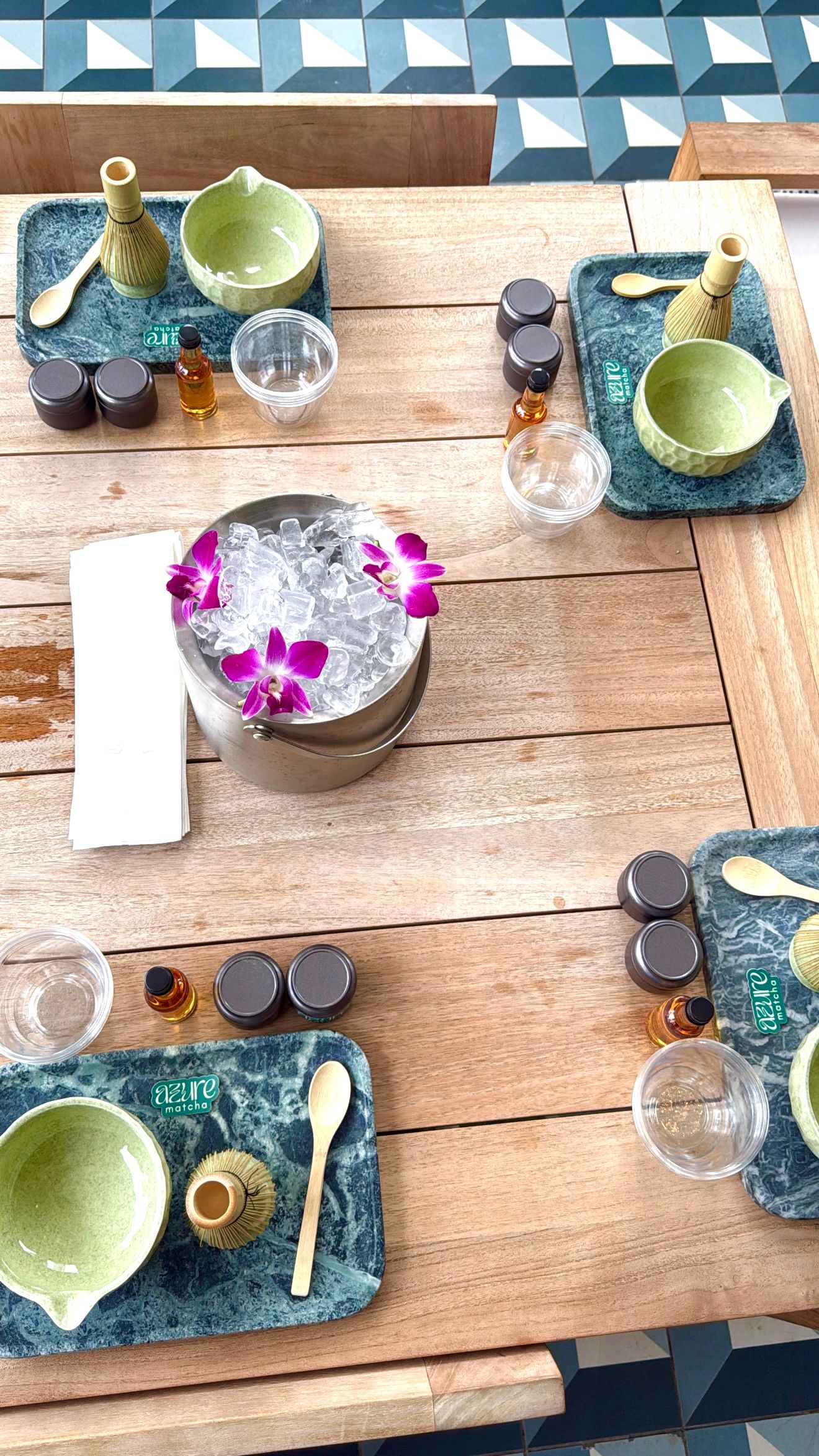
Look for a matcha masterclass and wellness social that includes sifter practice, a bowl roomy enough for a bamboo whisk, and feedback on technique. Learn to spot clumps and judge whether your foam is fine and dense or full of large bubbles.
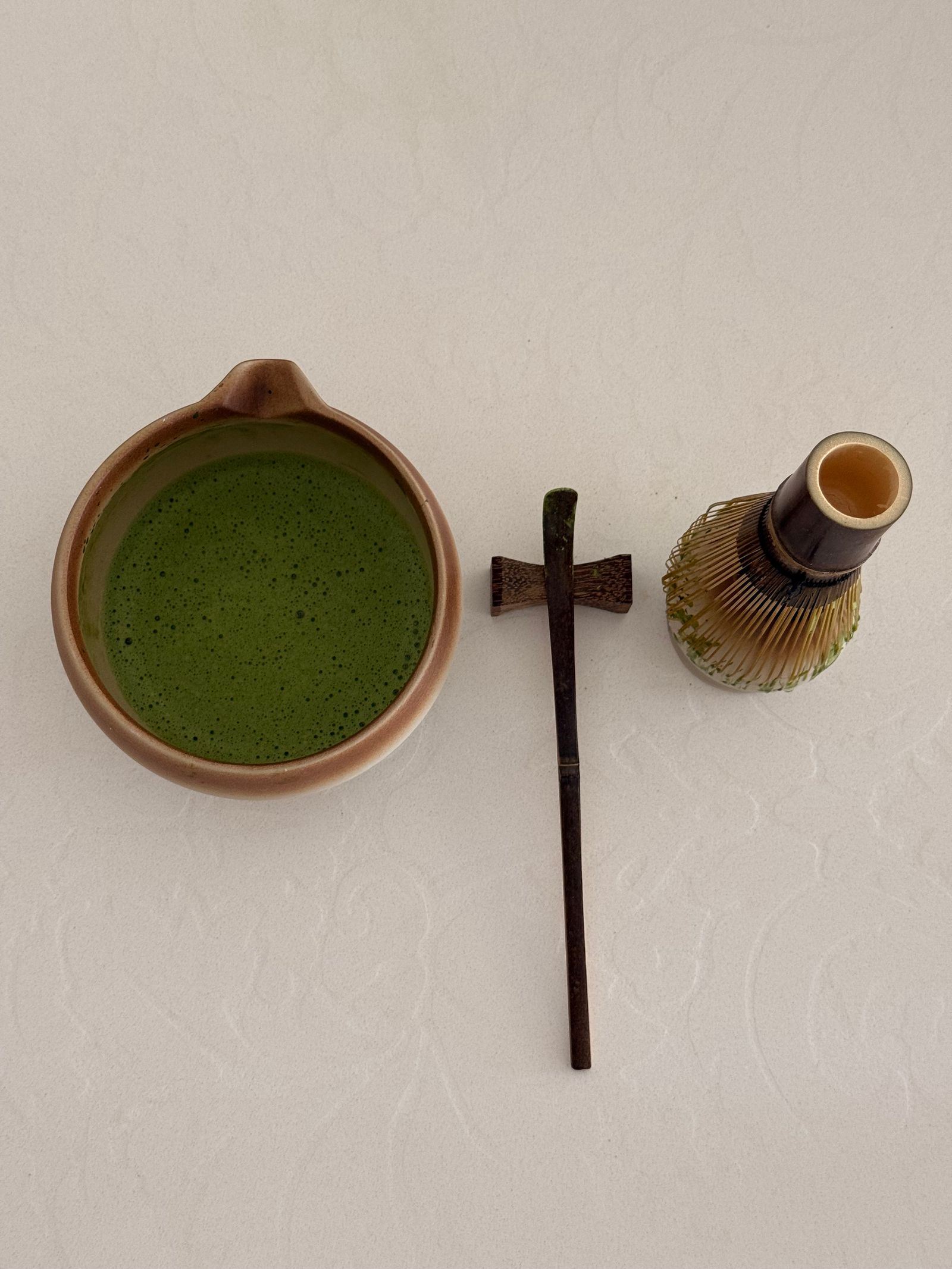
At Azure, we teach cold whisking, the method detailed in Azure Matcha: Brand, Blend, Method: sift the powder, work it into a smooth paste with a little room-temperature water, then add more water while whisking in a W or M motion. Other workshops may teach different methods.
Building Drinks Without Losing the Matcha’s Character
In a matcha workshop focused on drinks, similar to following a matcha latte recipe at home, ask to taste the tea before adding milk. Adjust flavor and texture in small steps so the matcha stays noticeable. Check whether you’ll make drinks yourself or taste a host-prepared menu.
Our team-confirmed fall selections, the kind served at the rooftop masterclass series at SLS Lux Brickell, show that range: Pear Vanilla Matcha uses Anjou pear essence and light vanilla cold foam; Toasted Rice Matcha pairs vanilla brown sugar essence with genmaicha-infused milk. These are menu examples, not confirmed class activities.
Grinding Workshops Show How Matcha Is Made
A matcha grinding workshop in Uji turns tencha leaves into powder; a whisking class starts with finished matcha. Grinding suits those curious about production more than latte preparation.
Ask the organizer how much matcha you’ll grind and whether any is included to take home.
Before booking, check whether you’ll operate the mill yourself or watch the instructor. Confirm whether matcha preparation and tasting are included.
Matcha Bowl Pottery Workshops Teach a Different Craft
A matcha bowl pottery workshop teaches ceramic craft. In a clay-shaping session, an instructor typically shows hand-building or wheel-throwing before guiding you through forming your bowl. You practice shaping the walls, smoothing the rim, and creating an interior with room for a whisk. The clay then needs to dry and be fired, so a freshly shaped bowl is not ready to use that day. Searching for a “matcha bowl making class Los Angeles”? Check whether tea preparation is included before expecting a whisking lesson.
Ask the studio:
- Will you shape clay or decorate an existing bowl?
- Does the price include glazing and firing?
- When will your bowl be ready, and can you collect it or have it shipped?
- Will the finished bowl be food-safe, with enough room inside for whisking?
Finding a Matcha Workshop Near You
For a “matcha workshop near me” search, pair your city with “matcha making class,” “matcha tasting,” or “matcha events.” Try NYC, Los Angeles, Orange County, San Diego, Boston, or Houston, then check the organizer’s booking page for current dates.
For London, Montreal, Toronto, Singapore, Bangkok, and Jakarta, pair the city name with “matcha workshop” or “matcha class,” such as “matcha workshop Toronto.” Before paying, confirm the teaching language and cancellation terms. Choose a class that matches your learning goal, not an unverified “best” ranking.
Planning a Matcha Workshop in Uji or Kyoto
For a Uji matcha workshop or Kyoto matcha workshop, check whether the session covers grinding, drink-making, tasting, or a tea ceremony focused on ritual and etiquette.
Kyoto’s regional tourism guide places Uji about 20 minutes by train from Kyoto Station. Its quiet setting recalls the calm of Azure Secret Oasis. Check your train service and onward route to the venue.
Before planning sightseeing around the session, confirm its start time, reservation requirements, included activities, and whether instruction is available in a language you understand.
Details to Check Before Booking a Class
Before booking a matcha workshop, check what the fee covers and how much instructor time you get:
- Price, duration, group size, and individual practice time.
- Tools provided, drinks included, and take-home items.
- Venue accessibility and dietary accommodations.
- Cancellation and refund terms.
Public tickets and private groups may have different booking processes. Request a written quote for a private session, or look at a joint format like Azure x Dripped Pilates for a movement-focused alternative.
Continuing the Practice at Home
After your matcha workshop, turn your notes into a practice log. Record your preferred texture and flavor balance, then track each preparation adjustment and its result. Change one thing per session to see what helped, the same habit of small adjustments that guests bring to Azure x Libre Pilates. Before shopping, check which tools you need and which materials your class includes to avoid duplicates.
For further practice, read “Matcha Latte Recipe for Beginners” and “Azure Matcha: Brand, Blend, Method.”
Azure Matcha Masterclasses and Wellness Experiences
Our rooftop matcha workshop series at SLS LUX Brickell’s Altitude Pool and Lounge lists a confirmed July 18, 2026 session: 90 minutes, 8 to 20 guests, and a take-home kit with a bowl, whisk, matcha powder, essence, and sifters.
Our wellness collaborations include Secret Oasis, Inner Landing, and Dripped Pilates. Ask about masterclasses and private experiences through our experiences page; see our matcha page for products.
Confirm current pricing and schedules with Azure before booking. Check that event pages, photos, and captions refer to the session you plan to attend.
Final thoughts on Making the Most of a Matcha Workshop
You do not need to master every skill in one class. We suggest starting with your main goal and checking the lesson plan. Build on it one bowl at a time.
FAQ
Yes, if you want feedback on texture and hands-on practice with a bamboo whisk. Azure Matcha teaches cold whisking through a sift, paste, whisk sequence, so look for a session where you can practice the paste stage and compare your results with your usual home method.
A private workshop is worth considering if your group needs different levels of instruction. Ask for shared preparation practice, beginner feedback, and time for experienced guests to discuss cultivar and processing; confirm that plan in your written quote before paying.
Taste plain matcha first, then notice whether its aroma, savory depth, and finish remain clear in each drink. Pear Vanilla Matcha adds Anjou pear essence and light vanilla cold foam; Toasted Rice Matcha uses vanilla brown sugar essence and genmaicha-infused milk. If that comparison is your goal, ask whether both drinks are available for your tasting, since they are menu examples, not confirmed workshop activities.