What Is Matcha? Shade-Grown Green Tea Explained (September 2026)
A lot of what gets sold as matcha isn't really matcha. That's worth knowing before you buy your next tin. The real thing is a shade-grown, stone-ground leaf with a flavor profile most people haven't experienced yet, and once you understand what separates good matcha from the rest, the whole category looks different.
TLDR:
- Matcha is ground whole-leaf tea, so you consume the full leaf, not a water extract alone
- "Ceremonial grade" has no legal definition; origin, cultivar, and harvest date signal real quality
- A standard serving (2-4g) typically contains less caffeine than coffee's typical 95mg, though exact totals vary by cultivar and harvest
- Store matcha sealed, away from light and heat; dull color and flat aroma mean it has gone stale
- Azure Matcha's Premium Blend uses Okumidori and Saemidori, stone-ground in small batches in Uji, Japan
What Is Matcha? Powdered Green Tea Explained
Matcha is finely ground powder made from shade-grown Camellia sinensis leaves, processed through a method that produces a dried leaf called tencha before stone-grinding into the bright green powder you see in the tin. Unlike steeped green tea, where water extracts flavor from leaves that are then discarded, matcha is whisked directly into liquid. You drink the leaf itself, suspended in your cup.
Because you consume the whole leaf, the concentration of antioxidants, caffeine, and amino acids is far higher than in a conventional steep.
One thing worth clarifying: pure matcha is simply ground tencha leaf, nothing added. Many products labeled "matcha" are sweetened latte mixes or blends with fillers. If the ingredient list has anything beyond matcha, it is a matcha-flavored product, not matcha.
Matcha’s Origins and Role in Japanese Tea Culture
Powdered tea first appeared in China during the Song dynasty, where monks prepared it as a concentrated, whisked drink. The practice traveled to Japan in the 12th century when Zen Buddhist monk Eisai brought tea seeds from China. Japanese cultivators refined the process, developing the shade-growing and stone-grinding techniques that define matcha today.
The Japanese tea ceremony, known as chado or "the way of tea," became the ritual home for matcha over the following centuries. Rooted in Zen principles of mindfulness, the ceremony shaped how matcha was prepared, served, and received. Ceremonial grade as a product label is a marketing term, not a historical classification tied to the ceremony itself.
Matcha eventually moved beyond the tearoom into everyday Japanese life, appearing in wagashi sweets, cooking, and casual cups.
How Matcha Is Grown and Made
Weeks before harvest, tea plants are covered with tarps or bamboo screens that block 70 to 90 percent of sunlight. This shading pushes the plant to produce more chlorophyll and L-theanine, deepening the color and softening bitterness. After harvest, leaves are steamed quickly to stop oxidation, then dried. Stems and veins are removed, leaving a clean flat material called tencha, which is then ground into powder.
Stone Milling vs. Mechanical Grinding
Stone mills are the traditional method, producing a finer, silkier texture. Some producers use mechanical grinding at scale. The slower the grind, the cooler the mill stays, and temperature control matters for preserving both aroma and that vivid green color.
Matcha vs. Regular Green Tea
Matcha is green tea, grown from the same Camellia sinensis plant as sencha. The difference is in how the leaf is cultivated and prepared. Because you drink the whole leaf in powdered form instead of a water extract, the concentration of everything in that leaf is measurably higher.
- Leaf processing — Matcha: Shaded, steamed, de-veined, stone-ground; Sencha (regular green tea): Sun-grown, steamed or pan-fired, rolled and dried
- Preparation — Matcha: Powder whisked into water; Sencha (regular green tea): Leaves steeped and removed
- Appearance — Matcha: Vivid green powder; opaque drink; Sencha (regular green tea): Loose leaf; pale golden-green liquid
- Texture — Matcha: Thick, frothy, creamy; Sencha (regular green tea): Thin, clear
- Leaf consumed — Matcha: Yes, entirely; Sencha (regular green tea): No
What Matcha Tastes Like
Matcha has a grassy, vegetal quality up front, layered with umami, the same savory depth you find in a good miso broth. Behind that comes a gentle natural sweetness, and depending on the leaf, a mild bitterness or astringency at the finish. None of these elements should overpower the others in a well-made cup.
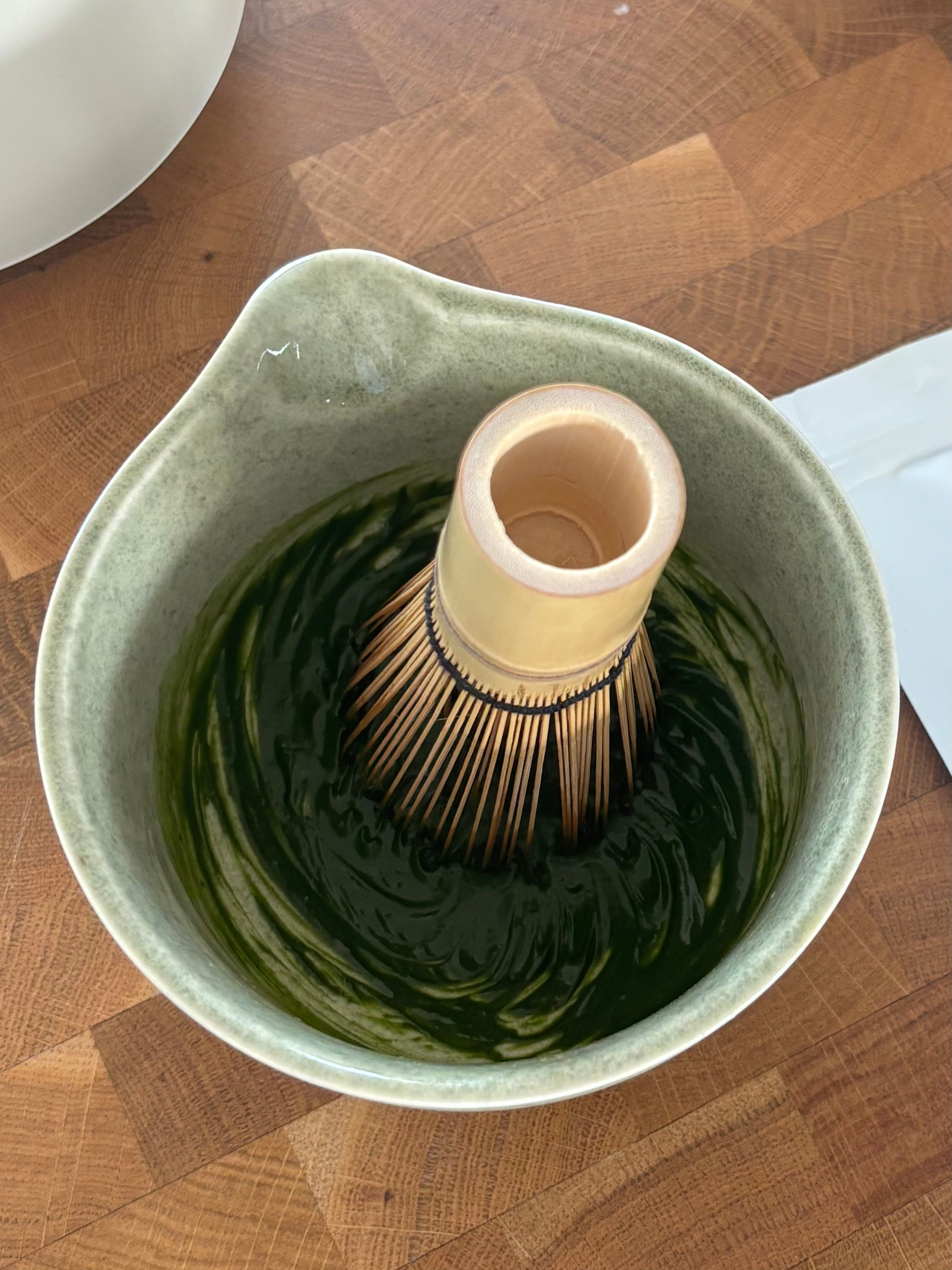
Several factors shift that balance. Cultivar matters: Okumidori tends toward a clean, grassy sweetness, while Saemidori runs richer and more rounded. Freshness matters too. Older matcha tastes flat, with bitterness pulling forward and no sweetness to meet it. Concentration matters as well: more powder means deeper umami and a thicker, almost creamy texture; less powder reads lighter and more delicate.
In a latte, milk softens the vegetal edge and rounds the bitterness considerably. The umami recedes, and what you mostly taste is a gentle, green-tinged sweetness. Neither form is better; they are genuinely different experiences of the same leaf.
Ceremonial Grade vs. Culinary Grade Matcha
Neither "ceremonial grade" nor "culinary grade" has a legal definition, so the grade claim alone tells you very little. In practice, ceremonial-labeled matcha is meant for drinking plain, whisked into water, where flavor is front and center. Culinary-labeled matcha is blended for baking or milk-forward drinks, where a bolder, slightly more astringent character works in its favor.
What actually separates good matcha from poor matcha is sourcing and processing: the region, the cultivar, the harvest flush, and how the leaf was handled from field to mill. If a tin says "ceremonial grade" but lists no cultivar, no region, and no harvest information, the label is doing all the work.
Matcha’s Caffeine Content
Caffeine content in matcha depends on the powder itself and how much you use, not the size of your cup alone.
Published research suggests a range of roughly 18.9 to 44.4 mg per gram of matcha, though that spread reflects real variation across cultivars, harvest flushes, and growing conditions. For a closer look at matcha green tea caffeine content, the powder amount is the primary lever. Treat it as a working estimate.
A typical cup of brewed coffee contains around 95 mg of caffeine. A standard matcha serving uses 2 to 4 grams of powder, putting it considerably lower in most cases, though exact totals vary by cultivar and harvest. At 6 grams, that gap narrows. The powder amount is the lever.
Matcha’s Wellness Appeal and Practical Cautions
Matcha contains catechins (particularly EGCG), L-theanine, and caffeine in meaningful concentrations. What research does not yet support are clean cause-and-effect claims: matcha is not a treatment, a, or a proven aid for any specific health condition. The fair framing is that it is a nutrient-dense drink with compounds researchers find interesting.
On caffeine, the Mayo Clinic's 400 mg daily guidance appears safe for most healthy adults. Sleep quality, sensitivity, pregnancy, breastfeeding, and certain medications all shift where your personal threshold sits. If any of those apply, speak with a healthcare professional before adding matcha to a regular routine.
Ways to Prepare and Enjoy Matcha
Matcha is flexible enough to meet you wherever you are. The most direct form is a plain whisked bowl: powder, water, foam, nothing else. From there, the range opens up. An iced matcha latte over cold milk is the most popular entry point for new drinkers. Lattes, hot or iced, soften the bitterness with milk and make the flavor more approachable. Matcha also works in baking, adding color and a faint grassy note to everything from cookies to glazes.
Tools for a Whisked Bowl
Three tools do most of the work:
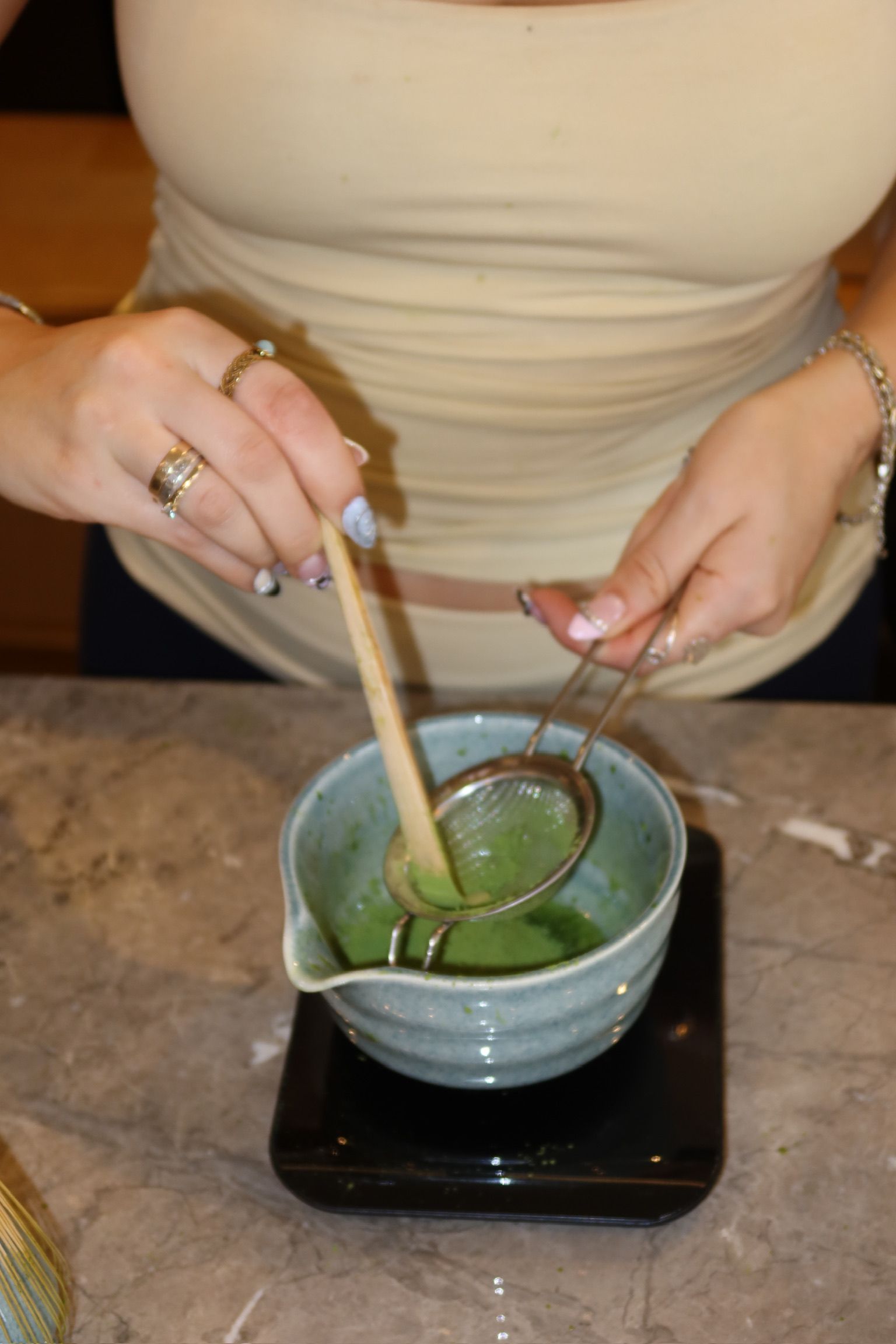
- A fine sifter to break up clumps before any water touches the powder, which is necessary if you want smooth foam.
- A wide bowl that gives the chasen room to move freely through the water.
- A bamboo chasen, the split-tine whisk traditional to the preparation.
The Cold-Whisking Method
The approach we use at Azure runs through three stages: sift the powder into the bowl, add a small splash of room temperature water and whisk into a smooth paste, then add the rest of the water and whisk in a tight W or M motion until you see fine, dense foam. The three minutes that make the cup break this down in detail. Room temperature water, not hot, keeps the leaf's character intact and avoids drawing out bitterness before it belongs there.
How to Choose Matcha
What actually signals quality is the information a producer is willing to share.
Look for these when sizing up any tin:
- Named origin (Uji, Kagoshima, and Shizuoka are Japan's three main producing regions)
- Cultivar, where available (Okumidori, Saemidori, and Yabukita all taste different)
- Harvest flush (first-flush leaves are harvested earlier in the season and tend to be sweeter and more delicate)
- Processing notes (stone-ground versus mechanically milled affects texture)
- Airtight packaging with a production or best-by date
- An ingredient list with nothing except matcha
Color matters too. Vivid, saturated green points to good chlorophyll content and freshness. Dull, yellowish, or brownish powder signals age or lower-grade leaf, regardless of what the label says.
How to Store Matcha
Matcha has four enemies: air, moisture, heat, and light. Oxygen stales the leaf quickly, heat accelerates it, moisture clumps the powder and invites off-flavors, and direct light degrades chlorophyll fast. Left unsealed on a counter, even a good tin goes flat within weeks. This is part of why the first flush is worth protecting from the moment the leaves are picked.
Keep matcha in a tightly sealed, opaque container away from sunlight and heat sources. Some tins are designed to be refrigerated after opening; others are shelf-stable. Either way, resealing firmly after each use matters most.
How to Tell If Matcha Has Gone Stale
Freshness shows itself clearly when something is off. There are three things to check:
- The aroma goes first. Good matcha smells green, slightly grassy, faintly sweet. Stale matcha smells like nothing, or faintly dusty.
- The color dulls from a vivid, saturated green toward something yellower or muted.
- The flavor flattens, and bitterness moves forward without sweetness to balance it.
None of these signals a food-safety concern, but they do mean the leaf has lost what made it worth drinking.
Learning About Matcha With Azure Matcha
Everything discussed in this guide, from cultivar to processing to preparation, comes together in a single tin when the sourcing decisions are specific enough to matter.
Our Azure Premium Blend is built on two cultivars: Okumidori and Saemidori. The leaves are shade-grown for four weeks, hand-picked during the first flush, and stone-ground in small batches in Uji, Japan. That sequence produces the flavor profile you get in the cup: pistachio, almond, mellow umami, and sweet cream caramel, without bitterness pulling forward.
We prepare it using the cold-whisking method. The working serve is approximately 4g per cup, with 3 to 6g as the adjustable range. More powder means stronger flavor and a creamier result, so adjust to your preference.
Pre-order opens in October 2026. Visit the Azure Premium Blend page to be notified when it goes live.
Final Thoughts on Matcha and What Makes It Worth Knowing
The details covered here, such as cultivar, harvest flush, processing method, and storage, only matter because they show up in the cup. That feedback loop is the whole point. Start with something well-sourced, pay attention, and the category opens up from there.