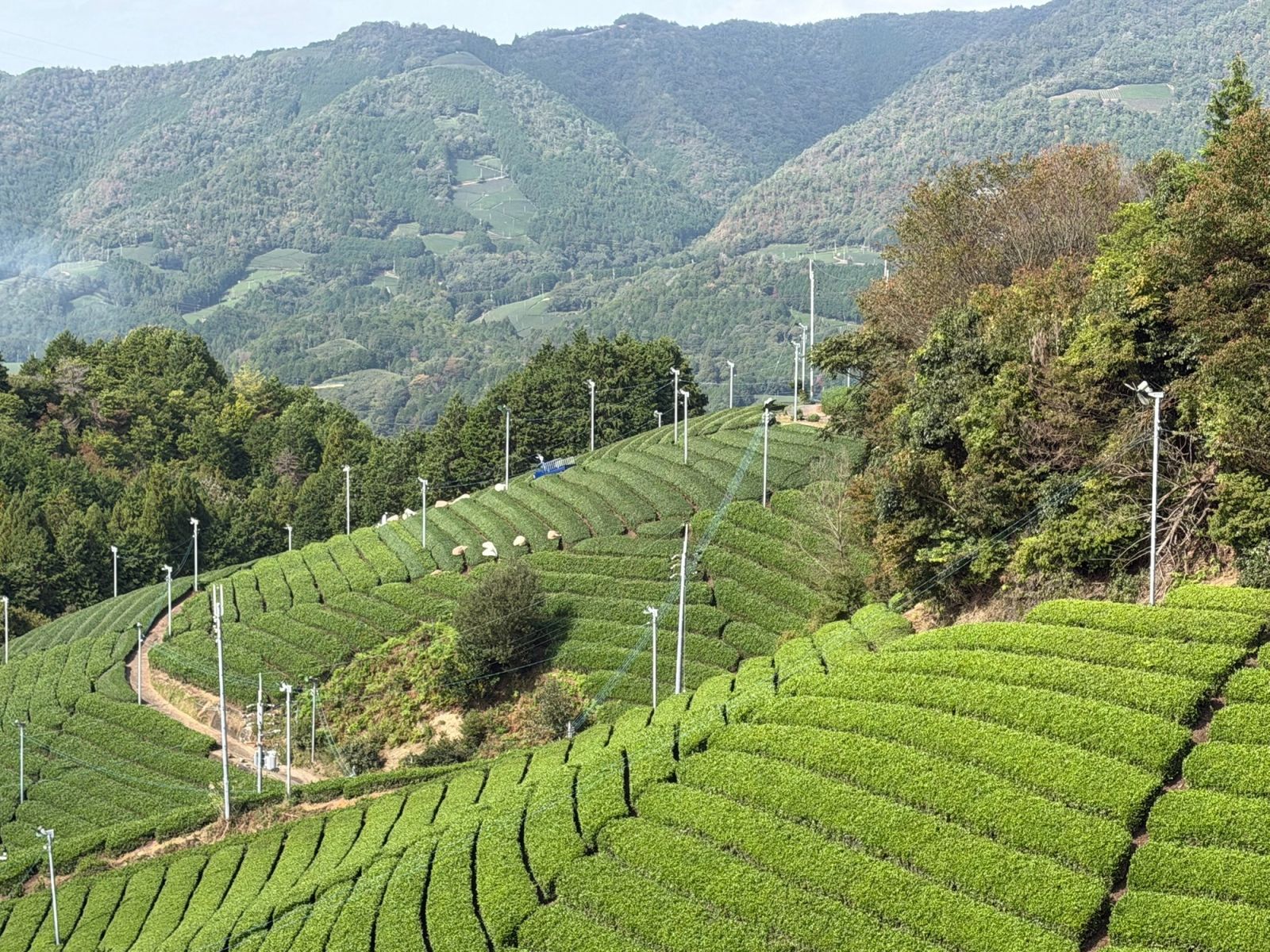
Seeing frost fans in tea fields alongside shade covers, you could assume they're doing the same job. They're not: shading controls light, while fans move warmer air toward shoots threatened by spring frost. Neither the equipment nor a field photo tells you how the finished tea will taste. Separating those roles helps you understand what's protecting the harvest and what shapes the leaves that reach your cup.
TLDR:
- Frost fans in tea fields move warmer air down to protect tender spring shoots.
- Fans offer limited protection when the air above the tea field is also too cold.
- Shading shapes tencha’s flavor and color, a separate job from frost protection.
- Check your matcha’s region, cultivar, harvest season, shading, and processing.
- Azure Matcha confirms Saemidori frost protection, but its source farm’s fan use is unverified.
Frost Fans in Tea Fields Protect Spring Shoots
Frost fans in tea fields protect tender spring shoots by moving warmer air down toward the plants. The powered fans sit on tall poles. They do not cool the bushes or generate electricity.
On clear, calm nights, the ground loses heat. Air near the tea canopy can then become colder than the air above it. When a warmer layer is available, fans push that air toward the shoots, helping raise the temperature around the leaves.
If the air above the field is also too cold, mixing offers limited help. Growers use these fans to protect young leaves destined for the spring first flush from damage before picking begins.
Why the First Flush Is Vulnerable to Spring Frost
Ichibancha is the first tea picking of the year, following winter dormancy. As buds open and fresh leaves unfold, tender growth is exposed to late cold spells.
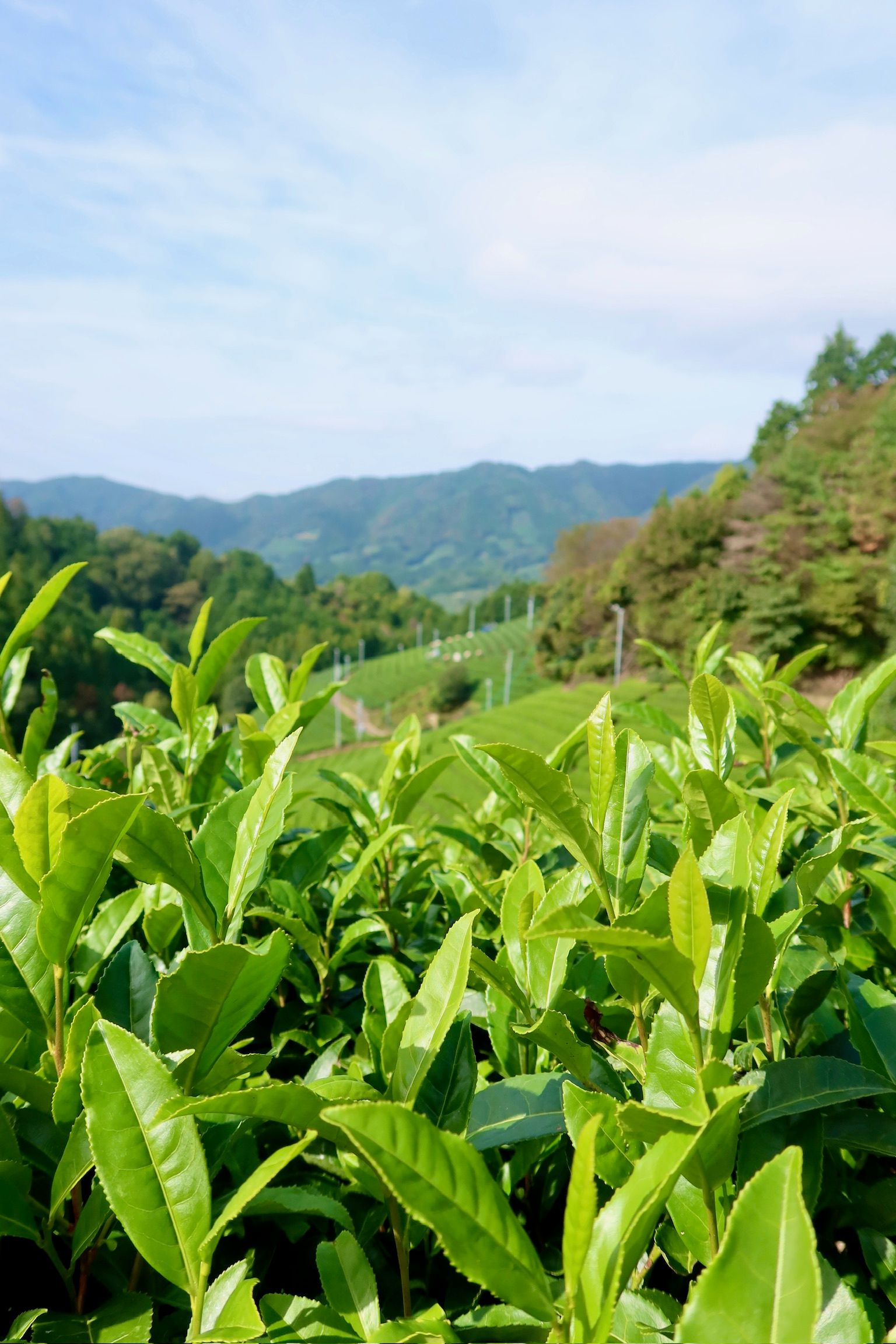
Frost can injure or kill young shoots while the tea bush survives. A living plant can still mean a lost picking opportunity: damage may reduce or delay the planned harvest while the bush produces replacement growth.
First-flush leaves go into several kinds of Japanese tea; only some are grown and processed for matcha. Frost protection preserves the crop growers intend to pick. Sweetness and umami depend on factors such as cultivar and growing practices, with processing shaping the finished tea.
Frost Protection Across Uji, Kagoshima, and Shizuoka
Frost fans in tea fields reflect local growing conditions, not a region's reputation. Across Uji, Kagoshima, and Shizuoka, weather and the timing of new growth shape frost risk, even between nearby fields. In Shizuoka, tea-field trials have also shown how sprinkler frost protection works: water releases heat as it freezes on the plants, protecting shoots without warming them by moving air.
Wazuka is a town in Kyoto Prefecture's Uji tea region, separate from Uji city. A government tourism brief estimates that Wazuka grows about 49% of Kyoto's Uji tea, giving this small town a large role in the region's harvest.
- Uji. Local context: Wazuka's hillside fields sit within this broader tea region.
- Kagoshima. Local context: A southern location still calls for attention to spring cold spells.
- Shizuoka. Local context: Frost planning depends on field conditions and the crop's stage of growth.
Protection routines vary by farm. Growers may use fans or covers, alongside seasonal choices such as pruning timing.
Frost Protection and Shading Serve Different Roles
Shade canopies control the light reaching tea leaves before harvest. For tencha, that shapes flavor and color.
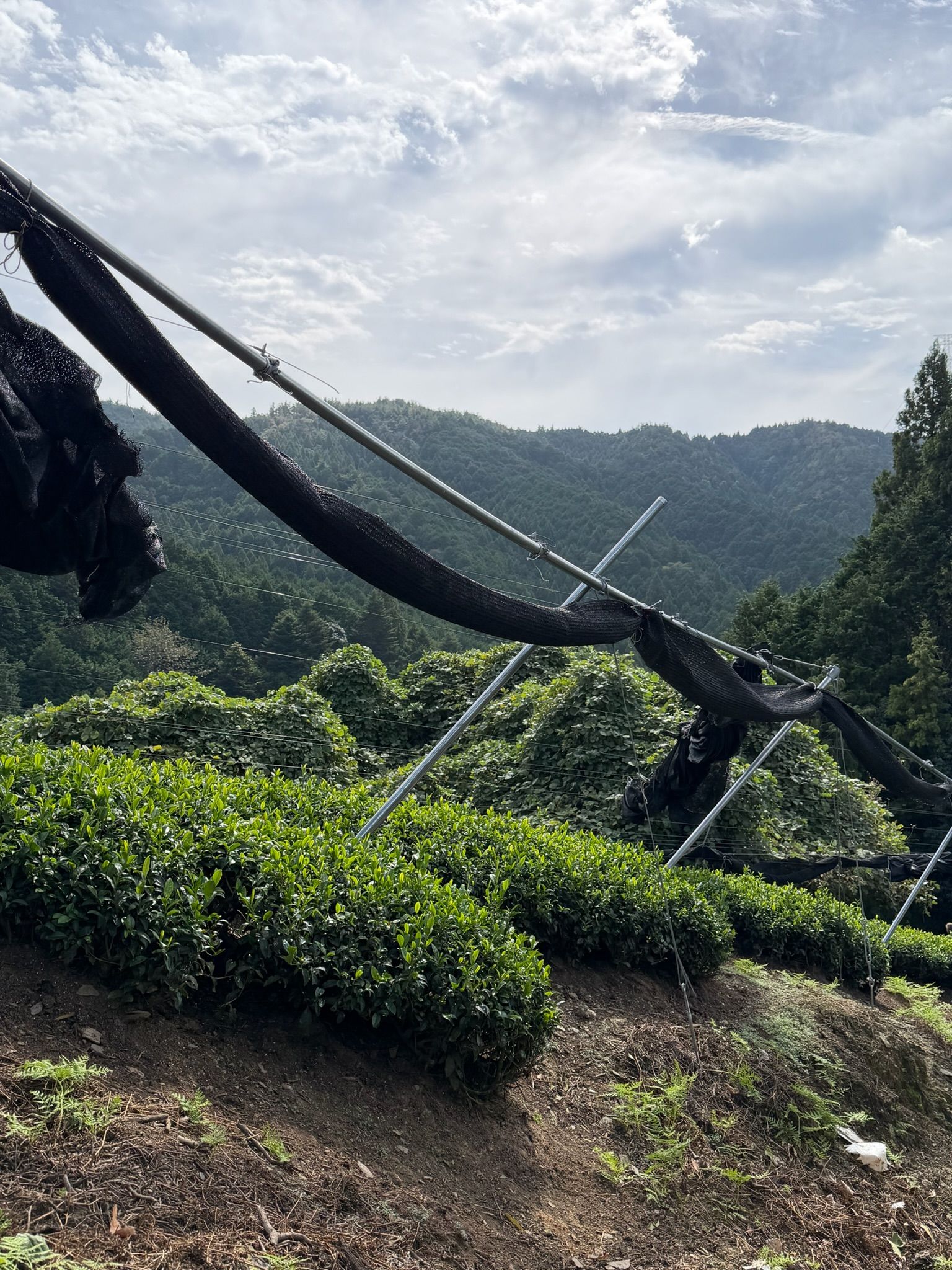
Shading began as frost protection before developing into a flavor-shaping practice. A Kyoto tea research paper traces shading cultivation's frost-protection origins back more than 400 years. Growers later recognized differences in shaded tea's flavor, aroma, green color, and softness. The paper also reports higher free amino acid content in matcha and gyokuro compared with open-sun-grown sencha.
After picking, leaves destined for tencha are steamed and dried without rolling. Removing stems and veins leaves the material ground into matcha. Shading is one step in that path from field to powder, a path that also separates ceremonial and culinary matcha grades.
What Harvest Protection Reveals About Matcha Quality
Frost fans in tea fields offer one clue about a grower's care for a seasonal crop. A clear account of what was grown and how it was handled tells you more than a farm photograph.
Harvest protection takes equipment and upkeep. Leaf selection adds labor, shading requires materials and time, and careful processing adds work before powder reaches a tin. These steps contribute to production costs, but price alone cannot tell you how matcha will taste. Cultivar and processing choices also shape the cup, both central to what makes high quality matcha.
When assessing matcha, look for details you can trace:
- A named growing region, with farm information where available, alongside JAS organic certification details where applicable.
- The cultivar or cultivars used in the blend.
- The harvest season, plus an account of shading and processing.
“Ceremonial grade” has no legal definition. A seller using that phrase should still explain what is in the tin and how it was made.
Azure Matcha’s Spring Harvest Standards
We work farm-direct with tea producers across Uji, Kagoshima, and Shizuoka, part of the Azure blend and method behind every tin. Our Azure Premium Blend comes from Wazuka: hand-picked, first-flush Okumidori and Saemidori, shaded for four weeks and stone-ground in small batches in Uji. We use spring harvest only.
Our sourcing notes confirm that the farm protects frost-sensitive Saemidori. Whether it uses frost fans is unconfirmed, so we share only the documented harvest standards behind Azure Premium Blend.
Final Thoughts on Frost Fans and Your Matcha
Each spring brings a new first flush and new weather to get through. Read the label for region, cultivar, and harvest season, and ask us when a detail is missing.
FAQ
No. A missing fan photo does not tell you whether a farm protects its crop or how the matcha will taste. For Azure Premium Blend, judge the documented details: first-flush Okumidori and Saemidori from Wazuka, four weeks of shading, and small-batch stone grinding in Uji.
No. A later picking date alone does not prove that tea comes from a later flush; the growth being harvested matters. If frost affects a crop, ask Azure Matcha to confirm the batch’s harvest details instead of judging by the picking date alone.
Read Wazuka as the growing location and Uji as both the broader tea-region name and the stated milling location. Azure Premium Blend’s cultivars grow in Wazuka, within Kyoto Prefecture’s Uji tea region, and are stone-ground in Uji. When checking origin claims, separate where the leaves grew from where they were processed.