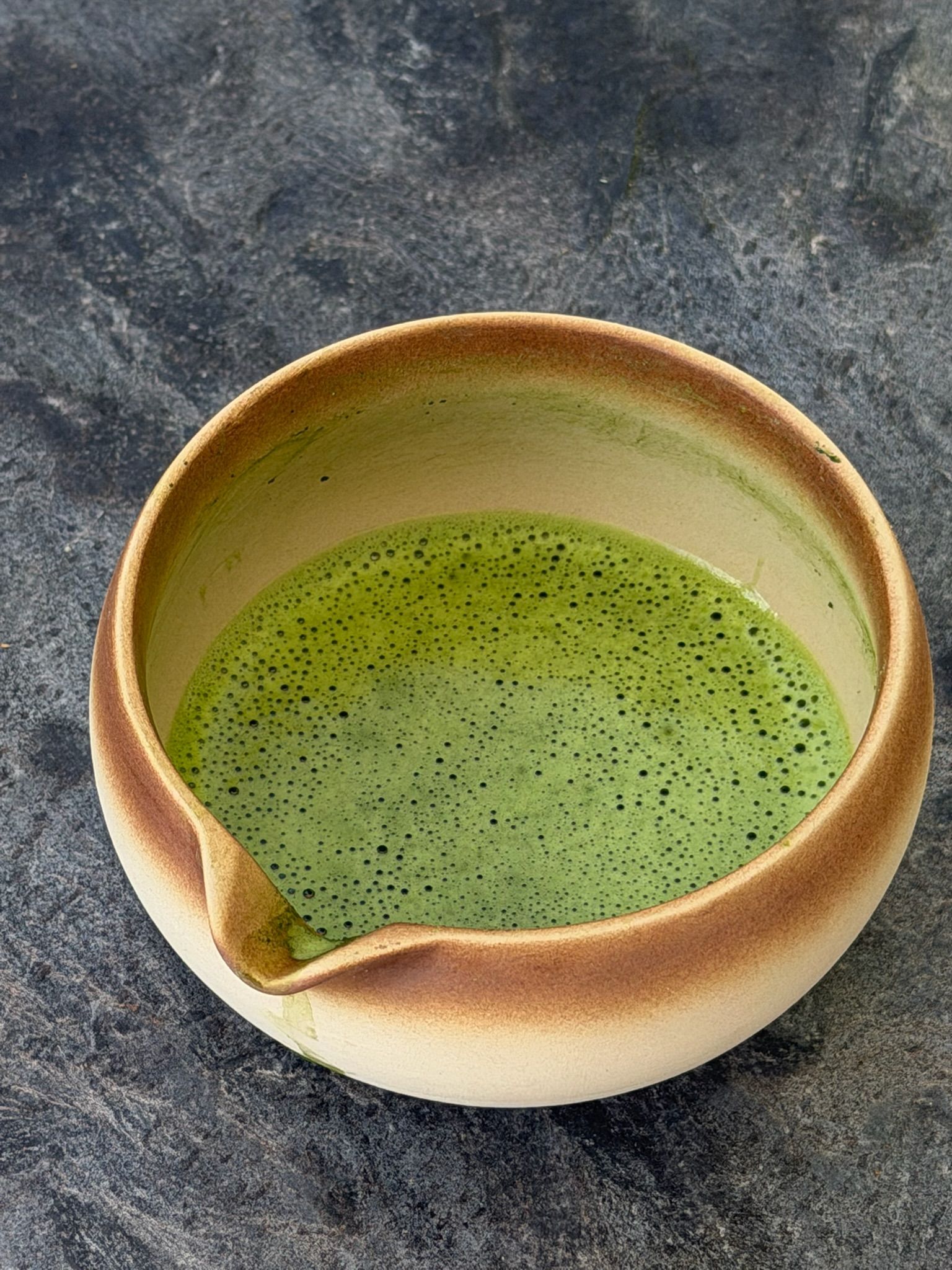
The first time you taste a first-flush, shade-grown bowl next to a generic ceremonial grade, the difference is hard to miss. Getting there consistently is the harder part. Knowing what to look for in a cultivar, a harvest, and a growing region is what makes the difference between a good tin and a forgettable one.
TLDR:
- Quality signals: cultivar, harvest flush, growing region, and milling date.
- "Ceremonial grade" has no legal definition; source details are what confirm quality.
- Powder match: first-flush for a whisked bowl, second flush for lattes, culinary for baking.
- Tasting setup: approximately 4g per bowl, room temperature filtered water, same bowl and chasen each time.
What Defines High Quality Matcha
Matcha is finely milled tencha, the shade-grown leaf prepared for grinding and nothing else. Tencha has its stems and veins removed before milling, which gives quality matcha its smooth texture and clean flavor. Powdered green tea, instant blends, and sweetened drink mixes share shelf space but are different products entirely.
Defining quality by price or packaging alone will steer you wrong. What actually signals quality is traceable production: the cultivar, the harvest flush, the growing region, and when it was milled. Matcha oxidizes, and older powder tastes flat regardless of what the label claims.
Fit for purpose also plays a role. A whisked bowl calls for different leaf than a latte or a baked good.
Color, Aroma, and Texture Reveal Quality
Vivid green is the first indicator worth checking. Color ranges from yellow-green to a saturated jade depending on cultivar, region, and shade duration. Brighter, deeper greens tend to indicate higher chlorophyll from longer shade coverage, but color alone can be gamed with additives or dyes, so it confirms nothing on its own.
Smell the powder before you whisk. Fresh matcha carries a grassy, vegetal sweetness with some depth underneath, sometimes nutty, sometimes faintly oceanic. Stale matcha smells flat, hay-like, or slightly sour.
Rub a small amount between your fingers. Fine, silky powder with minimal clumping indicates good milling. Gritty or chunky powder suggests coarser grinding or older stock.
On the palate, some bitterness is normal and not a flaw. First-flush, shaded leaf tends to have rounder umami with a cleaner finish. A harsh astringency that lingers well past the cup usually points to later-harvest leaf, less shade time, or age.
Ceremonial and Culinary Labels Need Context
"Ceremonial grade" appears on a lot of matcha packaging. It carries weight as a term, but no regulatory body defines it, and no legal standard specifies which cultivar, harvest flush, or processing method qualifies. Any producer can print it.
In practice, the label is a commercial signal, not a specification. Culinary grade typically refers to later-harvest leaf with less shade time, producing more bitterness and a less refined flavor. Ceremonial grade generally implies first-flush, shaded leaf ground to a finer particle size. Those patterns hold often enough to be useful, but they are tendencies, not guarantees.
What the label cannot tell you is where the leaf came from, which cultivar was used, or when the powder was milled.
Cultivars Shape Matcha’s Character
Cultivar refers to the specific variety of Camellia sinensis plant. Tea farmers select cultivars the way winemakers select grape varieties: for yield, resilience, and above all, flavor.
A few names come up repeatedly when shopping:
- Yabukita: the most widely planted cultivar in Japan, reliable and mild, with a clean grassy flavor
- Okumidori: deeper green color, rounder umami, tends toward a smoother finish
- Saemidori: bright green, pronounced sweetness, often a finer aroma
- Gokou: associated with Uji, earthy depth, complex, less common outside specialty producers
Soil, shade duration, and harvest timing can pull any cultivar in a different direction. A Saemidori grown in poor conditions will not taste like one grown well.
Single-cultivar matcha lets the leaf's individual character come through clearly. Blends layer complementary cultivars to balance aroma, body, and finish in ways a single variety might not achieve alone.
Harvest and Shading Influence the Leaf
First harvest matcha refers to the season's earliest harvest, typically late April to May in Japan. Leaves picked at this point are younger, more tender, and higher in L-theanine, which contributes to the smooth umami character serious drinkers look for. Later harvests yield more leaf volume but tend toward greater bitterness and a rougher texture.
Shading is a separate variable. Covering tea plants before harvest reduces photosynthesis, which keeps L-theanine high and lowers the formation of catechins responsible for astringency. Research comparing open-air cultivation with 85% and 95% shade treatments found measurable differences in chlorophyll and amino acid content, though those experimental intensities are not industry-wide purchasing standards. Shade duration and coverage genuinely move the chemistry of the leaf, and producers make deliberate choices about both.
Neither first flush nor shading is a guarantee on its own. A heavily shaded later harvest can outperform a lightly shaded first flush in certain quality markers. What matters is how those decisions combine, and whether a producer is transparent enough to share them.
Growing Region Adds Context, Not a Quality Ranking
Region matters, but it is not a shortcut to quality. Uji matcha, from Kyoto Prefecture, holds the oldest reputation in Japanese tea, and that history is real. Nishio, in Aichi, produces a large share of Japan's total matcha volume with strong technical infrastructure. Kagoshima benefits from a warmer climate that supports earlier harvests and high yields. Shizuoka is Japan's largest tea-producing region overall, though it is better known for sencha than matcha.
Each region has real terroir differences in soil, elevation, and climate. But region alone cannot tell you which cultivar was grown, how long it was shaded, or which flush was harvested.
One distinction worth watching: where tea is grown is separate from where it is blended, milled, or packed. Some tins list a milling location without specifying the farm origin. Ask where the leaf was actually grown, not where the powder was finished.
Processing and Milling Affect the Finished Powder
After harvest, tencha leaves are steamed quickly to halt oxidation, then dried without rolling. That unrolled structure separates tencha from every other Japanese green tea. Stems and veins are removed before milling, which reduces fiber content and sharpens the powder's texture and flavor clarity.
Milling is where the finished character of matcha takes shape. Stone grinding is the traditional method and still produces distinctive results: irregular particles that research associates with better foam stability and a characteristic aroma. Research comparing cyclone, bead, and stone milling found measurable differences in physical properties, taste, and aroma across methods, so "stone-ground" on a label is a starting point, not a conclusion.
Particle size matters practically. Finer powder disperses more evenly and produces a cleaner finish in the bowl. Coarser milling leaves a grittier mouthfeel regardless of leaf quality. Our Azure Premium Blend is stone-ground in Uji in small batches, keeping heat exposure low and preserving the leaf's aroma through the milling stage.
Match the Tea to Bowls, Lattes, or Baking
Not every preparation calls for the same powder, and buying the most expensive tin for baking is genuinely unnecessary.
A plain whisked bowl puts everything on the table: no milk, no sweetener, nothing to soften or redirect. Delicate aroma and a clean, rounded finish matter most here. First-flush leaf with longer shade time will show clearly in this format.
Iced matcha lattes work differently. Milk rounds out bitterness and adds body, so you want a powder with enough flavor presence to still register after dilution. A very delicate leaf can disappear entirely.
Baking tolerates the most variation. Heat changes the aroma profile regardless of starting quality, and sweeteners and fat reshape the flavor. A later-harvest, lower-cost powder performs well once it's in a batter.
- Plain whisked bowl. What matters most: Aroma, umami, clean finish; Harvest to consider: First flush, long shade
- Latte or milk-based drink. What matters most: Flavor presence, color; Harvest to consider: First or second flush
- Baking. What matters most: Vivid color, consistent grind; Harvest to consider: Second flush or culinary
Reading Online Listings and Price
Pricing tells part of the story. A tin priced below $15 for 30g of "ceremonial grade" matcha should prompt questions. The economics of first-flush, shade-grown, stone-ground leaf make very low prices hard to explain. Pricing often falls between $0.50 and $1.50 per gram for ceremonial-grade powder, with single-origin or rare-cultivar tins often running higher.
When reading a listing, check for:
- Cultivar name, beyond a generic "Japanese matcha"
- Harvest flush and season (first flush, spring 2026, etc.)
- Growing region and ideally farm or producer name
- Milling method and location
- Packaging or milled-on date, beyond a "best by" window
- Net weight listed clearly so price-per-gram is calculable
Organic certification and third-party contaminant testing answer different questions than sensory quality does. A certified-organic powder from a late harvest may taste rougher than a non-certified first-flush from a transparent producer. Both attributes matter, but neither substitutes for the other.
If origin details are vague or missing, send the seller a question. Most serious producers answer readily; silence or a generic response usually signals blended stock without traceable sourcing.
Freshness and Storage Preserve Quality
Matcha oxidizes once the tin is open. Oxygen, light, heat, and moisture all work against the powder, and any one of them will flatten the flavor before it runs out.
Airtight, opaque packaging slows the damage. A tin on a sunny counter degrades faster than one kept in a cool cupboard, even with the lid sealed. Refrigeration works only if the container seals tightly enough to prevent condensation when returned to room temperature.
Buy a size you can finish. A 30g tin used over three to four weeks will taste better than a 100g bag sitting for four months. Follow your producer's guidance, since milling method, particle size, and packaging quality all affect how quickly a powder fades.
One date distinction matters: harvest date and milling date are separate. Leaf can sit as tencha for months before milling. A spring harvest milled in autumn is older than the harvest date alone suggests. Look for a milled-on or packed-on date when available.
A Consistent Tasting Setup Makes Comparison Fair
A fixed preparation protocol matters more than most people expect. Preparation variables swamp quality differences fast, so keeping conditions identical across samples is the only way to trust what you're tasting.
Keep these consistent across every sample:
- Dose: approximately 4g per bowl (3-6g works; more powder means a stronger flavor and creamier result), weighed on a small scale so concentration stays identical
- Water: room temperature, filtered, same volume each time
- Equipment: same bowl, same chasen, same number of whisk strokes
- Timing: taste within 30 seconds of whisking
With those fixed, taste in sequence. Start with aroma before whisking: lean close and smell the dry powder. Fresh, vibrant matcha has a grassy sweetness with depth behind it. After whisking, check color and foam density before tasting.
What to Note on the Palate
On each sip, track four things: first impression (sweet, vegetal, grassy), mouthfeel (silky, gritty, thin), flavor balance (umami against bitterness), and finish length. A quality leaf holds its flavor for a beat after swallowing. A flat or harsh finish that cuts off abruptly usually signals age or a rougher harvest.
Take notes between samples instead of relying on memory. Palate fatigue sets in quickly, and impressions blur after three or four powders without a reference point.
Azure Matcha’s Cultivar, Harvest, and Processing Details
Our Azure Premium Blend combines Okumidori and Saemidori, producing a profile of pistachio, almond, mellow umami, and sweet cream caramel.
The leaf is hand-picked in the first flush and shaded for four weeks before harvest, keeping L-theanine high and bitterness in check. Stone grinding happens in small batches in Uji, Japan, with growing regions across our sourcing network spanning Uji, Kagoshima, and Shizuoka.
Pre-order opens in October 2026. Sign up on the Azure Premium Blend product page to be notified when it's available.
Final Thoughts on Sourcing and Tasting High Quality Matcha
The sourcing details and tasting variables covered here compound over time. Each tin you assess with a fixed setup sharpens the pattern recognition for the next one. The difference between a producer worth returning to and one that isn't usually comes down to whether the story on the label holds up when you ask a single direct question.
FAQ
A typical 3g serving of ceremonial-grade matcha contains somewhere in the range of 60 to 80mg of caffeine, though published figures vary and should be treated as working estimates until confirmed by lab data. The exact amount also changes with cultivar, shade duration, and harvest flush. First-flush, heavily shaded leaf tends to be higher in L-theanine, which moderates how the caffeine is absorbed and supports a calmer, more even energy. For a full breakdown, see our guide on matcha green tea caffeine content.
High quality matcha is finely stone-ground tencha: shade-grown leaf with stems and veins removed before milling. Regular powdered green tea skips the shading and the tencha processing, which produces a rougher texture, more bitterness, and none of the smooth umami character that first-flush, shaded leaf carries.
Check for cultivar name, harvest flush, growing region, milling method, and a milled-on or packed-on date. A listing that only says "Japanese matcha" or "ceremonial grade" without those specifics gives you little to go on. Price is a signal too. See the sourcing section for a working range and what drives prices above or below it.
The label alone tells you nothing verifiable, since no regulatory body defines ceremonial grade and any producer can print it. What actually confirms quality is the sourcing detail behind it: which cultivar, which harvest flush, how long the plants were shaded, where the leaf was grown, and where and how it was milled.
Both work well for a plain whisked bowl, but they pull in different directions. Okumidori gives a deeper green color and rounder umami. Saemidori adds brightness and a more pronounced natural sweetness. Blending them, as in the Azure Premium Blend, layers those qualities so neither dominates.
Region affects the leaf through real terroir differences in soil, elevation, and climate, but it cannot substitute for cultivar, harvest flush, and shade duration as quality markers. Uji carries a long history, but a well-farmed first-flush Saemidori from Kagoshima can outperform a poorly documented Uji tin. Ask where the leaf was grown, and also where the powder was milled or packed.