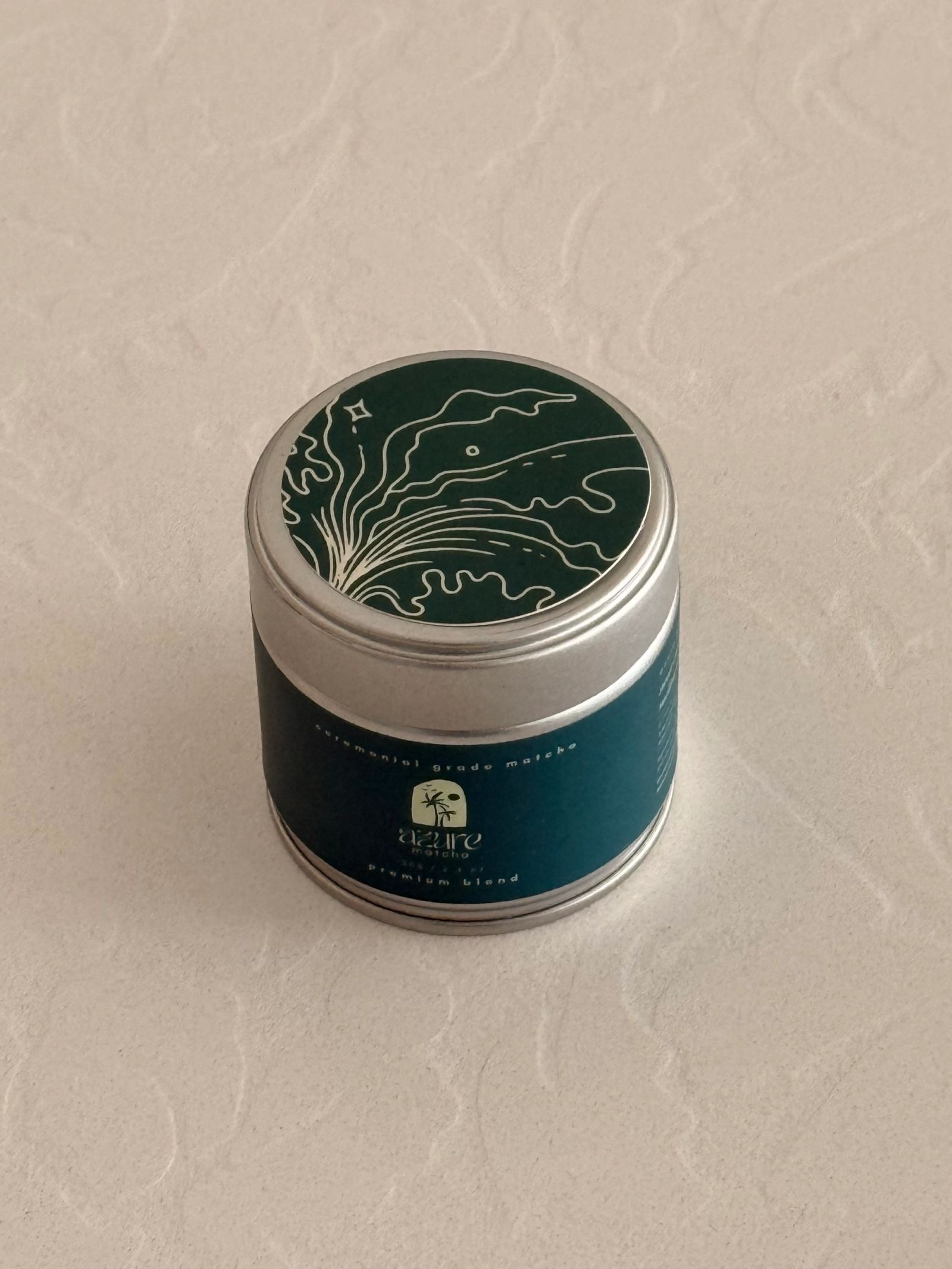
Looking for the best matcha powder can leave you comparing labels that sound alike but reveal very different details. You deserve to know which claims have supporting records and which still need checking. We haven’t independently tasted or lab-tested these powders, so our comparison focuses on sourcing, harvest, processing, and ingredients to help you ask better questions before buying.
TLDR:
- Check your matcha label for pure tea, named cultivars, harvest, origin, and milling details.
- Look past “ceremonial grade.” The term has no legal definition.
- Treat this list as editorial, not independently tested.
- Azure Matcha’s blend uses first-flush Okumidori and Saemidori, stone-ground in Uji.
What Is Matcha Powder?
Matcha is finely ground green tea made from shade-grown tencha leaves. After drying, the leaves have their stems and veins removed before being milled, traditionally between stone grinding wheels. When choosing the best matcha powder, look for pure tea powder, distinct from sweetened drink mixes. Unlike loose-leaf tea, matcha is processed into fine powder.
Look for a named cultivar, harvest, origin, and processing details. These tell you more than broad quality labels alone. Shading matters because covering the plants in the weeks before harvest slows growth and builds amino acids such as L-theanine, which gives the cup a rounder, sweeter character. Harvest timing matters too: first-flush leaves, picked in spring, are gentler in flavor than later pickings that see more sun. Milling is the last step, and slow stone-grinding keeps the powder fine without scorching the leaf. Pure matcha lists one ingredient, tea. If a tin lists sugar, flavoring, or milk powder, you are buying a drink mix.
How We Ranked Matcha Powders
Our best matcha powder selection is editorial, without independent tasting, lab tests, or ratings analysis. Missing details remain unverified.
- Origin: Region, farmer relationships.
- Cultivar: Blend or single cultivar.
- Harvest: First flush, shading duration.
- Processing: Milling method, location.
- Ingredients: Pure matcha or additions.
- Availability: Sizes, shipping, ordering status.
Sensory notes come from producers. The matcha quality assessment review is background, not ranking evidence.
Best Overall Matcha Powder: Azure Matcha
Our flagship Azure blend is our pick for readers seeking the best matcha powder with clear sourcing and guidance. It pairs Okumidori and Saemidori cultivars, shade-grown for four weeks and hand-picked in the first flush.
Stone-ground in small batches in Uji, Japan, our core blend comes directly from farmers, without distributors or middlemen.
Our tastings and masterclasses connect those production details with the tea in your bowl. For home preparation, sign up for availability updates. Tins are listed for early sign-up, coming out end of October!
Feature Comparison Table of Matcha Powders
The table below covers the six details that tell you the most about any matcha powder: origin, cultivar, harvest, shading, processing, and ingredients. Each column maps to a step in how the tea is grown and made, so a blank in one column is a question to put to the seller. Azure's row comes from our own production records: Okumidori and Saemidori cultivars, hand-picked in the first flush, shaded for four weeks, stone-ground in small batches in Uji, and sold as pure matcha with nothing added. We added four well-known brands as reference points: Jade Leaf, Cha Cha Matcha, Kettl, and Naoki. Their cells reflect what each brand lists publicly as of September 2026, and we have not tasted or lab-tested these powders. Where a brand does not publish a detail, the cell reads "Not listed." That marks the detail as unconfirmed, not absent. Use these columns as a checklist for any tin you consider, and ask the seller to fill in every blank. Keep in mind that Uji marks where our blend is milled, which is separate from where the leaves were grown.
- Azure Matcha. Origin: Japan; Cultivar: Okumidori and Saemidori; Harvest: Hand-picked first flush; Shading: Four weeks; Processing: Small-batch stone-grinding in Uji; Ingredients: Pure matcha
- Jade Leaf. Origin: Not listed; Cultivar: Not listed; Harvest: Not listed; Shading: Not listed; Processing: Not listed; Ingredients: Varies by product; sweetened latte mixes also sold
- Cha Cha Matcha. Origin: Not listed; Cultivar: Named on some tins; Harvest: Not listed; Shading: Not listed; Processing: Not listed; Ingredients: Not listed
- Kettl. Origin: Farm-direct, 15 Japanese prefectures; Cultivar: Not listed; Harvest: Not listed; Shading: Not listed; Processing: Not listed; Ingredients: Not listed
- Naoki. Origin: Farm-direct, multiple Japanese regions; Cultivar: Varies; single-cultivar set offered; Harvest: First Spring and Superior blends listed; Shading: Not listed; Processing: Not listed; Ingredients: Not listed
Competitor cells reflect publicly listed information as of September 2026. "Not listed" marks an unconfirmed detail, not a missing one. Uji is the milling location; Azure’s blend-specific growing region needs confirmation.
Frequently Asked Questions About Matcha Powder
Buy the powder whose production record you can read before checkout. Azure documents its cultivars (Okumidori and Saemidori), first-flush harvest, four weeks of shading, and small-batch stone-grinding in Uji, and the blend contains nothing but tea. Look for the same on any listing: pure matcha as the only ingredient, a named harvest, and a clear note on where the powder was milled. Choose a size you will finish within a few weeks, since a smaller tin is easier to use while the powder is fresh. Check availability before you plan around a purchase, as tins are currently open for early sign-up.
It has no legal definition, so any brand can print it on a tin. In practice, the term is used for matcha meant to be whisked with water and drunk on its own. Treat it as a marketing label, then look for the records behind it: named cultivars, a first-flush harvest, three to four weeks of shading, and stone-grinding. Those details separate a carefully made powder from a tin that only borrows the word. When you shop for ceremonial-grade matcha, ask for all four before you pay.
Farm-direct matcha is worth considering when the producer relationship comes with clear records for the powder you buy. Ask who grew the tea, which cultivars were used, when the leaves were picked, and where they were milled. A shop can also sell traceable matcha, so farm-direct and store-bought are not opposites. Compare the documented production details without treating the sales channel as proof of better taste or freshness.
Ceremonial-grade matcha is generally marketed for drinking, while culinary-grade matcha is intended for cooking and baking. These are not standardized quality categories, and “ceremonial grade” has no legal definition. For a bowl whisked with water, look for documented cultivar, harvest, and milling details alongside a producer’s tasting notes, since you will taste the tea without other ingredients. For baking, choose a powder whose flavor suits the recipe instead of paying for a ceremonial label alone. A latte does not require culinary-grade powder; choose according to the tea character you want alongside the milk. We use our first-flush Okumidori and Saemidori blend for both standalone tea and milk-based drinks.
Sensory clues cannot prove provenance, so begin with records for the exact powder you plan to buy. Ask for named cultivars, the growing region, harvest season, shading duration, and milling method instead of relying on a ceremonial-grade label. Check that a stone-ground claim identifies the milling location without presenting it as proof of where the leaves grew. When tasting, use the same amount of powder, water temperature, and whisking method across samples so preparation does not distort the comparison. Assess aroma, texture, bitterness, and finish together, instead of relying on green color or foam alone. Use the linked research background for assessment as context, not as verification of a particular tin.
Our official matcha product page offers sign-up. Azure sources from Uji, Kagoshima, and Shizuoka for its matcha blend; shipping covers US states and territories only. Each of those regions has its own growing conditions, and farm-direct sourcing removes distributors from the chain, so the leaf reaches you through fewer hands. Whichever seller you choose, ask for the region, the cultivar, and the milling location in writing.
Why Azure Matcha Is Our Best Matcha Powder Pick
Azure is our best matcha powder pick for readers who value documented production details and an optional guided tasting before building a home ritual, available in a 30g tin. Visit our official matcha page, including the 80g refill option, for early sign-up updates. The 30g tin suits a first purchase, with about seven servings at a 4g dose. The 80g refill suits a daily ritual once you know the dose you prefer. Every serving is prepared with our cold whisking method: sift, paste, whisk.
Final Thoughts on Choosing Matcha With Care
You deserve more than a quality label. We base our pick on production details, with other entries still unverified. Keep your next choice grounded in facts, from cultivar to ingredients.
FAQ
Start with your intended use, budget per serving, and current ordering options. Compare confirmed ingredients, cultivar, harvest, and milling details, then set aside any powder whose product information remains unverified. Azure Matcha lists production details, but its retail release timing still awaits confirmation.
If you are new to matcha, look for clear preparation guidance and a small pack so you can try it before buying more. Experienced drinkers can use documented cultivar, harvest, and growing region to narrow their choices. Neither group should treat missing competitor details as proof of lower quality.
Divide the pack price by its weight in grams, then multiply by your serving size. The suggested dose is 3-6g per cup, with 4g as the working serve; more powder gives a stronger, creamier result. At 4g per cup, a 30g tin provides about seven full servings. Include shipping costs and use the same serving size across powders for a fair comparison. Wait for confirmed prices and pack sizes before drawing value conclusions.