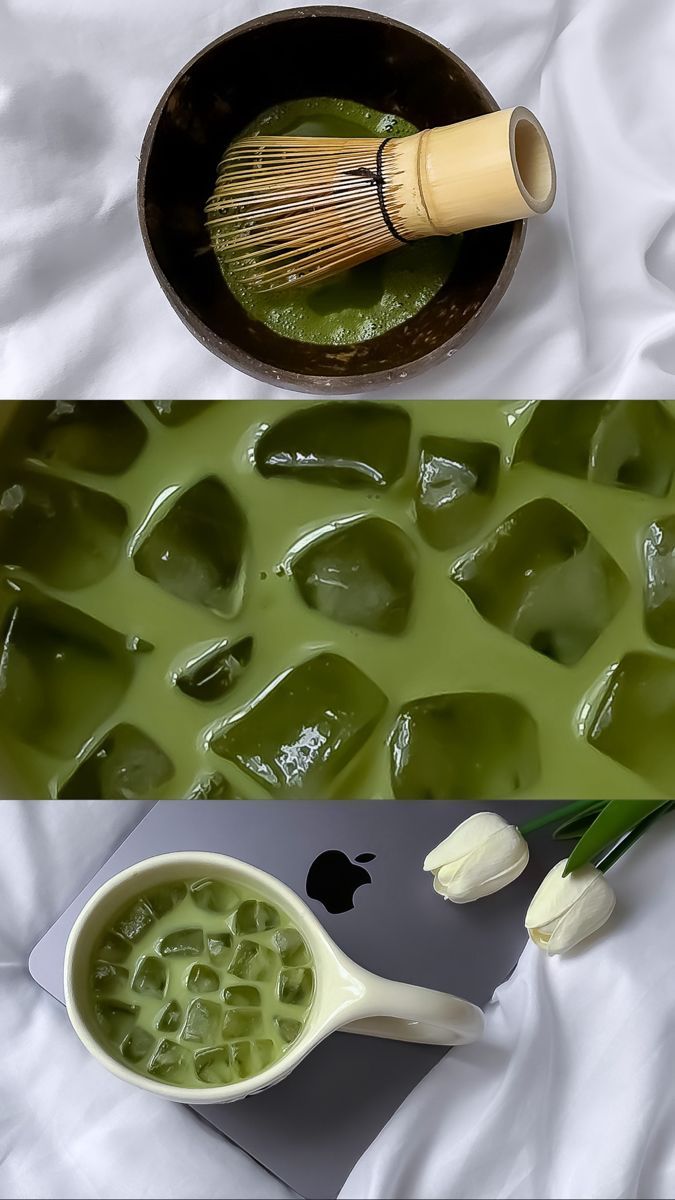
A lot of what you read about matcha and health is built on real research, just not always research that maps cleanly to your morning cup. Studies on weight, focus, skin, and digestion each tell a partial story. Putting those pieces together gives you a much clearer sense of what matcha can and cannot do for you.
TLDR:
- Matcha fits a balanced diet, but most health research used extracts or brewed tea, not whisked powder
- L-theanine slows caffeine absorption, producing steadier energy; a study found 4g improved attention vs. placebo
- A Cochrane review of 1,945 participants found green tea produced weight changes too small to matter clinically
- Café matcha drinks can contain 30 to 40g of sugar from presweetened powder and milk before any added syrup
- Azure Matcha's Premium Blend uses Okumidori and Saemidori cultivars, first-flush, stone-ground in small batches in Uji
The Evidence Behind “Is Matcha Good for You”
Matcha can fit a balanced, healthy diet. Whether it deserves more credit than that depends on which study you're reading and what it actually tested.
Most research attributed to "matcha" or "green tea" studies brewed tea, concentrated extracts, or isolated compounds like EGCG. Those findings aren't always transferable to a cup you whisked at home. A study using high-dose catechin capsules tells you something useful, but it doesn't confirm that your morning matcha latte does the same thing at the same scale.
The rest of this article breaks down what the research does and doesn't support across focus, weight, skin, digestion, and daily intake. Promising findings appear throughout. What they don't add up to is a guarantee that matcha prevents illness or produces dramatic results on its own.
What Matcha Contains and How It Differs From Green Tea
Matcha is the whole leaf, ground into powder and whisked directly into water. Brewed green tea steeps and strains; you get what leaches out. With matcha, you consume everything.
That matters for three compounds in particular: catechins (including EGCG, the most studied), caffeine content in matcha, and L-theanine. Matcha's whole-leaf preparation means higher concentrations per gram than what a tea bag releases. Shade-growing, standard for matcha production, also raises L-theanine content compared to sun-grown green tea.
Flavor follows from that same process. Shade growth deepens the umami, reduces grassy bitterness, and produces the mellow, almost sweet finish that good matcha is known for.
More of a compound isn't automatically more bioavailable or more impactful. What the whole-leaf format offers is a distinct nutritional composition worth understanding separately from brewed teas.
Antioxidants and the Limits of Health Claims
Matcha contains high levels of EGCG and other catechins, and these compounds show antioxidant activity in lab settings. What's less clear is how that activity translates to specific outcomes in the human body at the amounts you'd get from a daily cup.
Lab and animal studies regularly show promising results with green tea compounds and markers related to heart health, blood sugar regulation, and liver function. A review published by Pure Health Research linked matcha's consumption to cardio-metabolic and anti-inflammatory markers, while noting that human research remains limited and more randomized controlled trials are needed.
Animal studies use doses that don't map cleanly to human consumption. Human trials often use concentrated extracts instead of brewed or whisked matcha. Neither invalidates the research, but neither confirms that a daily matcha habit produces those same outcomes at scale.
Heart health, blood sugar, and liver markers are active areas of green tea research. Findings are genuinely interesting. They are research directions, not clinical recommendations.
Matcha, Caffeine, and Mental Focus
Research on the caffeine and L-theanine combination in matcha is more concrete than most health claims. A randomized, double-blind, placebo-controlled crossover study by Dietz et al. involving 23 healthy participants found that 4g of matcha improved attention and memory versus placebo. The sample was small and the window short, so treating these as proof of lasting cognitive enhancement goes further than the data supports.
L-theanine slows caffeine absorption, producing a steadier energy curve than coffee's sharper spike. It does not eliminate caffeine's effects entirely, and individual tolerance varies. At higher doses, matcha can still cause jitters. Adding espresso to a matcha latte compounds this, as total caffeine reflects both sources combined.
Matcha and Weight Loss: Modest Evidence, Not a Shortcut
A Cochrane review covering 18 studies and 1,945 participants found that green tea preparations produced weight changes too small to be clinically important. Matcha is not a weight loss tool in any meaningful clinical sense.
Short-term studies do show that catechins and caffeine together can raise fat oxidation slightly. Lasting, meaningful changes in body weight are a different claim, and the evidence does not support it.
Timing angles like morning matcha, iced matcha, or matcha before bed have no credible research behind them as fat-loss methods. Reddit threads and before-and-after photos are uncontrolled personal accounts where diet, sleep, exercise, and stress are impossible to isolate.
Matcha Lattes and Iced Matcha: The Whole Drink Matters
Plain matcha whisked into water has no added ingredients. A matcha latte or iced matcha latte adds at least milk and often sweetener, which changes the nutritional profile of what you're actually consuming.
Neither milk nor ice makes a drink unhealthy. A latte made with unsweetened oat milk and no added sugar is a reasonable choice. The same drink with flavored syrup, sweetened milk, and a large serving size is a different calculation. "Iced matcha" and "matcha latte" describe preparation styles, not health ratings.
When sizing up a café matcha drink, a few questions cut through the marketing:
- Is the matcha powder presweetened? Some café powders include sugar as a base ingredient, so even an "unsweetened" order may contain added sugar already blended into the powder. Checking the ingredient list or asking staff is the only way to know for sure.
- What milk is used and how much? Whole milk, sweetened oat milk, and plain unsweetened almond milk have meaningfully different calorie and sugar profiles per cup.
- How large is the serving? A 24-ounce drink with sweetened milk and a presweetened powder can contain 30 to 40g of sugar before any additional syrup.
If weight management is part of why you're drinking matcha, the overall drink composition matters far more than whether you ordered it iced or hot. Most café chains publish full nutrition information online for their matcha drinks, which is worth checking before you order.
- Plain whisked matcha (4g). Base powder: Single-ingredient, unsweetened; Milk: None; Estimated added sugar: 0g
- Home matcha latte. Base powder: Single-ingredient, unsweetened; Milk: Unsweetened oat or almond milk; Estimated added sugar: 0-2g
- Café matcha latte (no syrup). Base powder: Often presweetened powder; Milk: Whole or sweetened oat milk; Estimated added sugar: 10-20g
- Café matcha latte (with syrup, 24 oz). Base powder: Often presweetened powder; Milk: Sweetened milk; Estimated added sugar: 30-40g+
Morning Matcha, Empty Stomachs, and Sleep
Morning matcha works well for most people because caffeine and L-theanine together support alertness during hours when you want it. No research confirms that morning matcha burns more fat or does more for your skin than the same cup at noon.
If an empty stomach causes nausea or acid discomfort, drink matcha with or after breakfast. Some people drink it on an empty stomach without any issue. Both are fine.
Evening matcha is where caffeine becomes a real consideration. With a half-life of roughly five to six hours, a late-afternoon or evening serving can delay sleep onset for sensitive people. If you notice disrupted sleep, shifting to earlier in the day is a reasonable fix. The idea that matcha at night accelerates weight loss has no credible evidence behind it.
Matcha and Your Stomach
Matcha contains caffeine and tannins, both of which can irritate a sensitive stomach, particularly on an empty stomach or at higher doses. Nausea, loose stools, or cramping after drinking matcha are signals to reassess your approach.
A few variables are worth separating before drawing conclusions:
- Powder dose: more matcha means more caffeine and more catechins, which increases the likelihood of digestive irritation for sensitive people
- Caffeine sensitivity: some people respond poorly to caffeine regardless of the source
- Drinking without food: an empty stomach amplifies the irritating effect of both caffeine and tannins
- Milk ingredients: lactose, certain sugar alcohols in oat milk, and additives in non-dairy milks can cause digestive issues that get mistakenly attributed to the matcha itself
Research into matcha and gut microbiome modulation is early-stage and does not translate to a recommendation for digestive complaints. If your stomach consistently hurts, reducing your dose or drinking matcha with food is a reasonable first step. Persistent symptoms are worth discussing with a doctor.
Matcha, Skin, and Hair: Keep Expectations Realistic
Antioxidants and anti-inflammatory compounds in matcha generate genuine interest in skin and hair research. The actual evidence covers a narrower scope than most wellness content suggests.
Most studies on green tea and skin involve topical extracts applied directly, or in vitro experiments on isolated cells. Drinking matcha delivers these compounds systemically, but whether that produces measurable changes to skin clarity, tone, or texture at typical serving sizes has not been confirmed in human trials. The research does not support claims of overnight improvement, skin whitening, or acne treatment from drinking matcha daily.
Matcha skin before-and-after photos circulate widely online. They are uncontrolled personal accounts where sleep, hydration, diet, hormones, and skincare routines all shift simultaneously. Isolating matcha as the cause is not possible from a photo.
Hair claims follow the same pattern. Lab studies show green tea compounds interacting with hair follicle cells under specific conditions. That does not translate to a confirmed recommendation that drinking matcha reverses hair loss or meaningfully changes hair growth in humans.
Matcha as part of a varied diet with good hydration is a reasonable habit. Expecting it to function as a skin or hair treatment sets a bar the current research cannot clear.
Daily Matcha Intake and Possible Side Effects
The Mayo Clinic notes that up to 400mg of caffeine daily appears safe for most adults. That's a general ceiling, not a serving target, and your actual threshold may be lower depending on sensitivity, medications, or health status. All caffeine sources count toward that number.
Common side effects from too much matcha include jitters, heart palpitations, poor sleep, and digestive discomfort. If you're pregnant, breastfeeding, or on medications that interact with caffeine, consult a doctor. Drinking matcha is also meaningfully different from taking concentrated green tea supplements, which can deliver far higher doses of catechins and caffeine than a whisked cup.
Choosing Matcha With Clear Sourcing and Ingredient Information
"Ceremonial grade" appears on nearly every premium matcha tin sold today. It has no legal definition and no regulatory standard behind it. No governing body certifies it, and a producer can apply it freely, which means it tells you almost nothing on its own.
What actually tells you something: the cultivar, the growing region, the first harvest flush, and how the leaf was processed. These details reflect how the tea was handled, though they don't confirm that one grade delivers more health benefit than another at typical serving sizes. Culinary-grade matcha can carry higher raw catechin content than some first-flush shade-grown varieties. The relationship between price, grade, and nutritional impact is not straightforward.
When assessing any matcha, look for:
- Named origin (prefecture, beyond a generic "Japan")
- Harvest timing (first flush vs. later harvest)
- Processing method (stone-ground in small batches vs. industrial milling)
- Ingredient list with no fillers, added sugar, or anti-caking agents in the powder itself
- Any available third-party testing for heavy metals or pesticide residue
If a brand cannot answer where the leaf came from or how it was processed, that is a gap worth noting.
Azure Matcha as a Deliberate Daily Ritual
Sourcing and preparation details matter if you want a consistent daily ritual. The Azure Premium Blend uses Okumidori and Saemidori cultivars, shade-grown for four weeks, hand-picked in the first flush, and stone-ground in small batches in Uji. These are craft specifics, not health claims, part of the Azure matcha blend and method. They shape flavor and quality in ways you can taste.
Preparation follows the three minutes that make the cup: sift, add a small splash of room-temperature water, whisk into a smooth paste, then whisk in the rest of your water. Start with 4g per cup of the Azure Premium Blend and adjust between 3 and 6g to your preference. More powder means stronger flavor and higher caffeine exposure.
Final Thoughts on Matcha, Your Health, and What the Research Actually Says
The research is promising in places and limited in others, and that's worth knowing before you read the next wellness claim. A daily cup is a solid habit. What you add to it, and how much, shapes the rest.
FAQ
Ceremonial grade has no legal definition and no regulatory body behind it, so the label alone tells you little. What actually matters is the cultivar, growing region, harvest flush, and processing method. As covered above, the relationship between grade, price, and nutritional impact is not straightforward.
A 3g serving of matcha contains roughly 60 to 130mg of caffeine as a working estimate; published figures vary widely across sources and should be confirmed with lab data before relying on them. A standard cup of coffee is often cited around 95mg, though that figure also varies by brew method and bean. The more relevant difference is how the caffeine behaves: L-theanine in matcha slows absorption, producing a steadier energy curve without the sharp spike and drop that coffee tends to cause.
A Cochrane review covering 18 studies and 1,945 participants found that green tea preparations produced weight changes too small to be clinically meaningful, so matcha is not a weight loss tool in any clinical sense regardless of how it is prepared. That said, the overall drink composition matters: a latte made with unsweetened milk and no added sugar is a reasonable daily habit, while the same drink with sweetened milk and a presweetened powder can contain 30 to 40g of sugar before any extra syrup.
Starbucks uses a pre-blended matcha powder that contains sugar as a base ingredient, so even an order with no added syrup contains sweetener already mixed into the powder. If you want the benefits associated with matcha research, including its antioxidants and the caffeine and L-theanine pairing, a preparation using a single-ingredient, farm-sourced powder whisked without added sugar gets you closer to what the studies actually tested.
Yes, at higher doses. Common side effects include jitters, heart palpitations, disrupted sleep, and digestive discomfort, mostly tied to caffeine and tannin content. The Mayo Clinic notes that up to 400mg of caffeine daily appears safe for most adults, and all your caffeine sources count toward that number. If you notice stomach irritation, reducing your dose or drinking matcha with food instead of on an empty stomach is a practical first step.