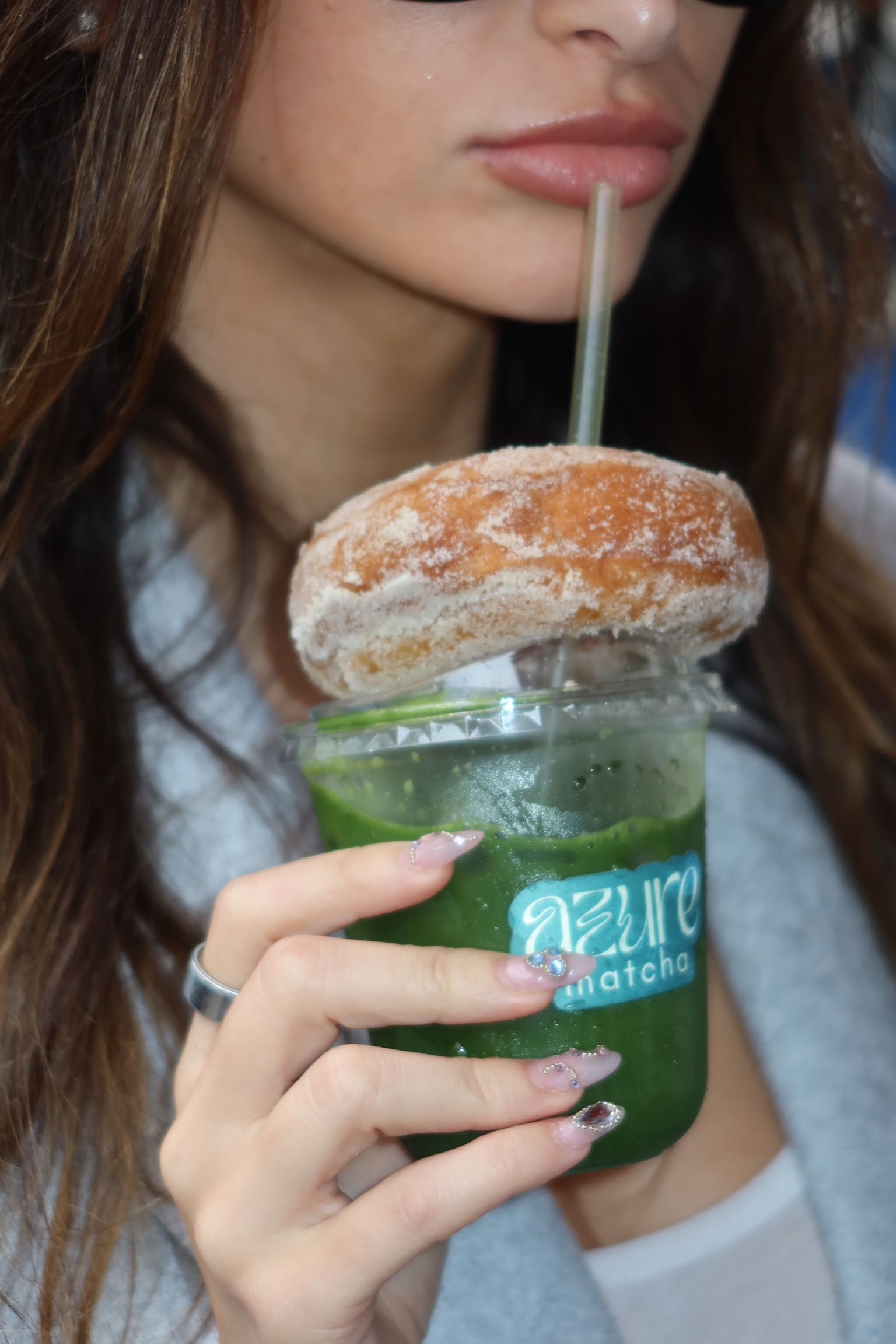
Your first sip is creamy, but halfway through, your matcha tastes washed out. Melting ice can thin the drink, and adding more powder next time may leave you with more bitterness. For an unsweetened matcha latte that feels rich, start with a smooth, cold-whisked base, then test water amounts and fuller-bodied milk separately to find what your cup needs.
TLDR:
- An unsweetened matcha latte has no added sweeteners, but milk can still contain natural sugars.
- Fix your watery latte by testing less water or switching to whole dairy or unsweetened full-fat oat milk, one change at a time.
- Sift, make a smooth paste, then whisk with room-temperature filtered water to reduce clumps.
- Add more powder for a stronger, creamier latte. More powder will not fix bitterness.
- Use 3-6g of Azure Matcha per cup. The working serve is approximately 4g.
What Makes a Matcha Latte Unsweetened
An unsweetened matcha latte contains matcha, water, and milk, with no added sweeteners. Unsweetened does not mean sugar-free: milk can contain naturally occurring sugars, which still appear in the latte’s nutrition information.
Unsweetened leaves room for creamy texture and sweet-tasting tea notes.
That sensory sweetness is separate from the sugar measured on a label.
For perspective, Harvard equates 4 grams of sugar with approximately 1 teaspoon. This is a label-reading conversion, not the sugar content of a standard latte.
Ingredients for a Rich Unsweetened Matcha Latte
An unsweetened matcha latte starts with pure matcha powder for flavor and body, filtered water for whisking, and unflavored milk. Check both labels: matcha mixes can contain sweeteners, and “unflavored” does not mean unsweetened. Use 3-6g of Azure matcha per cup, with approximately 4g as our working serve; more powder gives a stronger, creamier result. Extra water thins the base, while fuller-bodied milk adds creaminess, though a larger milk pour also softens the tea flavor.
Ceremonial and culinary matcha grades have no legal definition for “ceremonial grade.” Look for a named growing region, stated harvest, freshness information, and processing details such as stone-ground tea grinding. These offer more guidance than the grade label alone.
The drinks menu does not include a complete unsweetened recipe. The following details remain unconfirmed:
- The full ingredient list
- Water and milk quantities
- Ice amount and finished serving size
Milk Choices That Add Body Without Sweetening
For an unsweetened matcha latte, choose unflavored milk that adds body without hiding the tea. Plant-based milks vary by formulation.
- Plain dairy. Mouthfeel and flavor: Whole adds more body than skim; mild flavor; What to check: Milk allergy or lactose needs
- Unsweetened soy. Mouthfeel and flavor: Full-bodied, sometimes beany; What to check: Soy allergy; added sugars
- Unsweetened oat. Mouthfeel and flavor: Creamy; oat flavor can compete with tea; What to check: Added sugars; gluten-free labeling if needed
- Unsweetened almond. Mouthfeel and flavor: Lighter, with a nutty note; What to check: Nut allergy; added sugars
USDA lists saturated fat per cup as nearly 5 grams for whole milk versus none in skim. Compare ingredients and taste, not calories alone.
Equipment for a Smooth Matcha Base
For a smooth unsweetened matcha latte, give your whisk room to move and measure the powder before you start.
- A gram scale keeps your dose consistent so you can repeat a cup you like.
- A fine-mesh sifter breaks up dry clumps before mixing.
- A wide bowl gives you space to work the paste and sweep the whisk without splashing.
- A bamboo whisk blends damp powder into a smooth paste, following the same dose, paste, and whisk technique, then adds air as you whisk.
- A clear serving glass lets you spot pockets of unmixed powder in the finished latte.
Foam can sit above unevenly mixed tea, so judge the base by its smoothness, not its bubbles alone.
Cold Whisking for a Smooth Unsweetened Matcha Latte
At Azure, we cold-whisk the base for an unsweetened matcha latte, the same foundation used in our matcha latte recipe for beginners. Use room-temperature filtered water throughout.
Sift the matcha into your bowl.
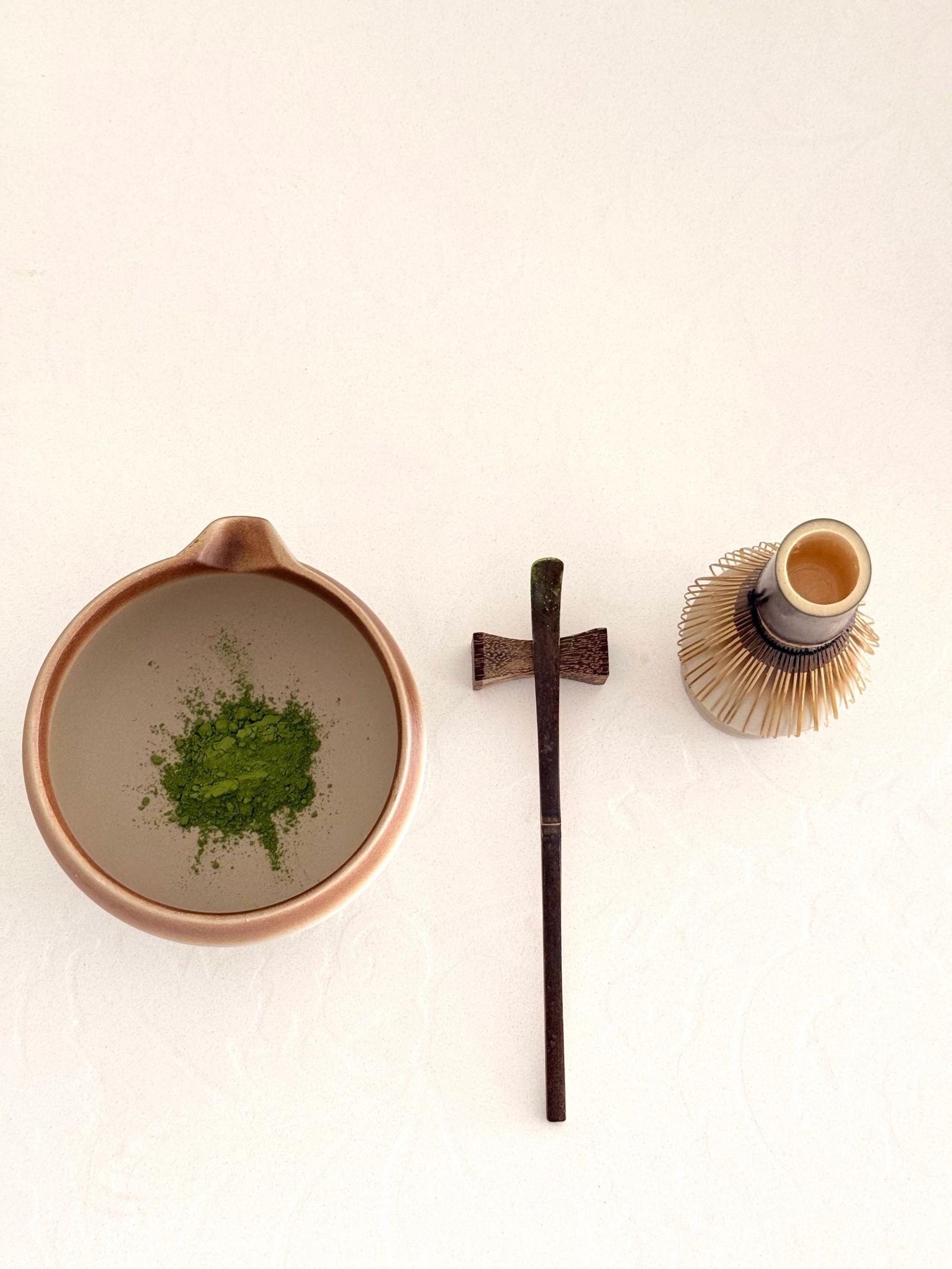
Add a small splash of water, enough to dampen the powder. Work it into a glossy paste, checking the edges for dry pockets.
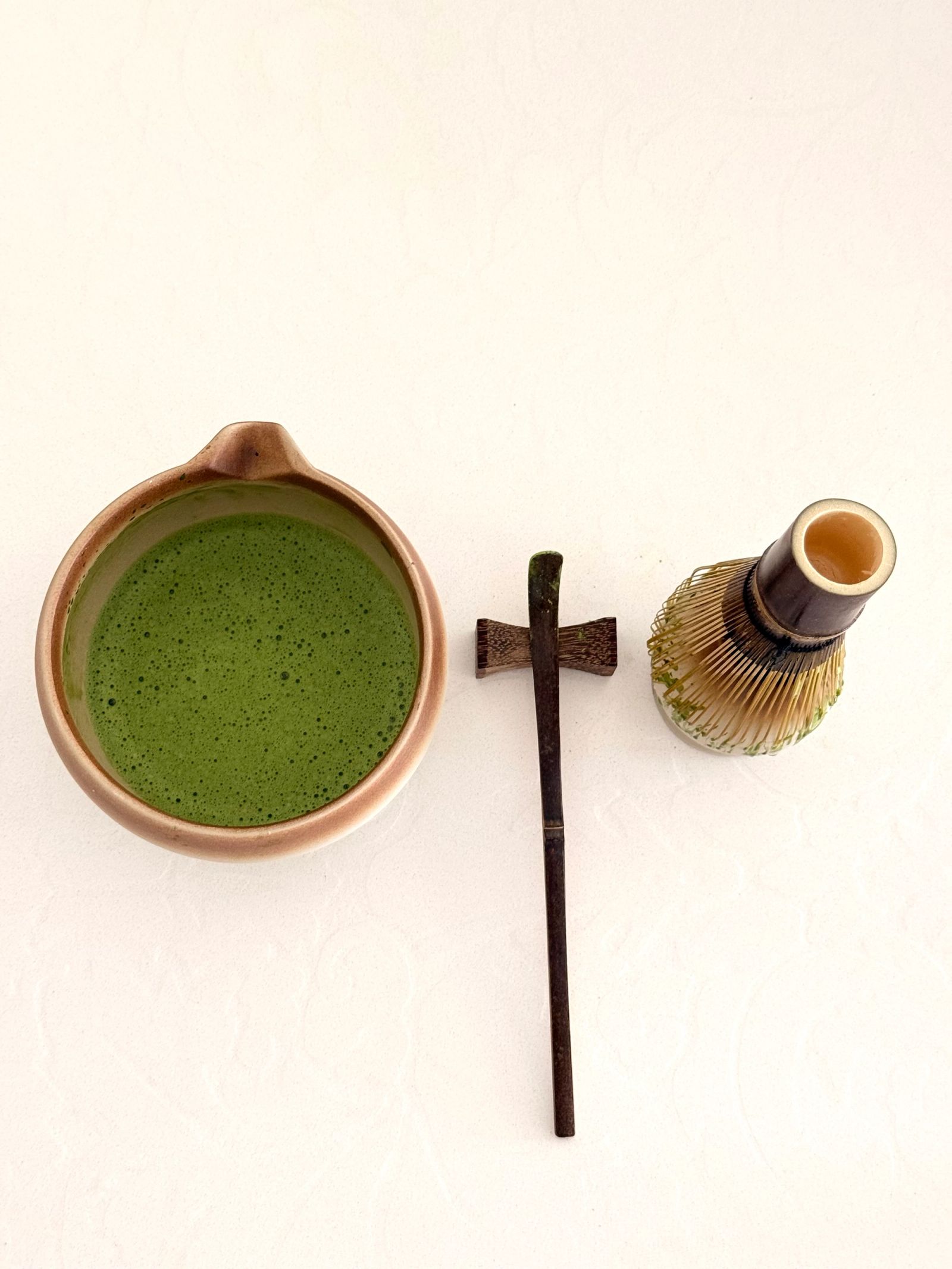
Pour in the remaining water gradually while whisking in a tight W or M motion. Let your wrist do the work.
Look for fine, dense foam. If large bubbles cover the surface, refine your whisking motion before moving on.
Fixing a Watery, Bitter, or Gritty Latte
Adjust one variable at a time in your unsweetened matcha latte so you can tell what helped.
- Thin body. Likely cause: Too much dilution or light-bodied milk; Next adjustment: Test less water or fuller-bodied milk separately.
- Weak tea flavor. Likely cause: Too little powder; Next adjustment: Increase powder, keeping liquid fixed.
- Excessive bitterness. Likely cause: Tea character or dose; Next adjustment: Reduce powder; if bitterness persists, compare another matcha.
- Gritty clumps. Likely cause: Unmixed powder; Next adjustment: Check dispersion before adding milk.
- Settling. Likely cause: Powder collecting at the bottom; Next adjustment: Stir gently before sipping.
Thinness that develops later may come from melting ice, a common pitfall covered in our iced matcha latte guide.
Calories, Sugar, and Caffeine in an Unsweetened Latte
An unsweetened matcha latte still contains calories, carbohydrates, and caffeine. Amounts depend on the milk, matcha dose, and serving size.
To calculate nutrition per serving, scale each ingredient’s label values to the amount you use. Record total sugars and added sugars separately, remembering that added sugars are included in the total.
Published matcha caffeine content figures vary widely, so treat any single number as a working estimate until lab data confirms it. Skipping sweeteners does not guarantee weight loss or jitter-free energy. A matcha latte is a daily ritual and a pleasant source of steady energy, not a treatment for any health condition.
Building an Unsweetened Ritual With Azure Matcha
An unsweetened matcha latte starts with the tea. Our Azure Premium Blend uses first harvest Okumidori and Saemidori grown in Wazuka, in the Uji tea region, shaded for four weeks and stone-ground in Uji.
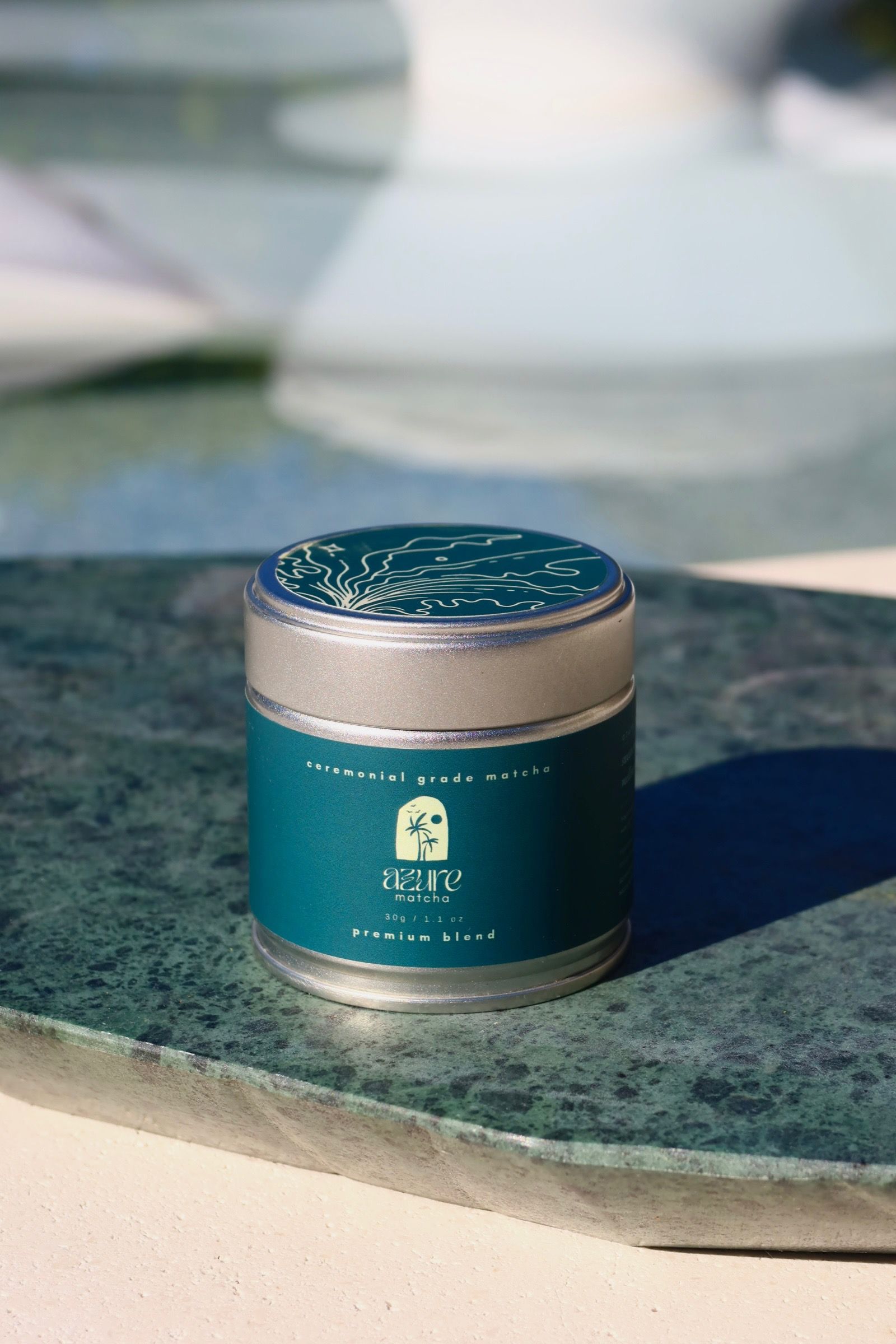
The Azure Premium Blend in our tin: first harvest Okumidori and Saemidori, stone-ground in Uji.
For your home ritual, read about our blend and method and check the Azure Premium Blend page for current ordering status.
Browse our Azure recipes page for existing menu drinks.
Final Thoughts on Your Unsweetened Matcha Ritual
Change one variable per cup and write down what you taste. In a week, your notes will point to the latte you keep making.
FAQ
Try unsweetened soy or oat milk with 3g of Azure matcha, the lighter end of our 3-6g range per cup. A fuller-bodied milk can support texture without increasing the tea dose; more powder gives a stronger, creamier result but also adds caffeine.
A 30g tin makes five servings at 6g per cup or ten at 3g per cup. At our typical 4g dose, expect about seven full servings, enough for roughly one week of daily lattes.
Compare total sugars and added sugars using the same volume of milk, then scale the figures to your pour. If a label lists 6g of total sugar per cup and you use half a cup, your milk contributes 3g; zero added sugar does not necessarily mean zero total sugar.