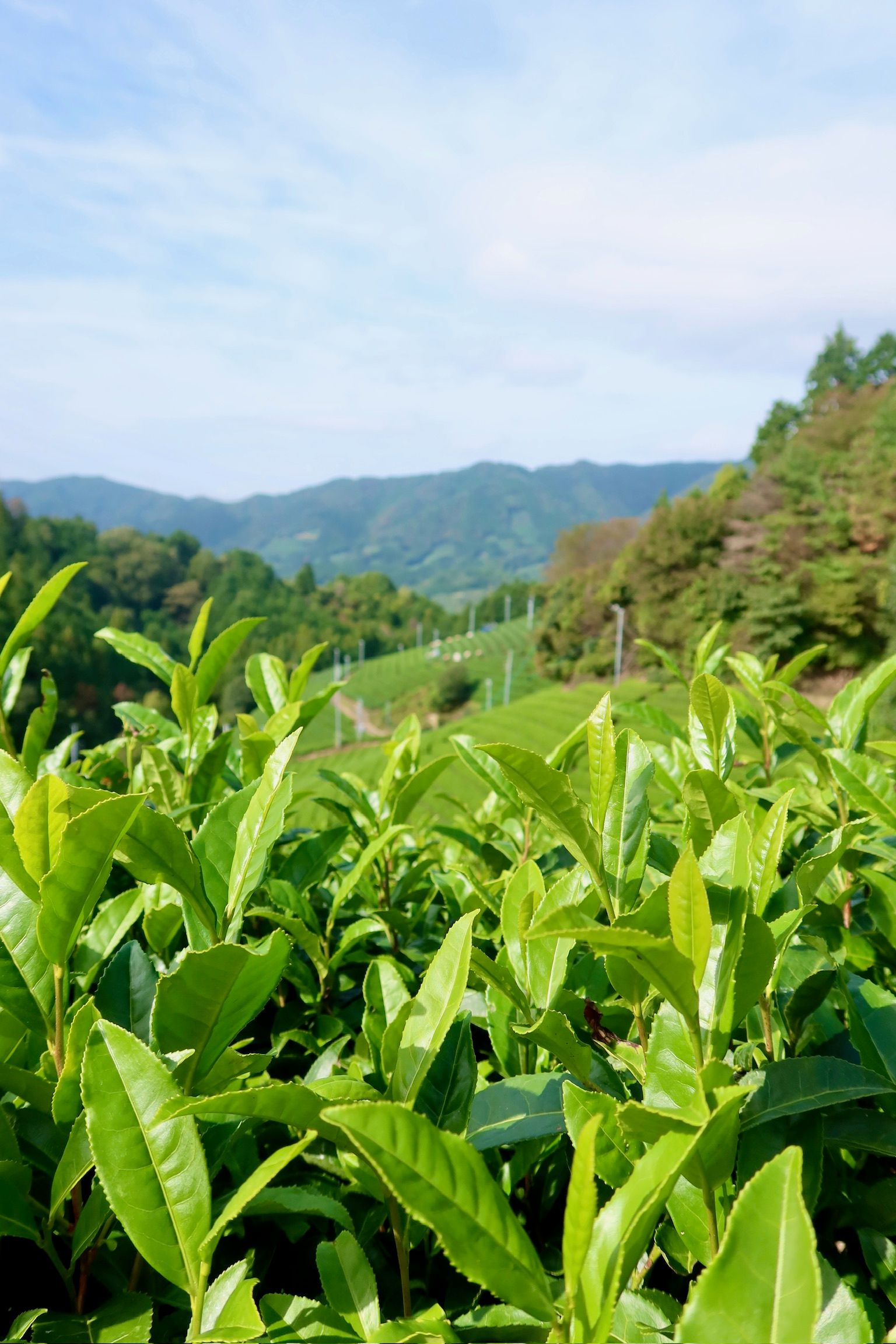
Trying to work out why matcha starts with different leaves from the green tea you usually steep? The answer is in the growing and processing. Tencha is shaded before picking and dried without rolling. Tracing that path from bush to powder explains the names, flavors, and preparation choices.
TLDR:
- Tencha is shade-grown, unrolled green tea. Milling its finished leaves makes matcha.
- A “tencha plant” is Camellia sinensis, not a separate tea species.
- Steep and strain your tencha leaves. Whisk matcha powder into water.
- Check leaf form, origin, cultivar, and harvest season before you buy tencha.
- Azure Matcha sells matcha powder made from Wazuka leaves, not loose tencha or tea plants.
What Is Tencha? Meaning, Pronunciation, and Plant Origin
Tencha is shade-grown green tea processed into unrolled leaves, mainly for milling into matcha. Its Japanese name, 碾茶, means “tea for grinding.” Tencha pronunciation is approximately “ten-cha.”
A “tencha plant” is Camellia sinensis, the same tea plant used to make matcha and other green teas. Tencha describes the prepared leaves, not a separate plant species. Understanding what matcha means helps clarify how tencha fits into the broader tradition.
How Tencha Is Grown and Harvested
Growers shade tea bushes before picking tencha leaves, limiting sunlight for greener leaves and a sweeter, umami-rich character. Shading affects chlorophyll and the balance of amino acids and catechins. Shading duration varies by region and growing practice: reporting on Shizuoka describes about 20 days of shade, while the Global Japanese Tea Association notes that it often lasts about four weeks.
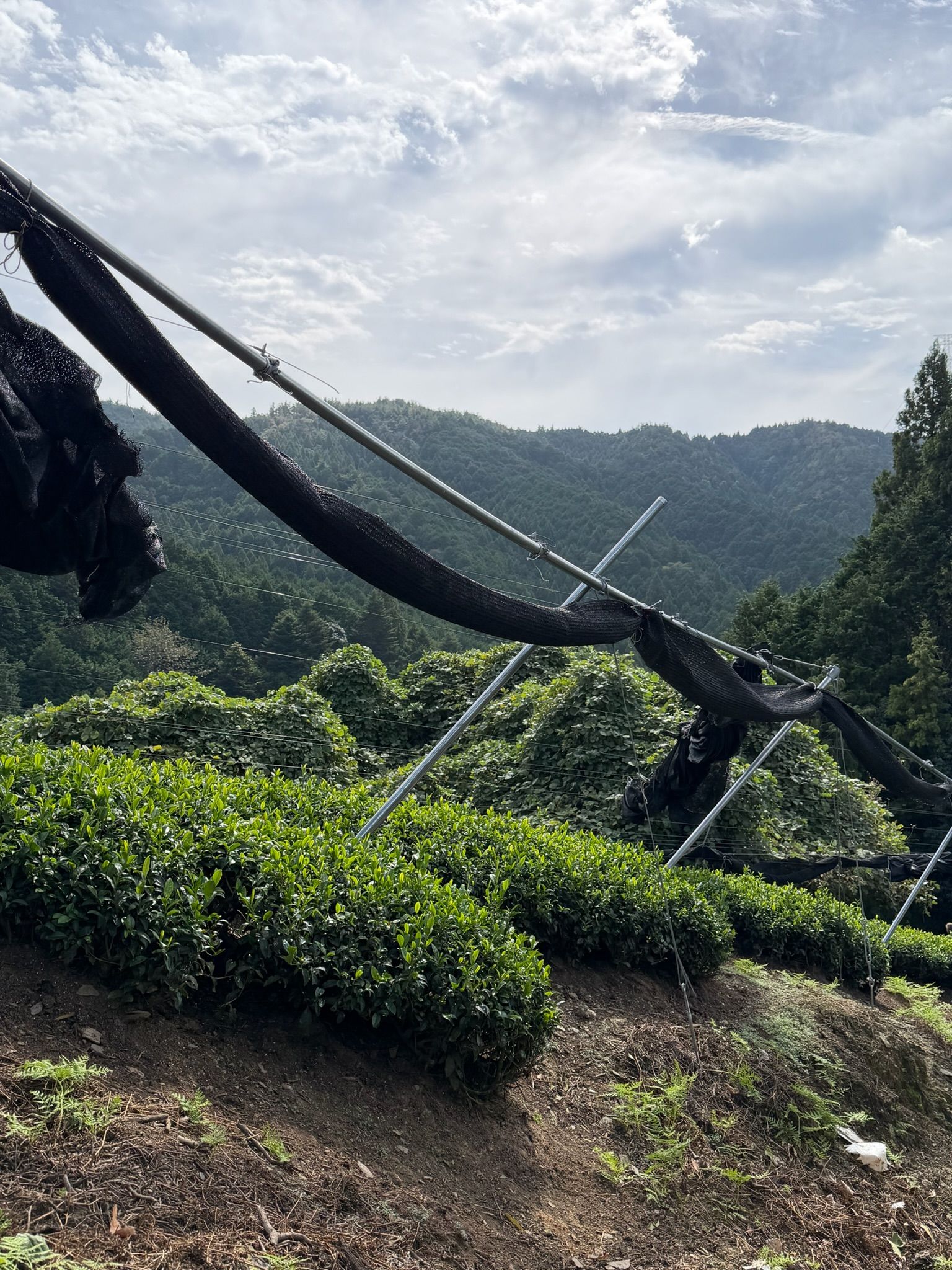
Cultivar, shading practice, and harvest season shape the result. The Okumidori cultivar supplies inherited traits; growers decide how to shade and when to pick. Tencha comes from spring or later harvests, picked by hand or machine, with first harvest matcha prized above later pickings.
How Tea Leaves Become Tencha
After harvest, leaves destined for tencha are steamed to limit oxidation, then cooled. Specialized drying equipment dries them without rolling, leaving a light, flaky leaf.
This crude tencha still needs finishing, whether it comes from the first flush or a later picking. Sorting removes stems and veins, preparing the leaf portion for matcha. The separated stems may be sold as tencha karigane, a stem tea distinct from finished tencha.
Milling the finished tencha leaf into powder is the final step in making matcha.
Tencha’s History and Growing Regions
Tencha belongs to Japan’s powdered tea tradition, rooted in tea practices brought from China. Today, growing regions include Kyoto, Aichi, Kagoshima, and Shizuoka.
In Kyoto, Wazuka sits within the Uji tea region, outside Uji city. It supplies about half of Uji tea, according to a Japanese government tourism sheet. A government history notes that Wazuka tea appeared in a 1734 shogunate document ranking high-quality regional products. The record concerns Wazuka tea generally, not the invention of tencha.
Tencha vs. Matcha: Leaves and Powder
Tencha vs. matcha comes down to leaf form, preparation, and what you drink.
- Form. Finished tencha: Leaf flakes; Finely milled matcha: Fine powder
- Preparation. Finished tencha: Steep, then strain; Finely milled matcha: Whisk into water
- Texture. Finished tencha: Light infusion; Finely milled matcha: Fuller suspension
- Consumption. Finished tencha: Most leaf material stays behind; Finely milled matcha: Suspended powder is drunk
“Tencha matcha powder” usually means matcha. Sellers may call tencha “matcha leaves,” so check the description. Grinding ordinary green tea does not make matcha. See what matcha is for the full picture.
Tencha vs. Sencha and Gyokuro
Tencha, sencha, and gyokuro are all green teas. Shading and rolling set them apart.
- Tencha. Preharvest shading: Extended; Rolling and appearance: Unrolled, flat flakes; Usual use: Milling into matcha
- Sencha. Preharvest shading: Generally no extended shading; Rolling and appearance: Rolled, needle-like leaves; Usual use: Steeping
- Gyokuro. Preharvest shading: Extended; Rolling and appearance: Rolled, fine needles; Usual use: Steeping
Choose sencha for a fresh, brisk infusion or gyokuro for a savory, umami-rich cup.
Tencha Taste, Brewing, and Culinary Uses
Brewed tencha tastes savory and vegetal, with gentle sweetness shaped by harvest and preparation. Its light-bodied infusion is clearer than matcha’s opaque suspension.
Follow your leaf supplier’s brewing guidance for the leaves you buy.
In cooking, dried tencha can serve as a leafy garnish. For “tencha tempura,” check which ingredient the dish uses. Fresh tea shoots and dried tencha behave differently in batter, so follow guidance for the exact leaf form you have.
Tencha Leaves Benefits and Caffeine
Tencha contains L-theanine, catechins, and caffeine, but these compounds alone do not prove specific health benefits.
When comparing tencha vs sencha health benefits, consider the amount of tea and preparation method. Steeping affects what enters your cup, while drinking powdered leaf changes your intake. A blanket “healthiest tea” ranking overlooks these differences.
Caffeine varies by tea and serving, and it is just one factor in what makes high quality matcha. Treat published caffeine figures as estimates unless confirmed by lab testing, and consider your own caffeine tolerance when choosing a serving.
Growing Tea for Tencha at Home
Searching for “tencha seeds” or a “tencha plant for sale”? Look for Camellia sinensis at a nursery with care guidance for your climate.
- Use acidic, well-drained soil. Keep it evenly moist without waterlogging.
- Ask about local winter hardiness and protect tender shoots from frost.
- Seed-grown plants vary genetically. For a named cultivar, request a plant propagated by cuttings.
Making tencha at home also requires shaded shoots and controlled steaming and drying equipment. Treat your first harvest as an experiment while you learn processing skills.
Buying and Storing Tencha Leaves
For where to buy tencha, start with Japanese tea specialists and direct producers. Confirm availability before ordering.
Check these product details:
- Loose tencha leaves or powder, so you get the intended form.
- Growing origin and cultivar, where disclosed.
- Harvest season or year and processing details.
- Preparation guidance for brewing or cooking.
Ceremonial and culinary matcha grades have no legal definition. Product details matter more.
Store tencha leaves airtight, away from heat, light, moisture, and strong odors. Follow the producer’s freshness guidance; shelf life depends on packaging and storage.
Azure Matcha’s Connection to Tencha
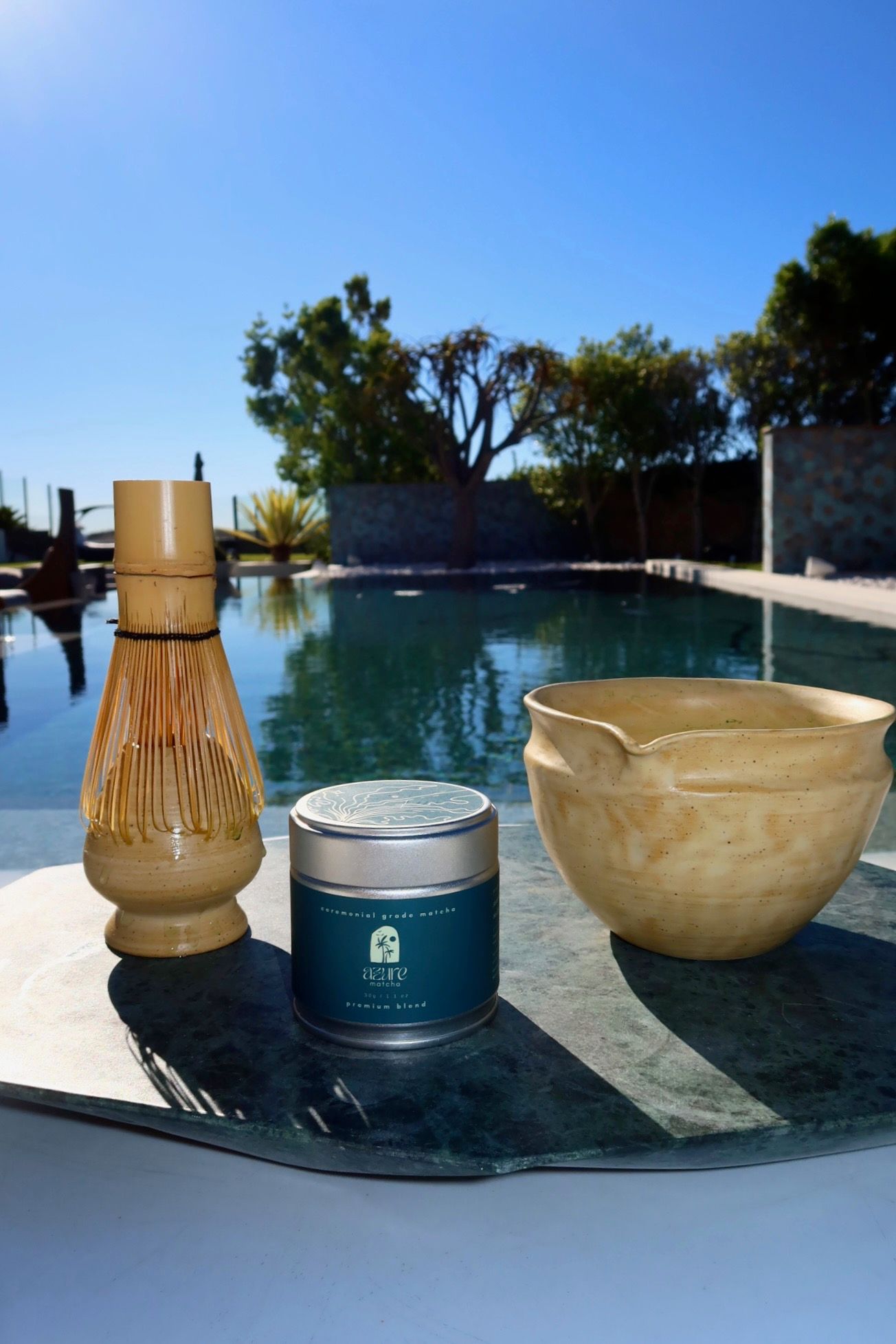
Our blend begins with Okumidori and Saemidori grown in Wazuka, in the Uji tea region. We use hand-picked spring first-flush leaves, stone-ground in Uji, following the Azure matcha blend and method.
We sell matcha powder, not loose tencha leaves or tea plants. Check our Azure matcha blend for current ordering availability, or browse our drinks menu for ways we serve the blend.
Final Thoughts on Tencha From Leaf to Cup
Every bowl of matcha starts weeks earlier, in shade. Next time you whisk, taste for the sweetness and umami that shading leaves behind.
FAQ
Choose matcha powder for lattes. Whisked matcha gives milk drinks body and a fuller tea flavor; steeped tencha produces a lighter infusion that milk can easily overwhelm.
A home coffee grinder can break down tencha, but it rarely produces the fine, even particles needed for smooth matcha. For a whisked bowl, buy finely milled matcha and save loose tencha leaves for steeping.
Look for tencha made from Okumidori or Saemidori, ideally from Wazuka with a spring first-flush harvest, to share some traits with Azure Matcha’s blend. Taste the strained tencha and whisked matcha without milk or flavoring, comparing aroma, sweetness, umami, and body. Matching cultivar and origin helps, but different batches and preparation methods will still affect the result.