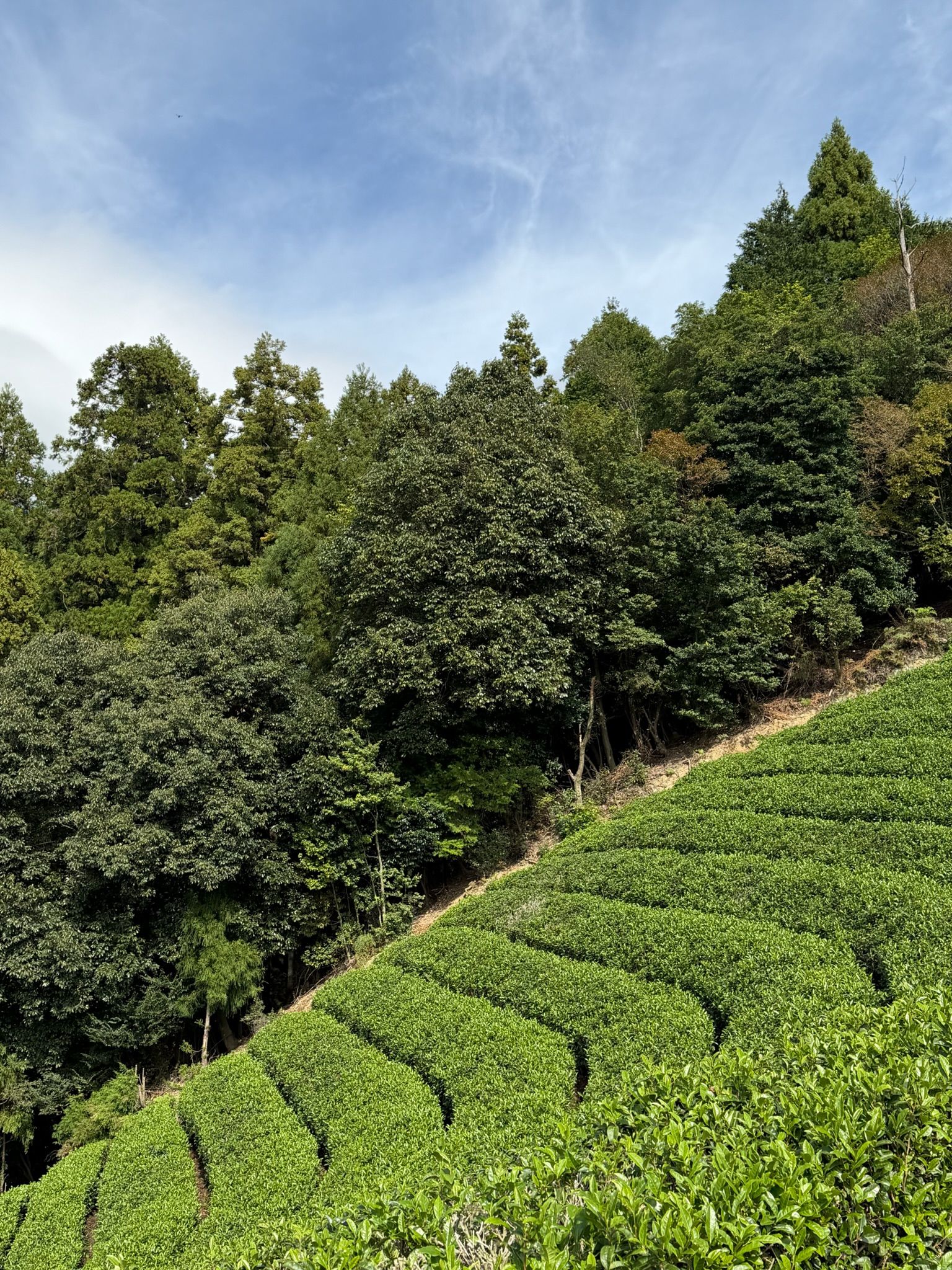
You pick up a tin marked “Uji” and picture tea fields inside the city. Your leaves could actually have grown on Wazuka’s slopes, within the wider Uji tea region. That’s why “where does matcha come from” takes more than a familiar place name to answer. Let’s connect the regions, growing methods, and label details so you can better understand the tea you’re buying.
TLDR:
- Matcha’s powdered-tea roots trace to China. Japan developed shaded tencha matcha.
- Matcha regions include Uji, Nishio, Kagoshima, and Shizuoka, with production outside Japan too.
- Growers shade matcha shoots for 3-4 weeks to help preserve sweetness and umami.
- Check your tin for where leaves grew. “Packed in Japan” gives you only the packing location.
- Azure Matcha’s flagship blend uses Okumidori and Saemidori grown in Wazuka, Kyoto.
Where Does Matcha Come From: Its Origins and Growing Regions
Where does matcha come from? The answer has two parts: a history that begins in China and a growing region that begins in a field.
Cultural roots explain how the tradition took shape. The origin printed on a tin should tell you where those particular leaves grew, so look for a named growing region alongside the country.
The Tea Plant Behind Matcha
Matcha starts with Camellia sinensis, the same species used for green, black, and oolong teas. Bushes grown for matcha are selected and tended for that purpose.
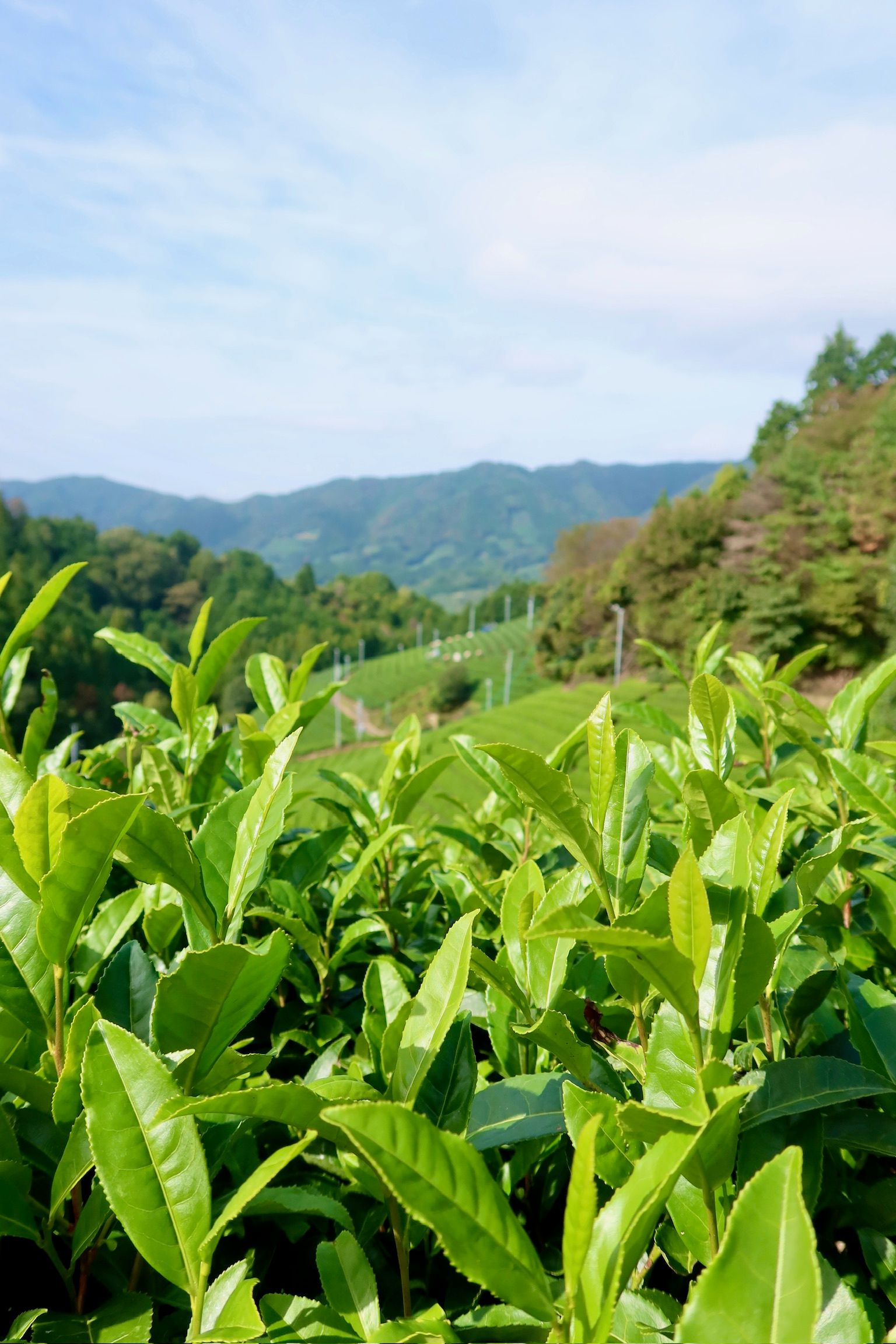
Within this species, cultivars are named plant varieties with distinct growing habits and flavor traits. A tin may list its cultivar alongside its region.
Preparation changes what reaches your bowl. Loose-leaf green tea is steeped, then the leaves are removed. Matcha is shade-grown tea finely ground and whisked into water, so you drink the powdered leaf suspended in it.
From Chinese Powdered Tea to Japanese Tea Culture
Where does matcha come from? Its roots reach China’s Song dynasty, 960 to 1279. The Metropolitan Museum describes Song dynasty tea bowls used for tea “whisked into a white foam.”
Buddhist monks brought powdered-tea practices from China to Japan. Eisai is associated with introducing the whisking method around 1191. Japanese growers later developed shade cultivation in Uji and tencha production.
In Japan, chanoyu, the tea ceremony, grew into a cultural practice devoted to preparing and serving matcha.
Uji and Wazuka in Kyoto’s Tea Regions
Uji matcha has a long association with Japanese matcha and tea-ceremony culture. On a label, “Uji” refers to a tea-producing area that extends beyond Uji city.
Wazuka sits in southeastern Kyoto Prefecture, within that region. The town contributes to Kyoto’s tea production, including sencha as well as tea for matcha.
Growers carved terraces by hand along Wazuka’s steep hillsides to plant tea.
Matcha Regions Beyond Kyoto
Beyond Kyoto, several Japanese regions grow tea for matcha. Use this regional guide when comparing tins.
- Nishio, Aichi Prefecture. Tea-growing context: A tea-growing area with a long focus on tencha for matcha.
- Kagoshima. Tea-growing context: A southern prefecture on Kyushu, where warm conditions suit early-budding cultivars such as Saemidori.
- Shizuoka. Tea-growing context: A major tea-growing prefecture producing matcha and other green teas.
Flavor varies within regions with cultivar and growing methods, which is part of what separates ceremonial and culinary matcha grades. China and other countries also produce matcha, and country of origin alone cannot tell you how carefully leaves were grown or processed.
From Shaded Leaves to Tencha and Matcha
Matcha production begins before picking. Growers shade young shoots for roughly three to four weeks ahead of first flush, limiting sunlight to help preserve sweetness and umami.
After harvest, the leaves follow a set sequence:
- Steaming stops oxidation.
- Drying without rolling keeps the leaves flat.
- Removing stems and veins leaves tencha, the processed leaf material ready for milling.
- Milling turns tencha into fine matcha powder. Stone mills are a traditional option.
Grinding ordinary green tea does not reproduce this process. Unshaded or rolled leaves bring a different starting material to the mill, with their own flavor and texture.
How Growing Conditions and Cultivars Shape the Cup
Cool nights and morning mist affect young leaves, while slopes help water drain. Tender spring growth from first harvest matcha generally holds more amino acids associated with umami. Farmers’ picking and processing choices also influence flavor and texture.
Okumidori was bred in Shizuoka and also grows in Kyoto. Saemidori grows in southern Japan and Wazuka; it differs from the similarly named Samidori. Neither cultivar belongs to just one region.
Tasting notes are most useful when tied to an individual tea, which is why judging what makes high quality matcha means looking past the region name. A creamy Okumidori batch reflects its growing season, handling, and genetics.
Reading Matcha Labels for Traceable Origin
“Packed in Japan” identifies the packing location. To answer “where does matcha come from,” ask where the leaves grew, even if the label names a milling or blending location.
Look for details you can check:
- A named growing area gives you a location to trace.
- The cultivar identifies the plant variety.
- Harvest information tells you when leaves were picked.
- Processing details describe how the tea was made.
Regional blends can contain carefully selected teas; single-origin matcha is not automatically superior. “Ceremonial grade” has no legal definition.
Azure Matcha’s Route From Wazuka to the Tin
Our flagship blend pairs Okumidori and Saemidori grown in Wazuka. We source farm-direct. The leaves are shaded for four weeks, hand-picked during the spring first flush, then stone-ground in small batches in Uji.
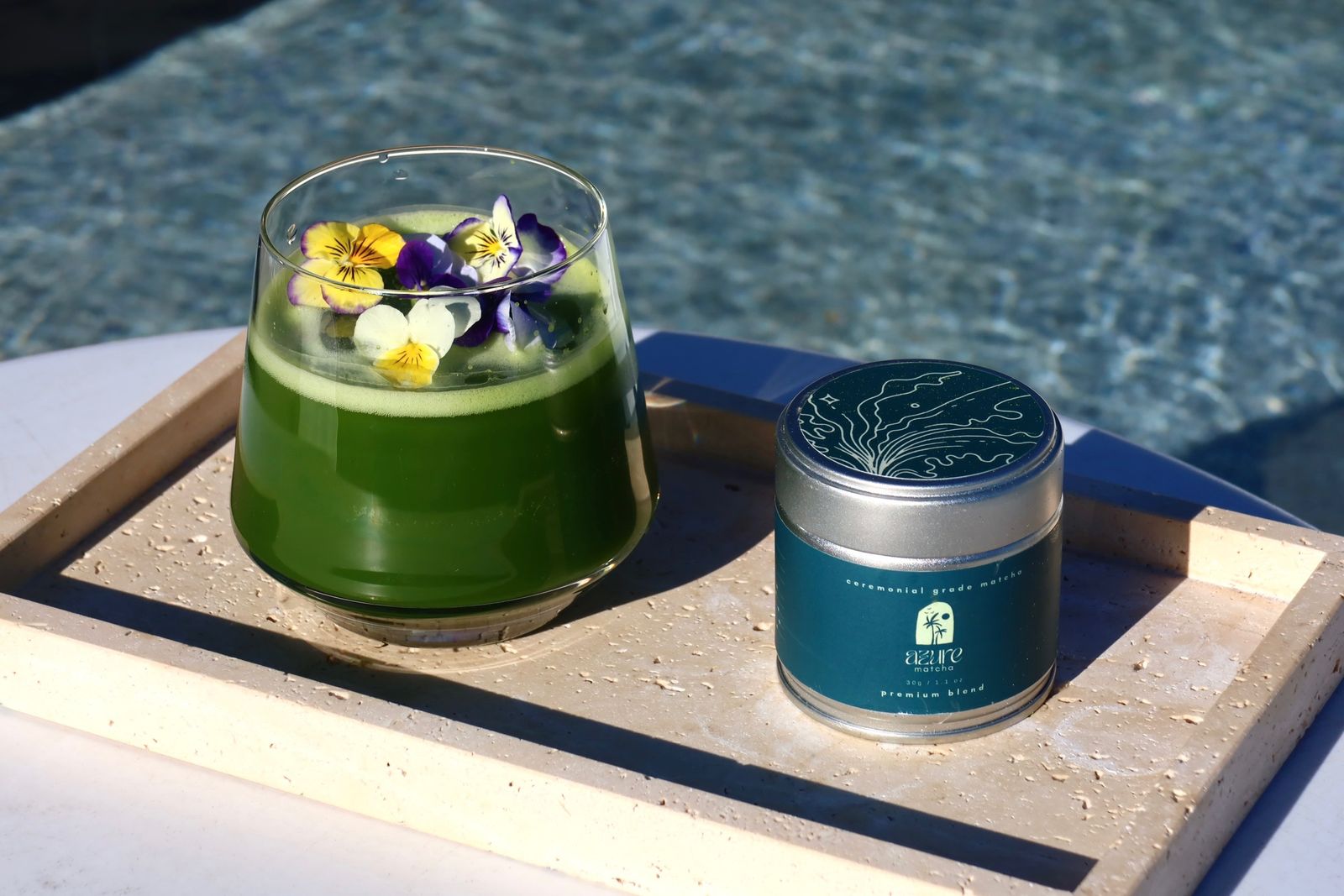
Find the blend on our Azure matcha product page and view the 30g matcha tin details.
Final thoughts on Tracing Matcha’s Roots
Knowing the field is half of the cup. The other half is the whisk. We prepare every bowl with room temperature water, which keeps first-flush leaf rounded and sweet instead of drawing out bitterness.
FAQ
Try both side by side: Azure Premium Blend pairs Wazuka-grown Okumidori and Saemidori, while a single-cultivar tea lets you taste one variety on its own. Keep your powder dose, water volume, and preparation method the same so preparation differences do not mask the teas’ character.
Start with the cultivar: look for Okumidori or Saemidori from another region and compare its tasting notes with what you enjoy in your current cup. Season and processing will still affect flavor.
Check for batch-specific milling or packing information and storage guidance; growing location alone cannot tell you how fresh the powder is. If those details are missing from the listing, ask Azure Matcha before ordering, and remember that a spring harvest date is not a milling date.
Matcha is a Japanese word written 抹茶. The characters combine a word for powder with the word for tea, so matcha translates to “powdered tea.” The name describes the form of the tea: stone-milled tencha leaf, whisked into water and drunk whole.
Okumidori is a tea cultivar bred in Shizuoka that also grows in Kyoto. Our Premium Blend pairs it with Saemidori, both grown in Wazuka. Flavor still depends on the growing season, handling, and batch, so the cultivar name is a starting point, not a full flavor guide.
First harvest, or first flush, is the tender spring growth picked after weeks of shading. It generally holds more amino acids associated with umami. Later harvests get more sun and tend to taste more bitter. We use only hand-picked first flush leaf in our blend.
No. Japan developed shaded tencha matcha, but China and other countries also produce it. Country of origin alone cannot tell you how carefully leaves were grown or processed, so look for a named growing area, a cultivar, and harvest details on the label.