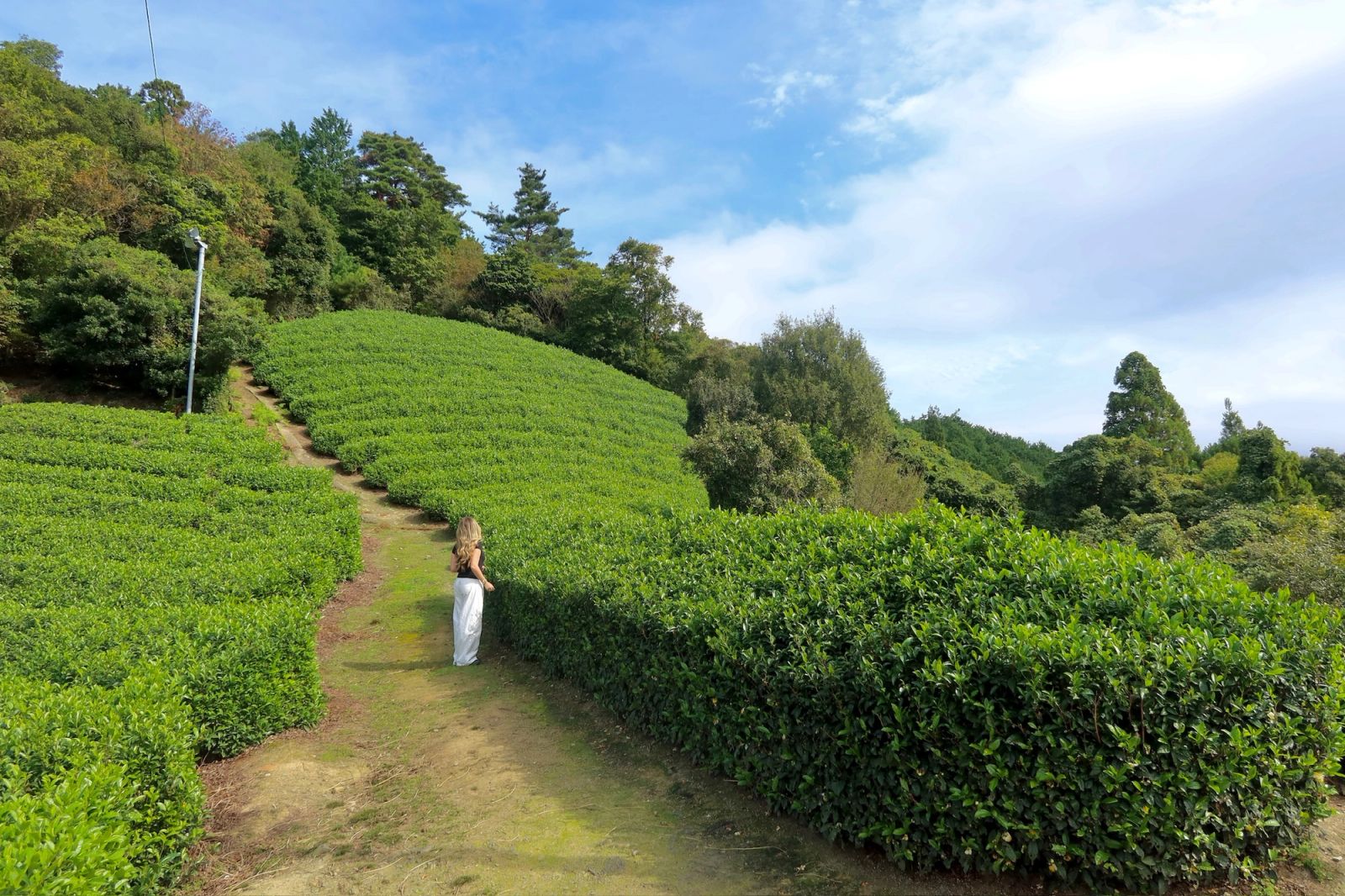
Looking for matcha leaves to grow at home, but unsure whether you need a special plant? The shrub is Camellia sinensis, the same species used for other teas; the difference lies in how its leaves are grown and processed. Following the route from shaded Wazuka bushes to tencha and stone-ground powder helps separate growing tea from making matcha.
TLDR:
- Matcha: 3 to 6g per cup (about 4g)
- Liquid: room temperature filtered water
- Add-ins: none
- Prep time: about 2 minutes (chasen soak, sift, paste, whisk)
Matcha Leaves Come From the Tea Plant
“Matcha leaves” is an informal term for tea leaves used to make matcha. They grow on Camellia sinensis, a tea shrub, not grass. A “matcha plant” is a shopping term for this plant, not a separate species.
The names follow processing: fresh tea leaves become tencha after processing, then finely ground tencha becomes matcha powder.
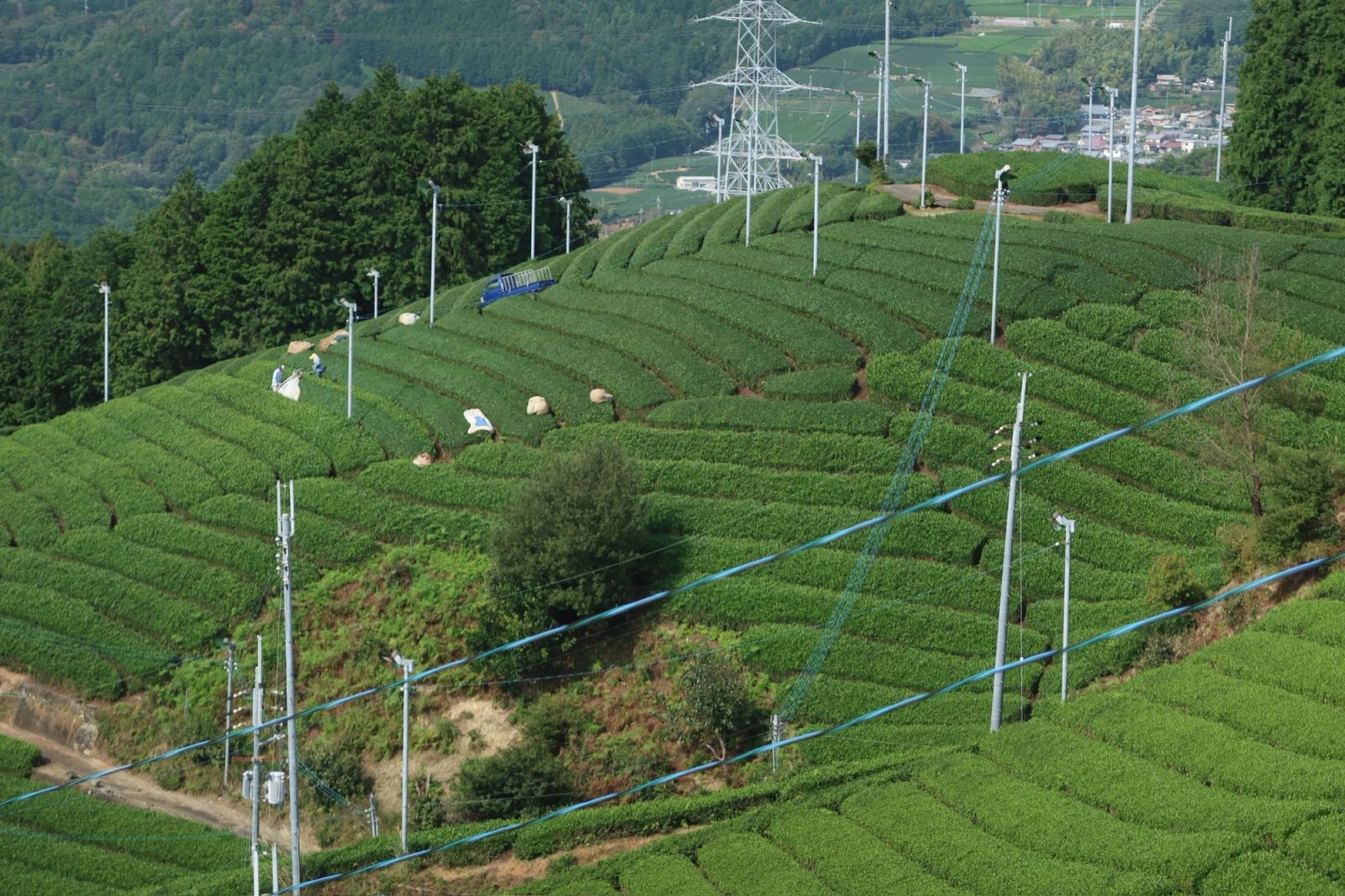
One plant, three forms: fresh Camellia sinensis shoots, dried tencha, and finished matcha powder.
Fresh tea leaves are harvested as shoots, tencha takes the form of dried flakes, and matcha is a fine green powder.
Wazuka’s Place in the Uji Tea Region
Wazuka sits in southeastern Kyoto Prefecture, within the wider Uji tea region. Tea grown here carries the Uji regional name, though its fields lie outside Uji city.
Hillside rows rise above the river valley, where morning mist softens sun exposure. Tea farming here reaches back centuries, but location alone cannot guarantee quality. For matcha leaves, cultivar shapes character, and growing conditions guide development. After harvest, processing helps determine the flavor and texture in your cup.
Shade Growing Shapes Matcha Leaves
Before harvest, growers cover tea bushes with shade cloth for roughly three to four weeks, part of what makes shade-grown green tea distinct. Unlike passing valley mist, these covers limit sunlight for a planned period, shaping matcha leaves.
Reduced light encourages chlorophyll and helps retain amino acids associated with umami, including theanine. Leaves become greener, often with more savory sweetness and less astringency. Cultivar and harvest timing also affect flavor, so shading alone cannot predict taste or make a tea healthier.
Harvesting and Processing Leaves Into Tencha
Growers harvest young shoots for matcha leaves, then steam them to halt the enzymatic oxidation that would otherwise darken the leaves. Airflow cools and separates the steamed leaves before they enter a drying oven. Unlike sencha, the leaves are not rolled into needles; they dry flat, ready to become tencha flakes. During finishing, stems and veins are removed, leaving the thin leaf material for milling.
First flush is the year's first picking after winter rest. Spring leaves are prized for tenderness and umami, though matcha also comes from later growth. Growers may harvest by hand or machine.
Stone Grinding Turns Tencha Into Matcha Powder
Stone mills grind finished tencha, the processed matcha leaves, into fine powder. Smaller particles create a smoother mouthfeel and help matcha stay suspended when whisked into water. Matcha disperses; it never fully dissolves, so even finely milled powder can settle as your bowl sits.
Milling methods vary. If a label says “stone-ground,” check the leaf source, including cultivar such as Okumidori, and processing details too. Grinding shapes texture, while growing and harvest choices shape the leaves that reach the mill.
Matcha Tea Leaves vs Powder and Other Green Teas
Matcha leaves and powder suit different preparations, which is part of why matcha grades differ so much. Tencha can be infused as leaf tea; matcha is ground tencha consumed as dispersed powder.
- Fresh tea leaves. Processing: Unprocessed; Physical form: Tender shoots; Intended use: Processing
- Dried tencha. Processing: Shaded, dried without rolling; Physical form: Flakes; Intended use: Milling or infusing
- Sencha. Processing: Steamed, rolled; Physical form: Needles; Intended use: Infusion
- Gyokuro. Processing: Shaded, steamed, rolled; Physical form: Needles; Intended use: Umami-rich infusion
- Matcha. Processing: Finely ground tencha; Physical form: Powder; Intended use: Whisked tea or lattes
Making Matcha From Green Tea Leaves at Home
Grinding ordinary green tea leaves at home makes powdered green tea, not matcha. Matcha leaves must undergo the growing and processing steps that produce tencha before milling. Grinding sencha cannot recreate those steps.
Household grinders can leave coarse, uneven particles that feel gritty in a drink, a difference that matters most with first harvest matcha. For small-batch experiments, check that your grinder handles dry tea leaves and follow the manufacturer’s instructions. Machines designed for particular leaf material may have different requirements from general kitchen grinders.
Where to Buy Matcha Leaves and Tencha
For dried tencha, try Japanese tea specialists. For ground matcha, check tea shops or Japanese grocery stores. Searching “matcha leaves near me”? Call ahead to confirm product form and stock.
Before buying, check:
- Tencha flakes or matcha powder.
- Growing region and harvest information.
- Shading and processing details.
- Sealed packaging that blocks light and moisture.
- Organic certification to support organic claims.
“Ceremonial grade” has no legal definition, a point worth weighing alongside what matcha means in Japanese tea tradition. Judge the tea by these details, not the label alone.
Growing a Tea Plant for Matcha at Home
Growing matcha leaves at home starts with a tea plant. Consult NC State Extension’s home tea growing guidance for growing conditions. Check frost exposure and provide acidic, well-drained soil with consistent moisture. Making matcha requires shading, leaf processing, and milling.
Buy Camellia sinensis plants or seeds from specialist nurseries. Ask for cultivar identification: seed-grown plants can differ from their parents, while cuttings of a named cultivar retain its traits.
Matcha Leaves Benefits, Caffeine, and Side Effects
Matcha leaves contain caffeine, L-theanine, and catechins. Their presence alone proves no specific benefit for skin, women, men, or morning drinking.
Mayo Clinic considers up to 400 mg daily safe for most adults, not a target or matcha serving recommendation. Caffeine can disrupt sleep, cause jitteriness, or upset your stomach. Seek individualized advice during pregnancy or medication use. We suggest 3 to 6g of Azure matcha per cup, with about 4g as the working serve. More powder gives a stronger, creamier cup, so adjust to your taste. Use verified caffeine content to count each serving alongside other caffeine sources. Reduce your intake if you notice jitteriness, stomach upset, or disrupted sleep.
Storing Tencha Leaves and Matcha Powder
Light, air, and heat dull the color and aroma of matcha leaves and powder. Moisture encourages spoilage, while nearby odors can taint flavor.
- Keep tencha leaves tightly sealed, away from heat and strong smells.
- Matcha powder exposes more surface area to air. Close its container promptly and use dry utensils.
Follow the producer’s storage instructions and freshness dates, one of several details covered in our high quality matcha guide. If refrigerating, let the sealed container reach room temperature before opening to avoid condensation on the tea.
Azure Matcha’s Path From Wazuka Leaf to Tin
Our flagship blend and method starts with Okumidori and Saemidori matcha leaves grown in Wazuka. Shaded for four weeks and hand-picked during spring’s first flush, the leaves are stone-ground in Uji in small batches.
We sell finished matcha powder. Browse our matcha collection for sourcing details, and check the 30g tin for stock and availability when matcha tin ordering opens on November 16, 2026.
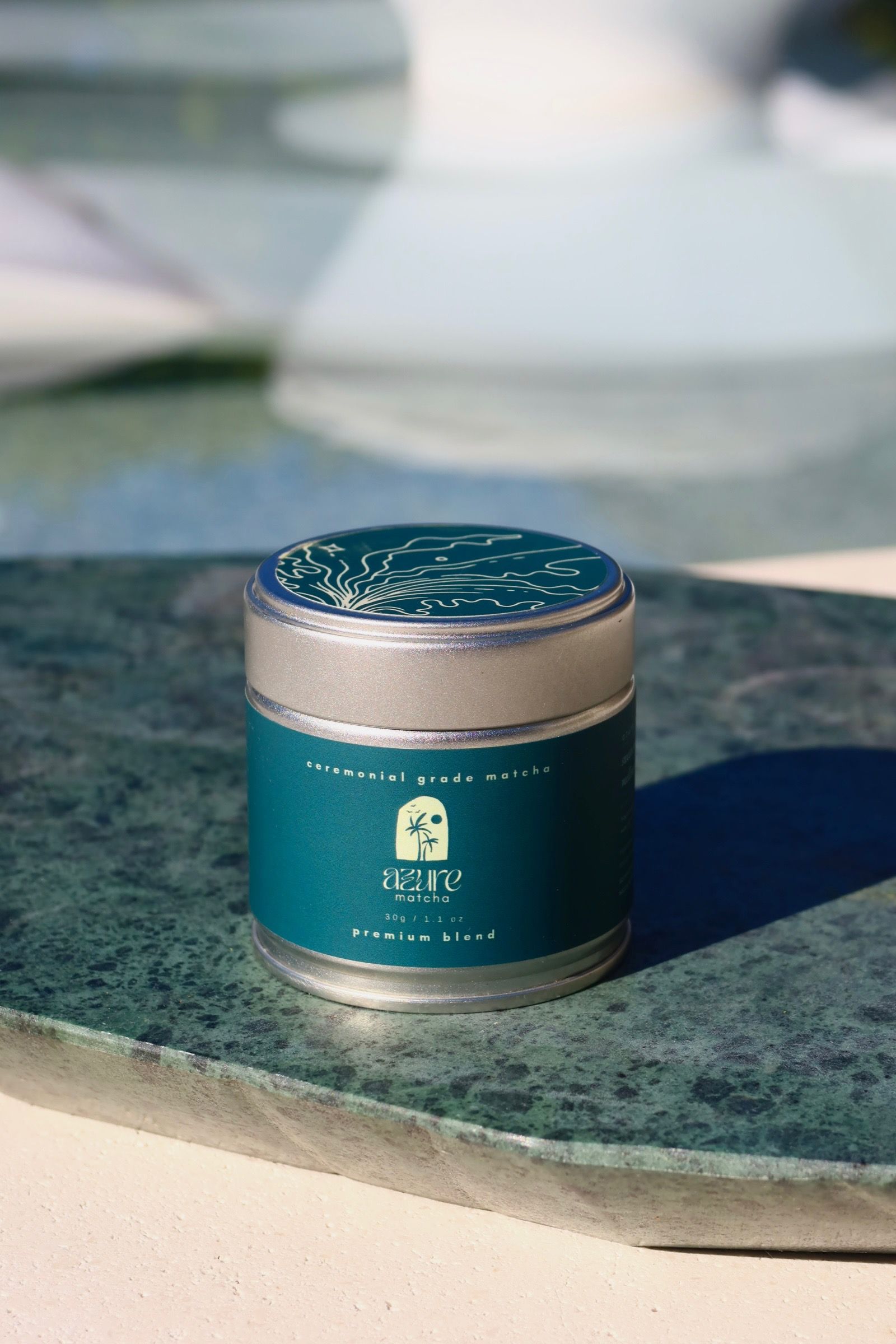
Azure Matcha's 30g tin, filled with Okumidori and Saemidori matcha grown in Wazuka and stone-ground in Uji.
Final Thoughts on Matcha From Leaf to Cup
Grinding ordinary green tea cannot make matcha. You need tencha, shaped by shading and careful processing. Check those details as you choose your next tea.
FAQ
Choose the 30g tin if you drink matcha occasionally, so you have less opened powder to protect from air and moisture. At about 4g per cup, 30g makes roughly 7 servings and 80g makes 20; choose the refill when your routine supports using a larger supply within the producer’s freshness guidance.
No. The comparison depends on how much matcha powder you use, its verified caffeine content, and your coffee’s serving size and brewing method. Without batch-tested caffeine data for Azure Matcha, a precise cup-for-cup comparison would be guesswork.
Start by soaking the tips of your bamboo whisk (chasen) in room temperature water for 30 seconds. This softens the tines and helps build a tighter foam. Then sift the powder, work it into a smooth, glossy paste with a small splash of room temperature filtered water, and whisk in the rest of the water slowly with a tight W or M motion. Clumps call for better dispersion, not more grinding: Azure Matcha is already stone-ground. Fine sediment after the cup sits is normal because matcha stays suspended in water without fully dissolving.